![8 Seconds - Garosugil Branch [Tax Refund Shop] (에잇세컨즈 가로수길점)](http://tong.visitkorea.or.kr/cms/resource/20/2879720_image2_1.jpg)
8 Seconds - Garosugil Branch [Tax Refund Shop] (에잇세컨즈 가로수길점)
14.1Km 2024-04-18
49, Gangnam-daero 156-gil, Gangnam-gu, Seoul
-
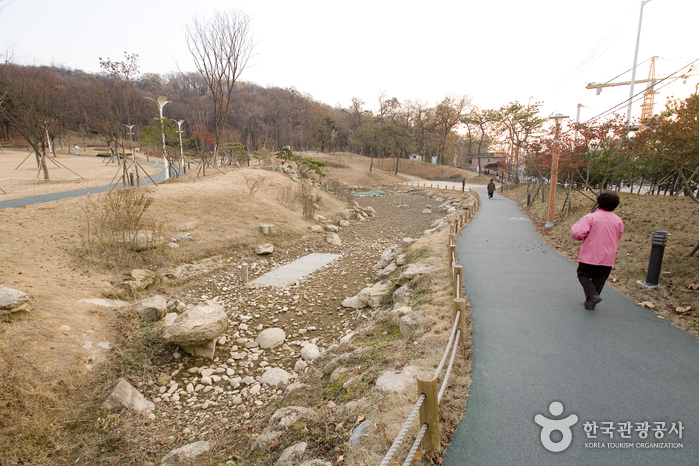
Iljasan Mountain Natural Park (일자산자연공원)
14.1Km 2021-04-23
660, Dongnam-ro, Gangdong-gu, Seoul
Iljasan Mountain is the tallest peak in Gangdong-gu, Seoul, providing the western boundary between Gangdong-gu and Hanam-si, Gyeonggi-do. Iljasan Mountain is one of the best spots in Seoul to watch the sunrise. Located on the mountain is the house of Master Lee Jip (pen-name Dunchon), providing a good getaway spot for local residents. Lee Jip was a loyal government official during the reign of King Gongmin during the late Goryeo dynasty. He was forced to move to an underground tunnel in the southwest side of Iljasan Mountain to avoid entrapment by Shin Don, a person of influence at the time. While living in hiding, he took the pen-name Dunchon (meaning drawing back to the countryside) to symbolize the hardships he was going through. The nearby area was named after him, being called Dunchon-dong.

Dogo Dental Clinic (도고치과의원)
14.1Km 2025-10-23
(4th Floor, Yungok Building), 533 Bongeunsa-ro, Gangnam-gu, Seoul
‘Dogo’ is an ancient Korean word used to describe the groundwork that had to be done before placing the foundation stone to build traditional Korean houses and buildings. Dogo Dental Clinic pursues only the best treatment based on fundamentals, principles, and hygiene. We share all processes with our patients and do not overtreat.
Dr. Rumi Lee from New Zealand provides the best treatment in English with diverse experience practicing in both New Zealand and Korea for several years.
We are very close to COEX and Bongeunsa Temple and in close proximity to transportation options, convenience facilities, and tourist attractions. Thus, you can enjoy many other experiences before and after receiving dental treatment.
Our clinic boasts an elegant interior and treatment space but the treatment fee is reasonable, so many patients like to visit. With Dr. Lee's delicacy and gentleness, even those who are afraid of dental treatment can feel comfortable.
![Meilijie - Garosu Branch (No. 2) [Tax Refund Shop] (메이리지에 가로수2호)](http://tong.visitkorea.or.kr/cms/resource/49/2879749_image2_1.jpg)
Meilijie - Garosu Branch (No. 2) [Tax Refund Shop] (메이리지에 가로수2호)
14.1Km 2024-04-22
1F, 16, Garosu-gil, Gangnam-gu, Seoul
-
Seoul Hyochang Park (서울 효창공원)
14.2Km 2024-07-09
177-18 Hyochangwon-ro, Yongsan-gu, Seoul
+82-2-2199-7608
Hyochang Park covers 122,245 square meters spanning across Hyochang-dong and Cheongpa 2-dong. It is a historic landmark that once contained several royal tombs, and was known at that time as Hyochangwon. The cemeteries that were originally located in Hyochangwon belonged to Crown Prince Munhyo, King Jeongjo’s first son who died at the age of five; Royal Noble Consort Uibin of the Seong Clan, King Jeongjo’s royal concubine and Crown Prince Munhyo’s mother; Royal Noble Consort Sugui of the Park Clan, King Sunjo’s royal concubine; and her daughter Princess Yeongon. The royal tombs were moved to Seooreung Tombs in the waning months of the Japanese colonial period. The Japanese empire began the development of Hyochangwon into a park in 1924, and the Japanese governor-general officially assigned the site as a park in 1940.
Presently, several of Korea’s greatest leaders are buried in Hyochang Park. The remains mostly belong to independence activists including Yoon Bong-gil, Lee Bong-chang, and Baek Jeong-gi, whose graves are collectively known as Samuisa Tomb. A statue of Lee Bong-chang has been built in the graveyard. Among the other patriotic martyrs who are interred in the park are Kim Gu and some of the key figures of the provisional government such as Lee Dong-nyeong, Cha I-seok, and Cho Seong-hwan. An ancestral shrine named Uiyeolsa has been built along the main gate and holds the portraits of the deceased independence activists.
![Uniqlo - Sinsa Branch [Tax Refund Shop] (유니클로 신사)](http://tong.visitkorea.or.kr/cms/resource/51/2879751_image2_1.jpg)
Uniqlo - Sinsa Branch [Tax Refund Shop] (유니클로 신사)
14.2Km 2024-04-18
B1-2F (Inwoo Bldg., Sinsa-dong), 145, Dosan-daero, Gangnam-gu, Seoul
-
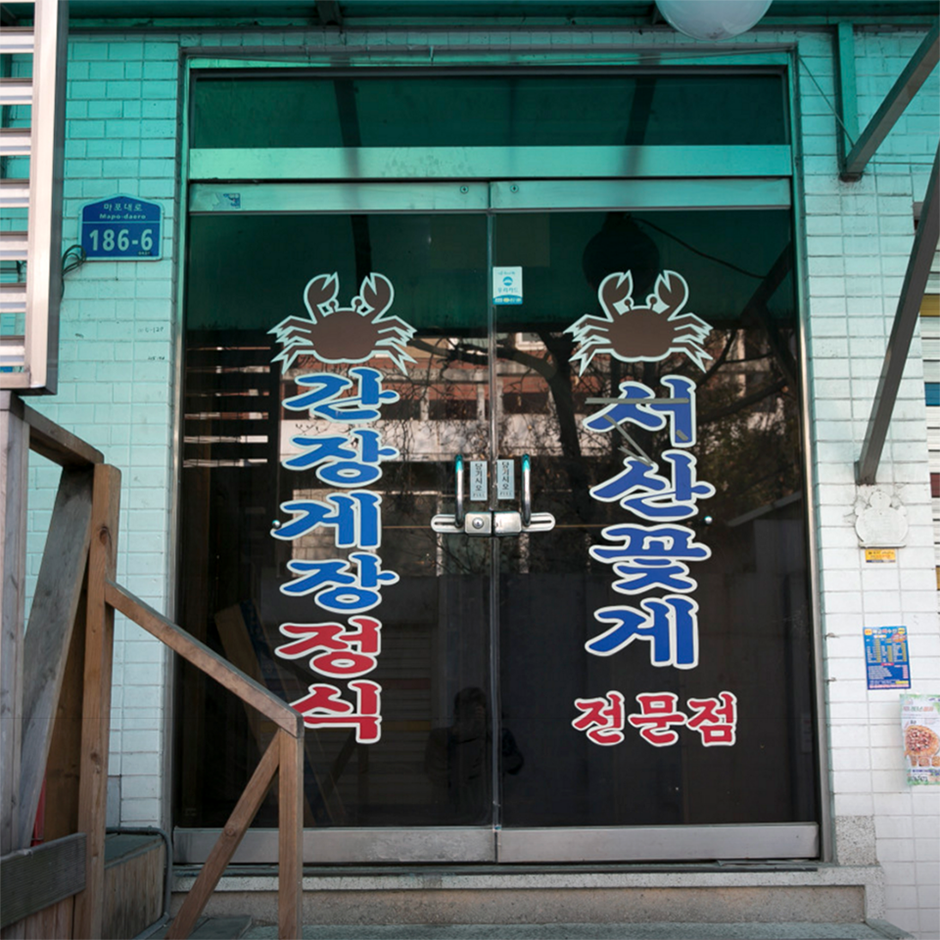
Jinmi Sikdang (진미식당)
14.2Km 2024-02-27
186-6 Mapo-daero, Mapo-gu, Seoul
Jinmi Sikdang is a specialty restaurant known for its exclusive focus on gejang (marinated crab), using only the finest blue crabs from the Seohae Coast. The restaurant prides itself on preparing only the amount of crab needed for the day, ensuring freshness, so it's advisable to make reservations before visiting, especially during peak hours. Known for its consistent quality and unwavering taste, Jinmi Sikdang continues to receive steady love from its customers.
Ewha Womans University (이화여자대학교)
14.2Km 2023-07-04
52, Ewhayeodae-gil, Seodaemun-gu, Seoul
+82-2-3277-2114
Ewha Womans University is Korea's first women's university founded in 1886 by American Methodist missionary Mary Scranton. Ewha Womans University is also the most famous women's university in Korea and its name originates from Ehwa Hakdang, a name given by Empress Myeongseong in 1887. Ewha Womans University created a four-year university course in 1910, and in 1943, the name of Ewha was taken away during the Japanese colonial period and downgraded to a one-year school. In October 1945, the year of Korea's independence from Japan, it regained the name of Ewha and was promoted to a university with eight departments. Currently, it consists of 15 graduate schools, 11 colleges, and 67 departments, and there are 8 affiliated research institutes.
The street in front of Ewha Womans University is famous for shopping. This place is full of clothing stores and neat food that boast a popping sensation to suit the tastes of female college students. The shopping street in front of Ewha Womans University is a straight road that lies ahead of Exits 2 and 3 of Seoul Subway Line 2. Alleyways stretch out like branches around this street and are filled with various accessory shops, clothing stores, shoe stores, restaurants, cafes, and beauty salons.
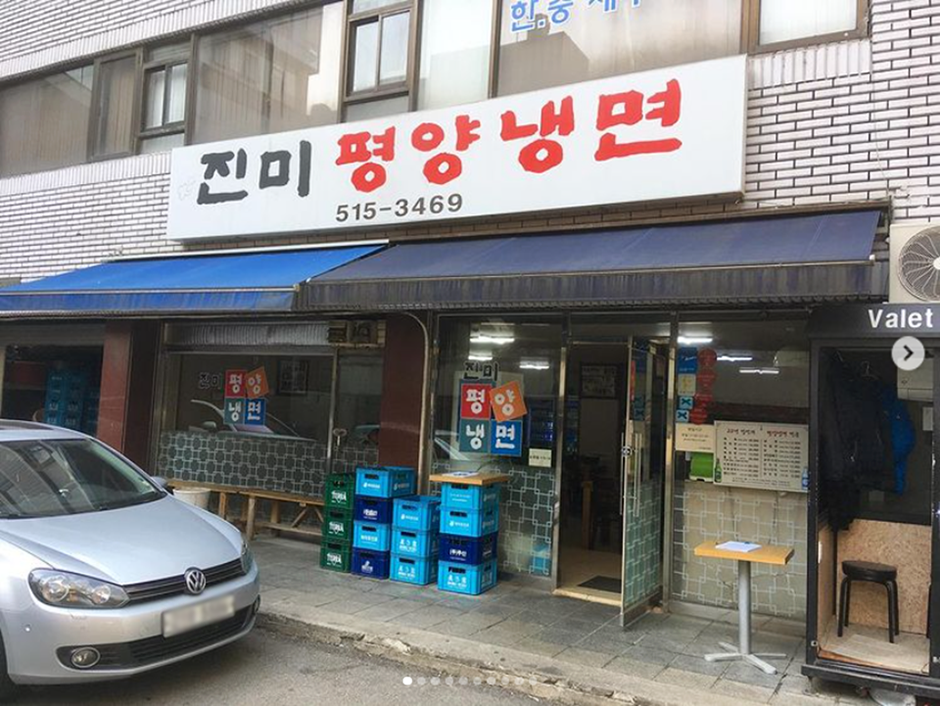
Jinmi Pyeongyang Naengmyeon (진미평양냉면)
14.2Km 2024-02-22
305-3 Hakdong-ro, Gangnam-gu, Seoul
Jinmi Pyeongyang Naengmyeon is a renowned Pyeongyang naengmyeon (Pyeongyang cold buckwheat noodles) specialty restaurant run by Chef Im Sekwon, who has accumulated years of experience in Jangchung-dong. Its signature dish is the naengmyeon (cold buckwheat noodles), offering a clean broth and chewy noodles. Additionally, they offer menu items such as jeyuk (spicy stir-fried pork), mandu, and bulgogi that complement the noodles perfectly. Renowned to the extent of long queues, it was selected for the Michelin Guide Seoul 2023.
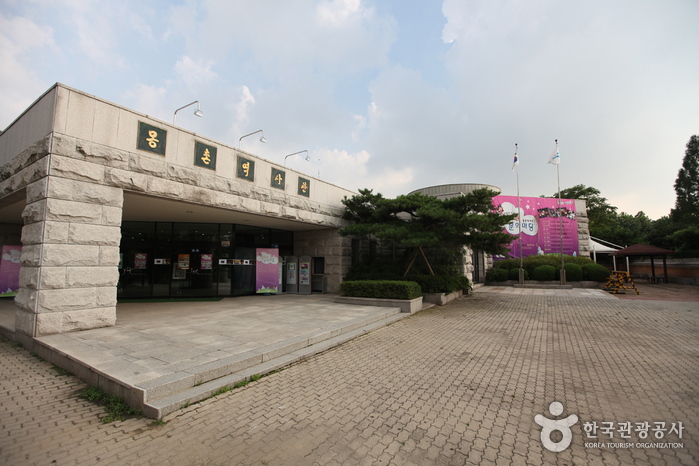
Mongchon Museum of History (몽촌역사관)
14.2Km 2021-08-13
424, Olympic-ro, Songpa-gu, Seoul
+82-2-2152-5900
The Mongchon Museum of History, located within Olympic Park, displays artifacts from the excavations of Mongchontoseong Fortress, such as earthen fortifications as well as other artifacts of the Baekje Kingdom period, offering a glimpse into Baekje culture. A model of a Baekje dugout hut site reveals ancient dwelling patterns. Also, the facility displays a perfectly preserved model of ancient houses and tombs, giving visitors the feel of traveling back to prehistoric ages.
 English
 한국어
한국어 日本語
日本語 中文(简体)
 Deutsch
 Français
 Español
 Русский


