
Soul (소울)
2.5Km 2025-08-20
B1, 35 Sinheung-ro 26-gil, Yongsan-gu, Seoul
Soul is a fine-dining located in Hannam-dong. It presents reinterpretations of Korean cuisine, drawing inspiration from traditional dishes. The menu is structured into lunch and dinner courses. Known for its ability to artistically express familiar flavors encountered in daily life, Soul was selected for the 2023 Michelin Guide Seoul. Operating on a reservation-only basis, bookings can be made via phone.
![Olive Young - Sookmyung Women’s Univ. Branch [Tax Refund Shop] (올리브영 숙대)](http://tong.visitkorea.or.kr/cms/resource/25/2889625_image2_1.jpg)
Olive Young - Sookmyung Women’s Univ. Branch [Tax Refund Shop] (올리브영 숙대)
2.5Km 2024-04-18
19, Cheongpa-ro 45-gil, Yongsan-gu, Seoul
-
![Olive Young - Sookmyung Women’s Univ. Station Branch [Tax Refund Shop] (올리브영 숙대입구역)](http://tong.visitkorea.or.kr/cms/resource/87/2888087_image2_1.jpg)
Olive Young - Sookmyung Women’s Univ. Station Branch [Tax Refund Shop] (올리브영 숙대입구역)
2.5Km 2024-04-17
1F, 285, Hangang-daero, Yongsan-gu, Seoul
-
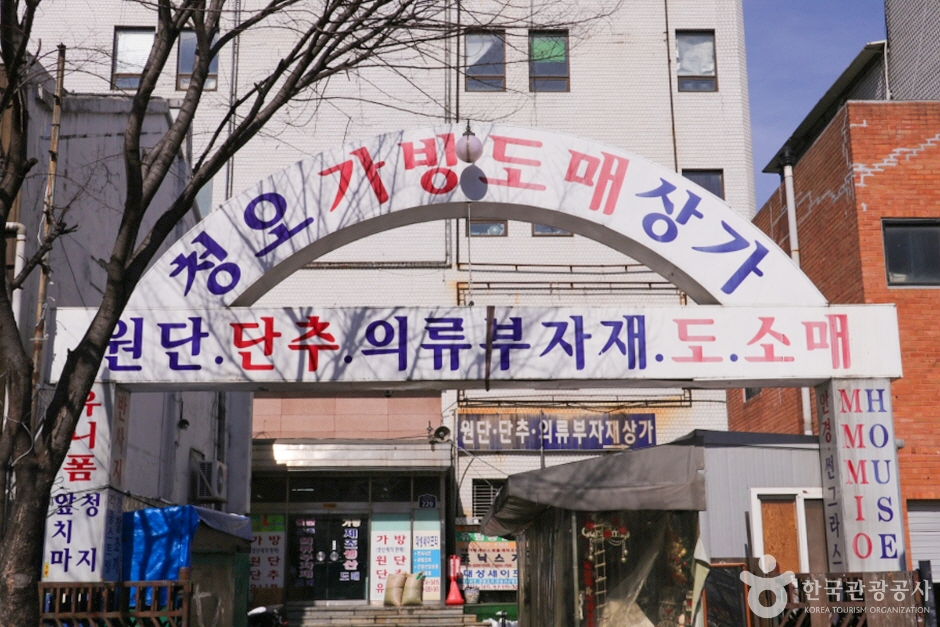
Cheonggye 5-ga Bag Wholesale Shopping Center / Cheong'o Bag Shopping Center (청계5가 가방도매상가 / 청오가방상가)
2.5Km 2024-03-18
229 Cheonggyecheon-ro, Jongno-gu, Seoul
Cheonggye 5-ga Bag Wholesale Shopping Center is a place where you can purchase various types of bags at affordable prices. They offer a diverse range of items including handbags, briefcases, suitcases, and school bags. Selling unique models produced directly from their own factory, the prices are reasonable, and the quality is excellent. The shopping center also houses wholesale stores for clothing and bag accessories.
![Olive Young - CJ CheilJedang Center Branch [Tax Refund Shop] (올리브영 제일제당센터)](http://tong.visitkorea.or.kr/cms/resource/75/2878675_image2_1.jpg)
Olive Young - CJ CheilJedang Center Branch [Tax Refund Shop] (올리브영 제일제당센터)
2.5Km 2024-04-22
330, Dongho-ro, Jung-gu, Seoul
-
Seoul Hyochang Park (서울 효창공원)
2.6Km 2024-07-09
177-18 Hyochangwon-ro, Yongsan-gu, Seoul
+82-2-2199-7608
Hyochang Park covers 122,245 square meters spanning across Hyochang-dong and Cheongpa 2-dong. It is a historic landmark that once contained several royal tombs, and was known at that time as Hyochangwon. The cemeteries that were originally located in Hyochangwon belonged to Crown Prince Munhyo, King Jeongjo’s first son who died at the age of five; Royal Noble Consort Uibin of the Seong Clan, King Jeongjo’s royal concubine and Crown Prince Munhyo’s mother; Royal Noble Consort Sugui of the Park Clan, King Sunjo’s royal concubine; and her daughter Princess Yeongon. The royal tombs were moved to Seooreung Tombs in the waning months of the Japanese colonial period. The Japanese empire began the development of Hyochangwon into a park in 1924, and the Japanese governor-general officially assigned the site as a park in 1940.
Presently, several of Korea’s greatest leaders are buried in Hyochang Park. The remains mostly belong to independence activists including Yoon Bong-gil, Lee Bong-chang, and Baek Jeong-gi, whose graves are collectively known as Samuisa Tomb. A statue of Lee Bong-chang has been built in the graveyard. Among the other patriotic martyrs who are interred in the park are Kim Gu and some of the key figures of the provisional government such as Lee Dong-nyeong, Cha I-seok, and Cho Seong-hwan. An ancestral shrine named Uiyeolsa has been built along the main gate and holds the portraits of the deceased independence activists.
Samcheong Park (삼청공원)
2.6Km 2024-03-18
44, Insadong-gil, Jongno-gu, Seoul
+82-2-2148-4150
Samcheong Park is a park that blooms in cherry blossoms in spring and fall colors in fall near Gyeongbokgung Palace. The park is home to a forest library and a café, and visitors can follow the trails to find acupressure trails, exercise equipment, badminton court, tennis court, playground, and a convenience store. The area surrounding the park is home to many galleries and restaurants, so it is a popular destination for walking among the people of Seoul.
Golden Tour Korea DMC (골든투어코리아 디엠씨)
2.6Km 2025-10-23
(#1227), 173 Mapo-daero, Mapo-gu, Seoul
Since its establishment in 2013, Golden Tour Korea DMC has been offering high-quality, customized travel services worldwide, focusing on premium travel experiences and diverse Korean tour products. In addition, the company actively organizes incentive tours, corporate meetings, government forums, business trips, family vacations, educational programs, and foreign patient attraction activities in Europe. Golden Tour Korea DMC designs tour products tailored to meet customers’ needs, with expert tour operators providing consulting to enhance customer satisfaction. The company maintains strong collaborations with numerous international partners. With extensive experience and expertise in the travel industry, Golden Tour Korea DMC will do its best to create beautiful memories and make the next chapter of your life unforgettable.
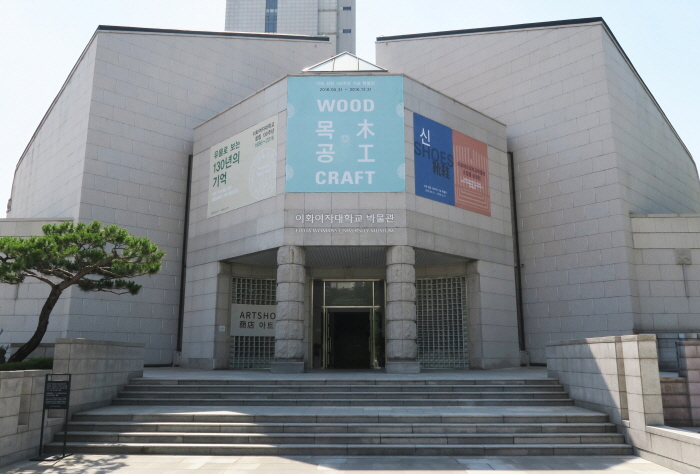
Ewha Womans University Museum (이화여자대학교박물관)
2.6Km 2022-09-14
52, Ewhayeodae-gil, Seodaemun-gu, Seoul
+82-2-3277-3152
The Ewha Womans University Museum was established in 1935 with the goal of preserving the cultural heritage of Korea. Originally, items related to folk art, traditional woodwork, and pottery were put on display in the hall of the main university to keep them from being confiscated during the Japanese occupation. This later led to the opening of the museum to display and store the growing collection.
Regular exhibitions of the museum’s collection have been taking place annually from 1972. Since 1996, the museum also held special exhibitions that focus on other themes related to cultural heritage. Additional small-scale exhibitions are also held frequently to promote Korea's traditional culture and art.
A ceramics research facility as well as a more traditional museum, a large portion of the museum’s efforts is focused on the research and excavation of kilns. To this aim, excavation teams from the museum have traveled to various parts of the country to conduct studies on historic sites and assess the value of artifacts. Through the publication of books and reports on its discoveries, the museum has contributed to raising knowledge and awareness of Korean cultural heritage in academia and among the public.
Ewha Welcome Center (이화웰컴센터)
2.6Km 2022-09-13
52, Ewhayeodae-gil, Seodaemun-gu, Seoul
+82-2-3277-3277
Ewha Welcome Center opened in 2013 as the first promotional center and visitor center of its kind on a university campus in Korea, comprised of an information desk, exhibition lounge, and gift shop. The information desk offers useful information to help visitors get the most out of their Ewha campus experience. The exhibition lounge introduces the history, traditions, and vision of the present-day and future of the university year-round. Visitors can purchase university gear at the gift shop. Furthermore, foreign visitors can take part in a range of campus tour programs in English and Chinese for an enriching experience.
 English
 한국어
한국어 日本語
日本語 中文(简体)
 Deutsch
 Français
 Español
 Русский


