
Innisfree - Seoul Express Bus Terminal Branch [Tax Refund Shop] (이니스프리 강남고속터미널)
11.4Km 2024-04-18
B1 Store #3, #4, 194, Sinbanpo-ro, Seocho-gu, Seoul
-
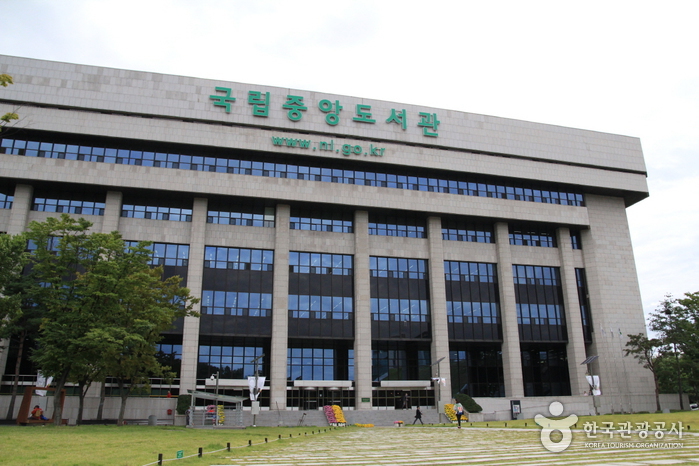
The National Library of Korea (국립중앙도서관)
11.4Km 2021-06-22
201, Banpo-daero, Seocho-gu, Seoul
+82-2-590-0500
The National Library of Korea collects and preserves many important documents and books, promoting a culture of appreciation for these cultural heritages. The library was founded on May 28, 1988 in the area of Seocho Park, later expanding to include an annex. The scenery of the park is beautiful and the atmosphere is very relaxing, perfectly suited to the pursuit of knowledge. For further understanding, the library also offers guided tours for those interested in library science. Many materials have also been scanned and are accessible online through the digital library.
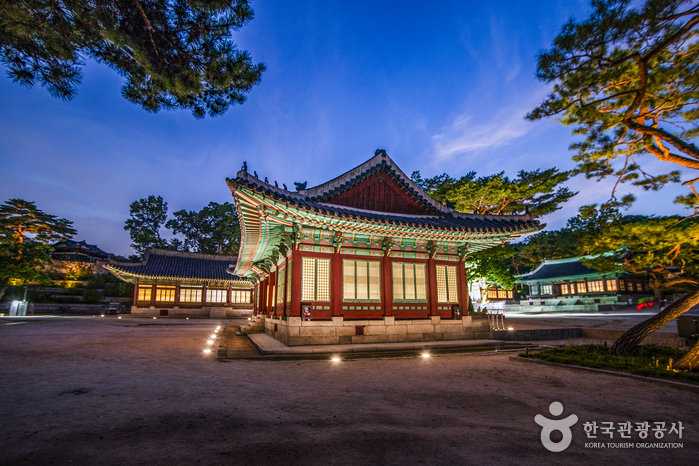
Changgyeonggung Palace (창경궁)
11.4Km 2024-10-31
185 Changgyeonggung-ro, Jongno-gu, Seoul
+82-2-762-4868
Located in the heart of Seoul, Changgyeonggung Palace was originally built as Suganggung Palace by the 4th ruler of the Joseon dynasty, King Sejong (r.1418-1450), for his retiring father, King Taejong. It often served as residential quarters for queens and concubines. During the reign of King Seongjong (r.1469-1494), the palace was renovated and renamed to Changgyeonggung Palace. It later became a park with a zoo and a botanical garden during Japanese colonial rule. The palace grounds remained this way until 1983 when restoration of its old grace was completed.
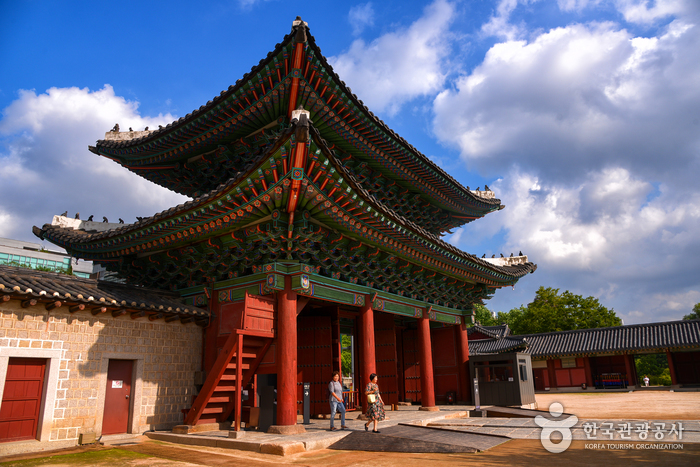
Changgyeonggung Palace Honghwamun Gate (창경궁 홍화문)
11.4Km 2021-05-27
99, Yulgok-ro, Jongno-gu, Seoul
+82-2-762-4868
Honghwamun Gate is the main gate of Changgyeonggung Palace. It has three opening gates in the front and two to the side with a sophisticated locking mechanism.
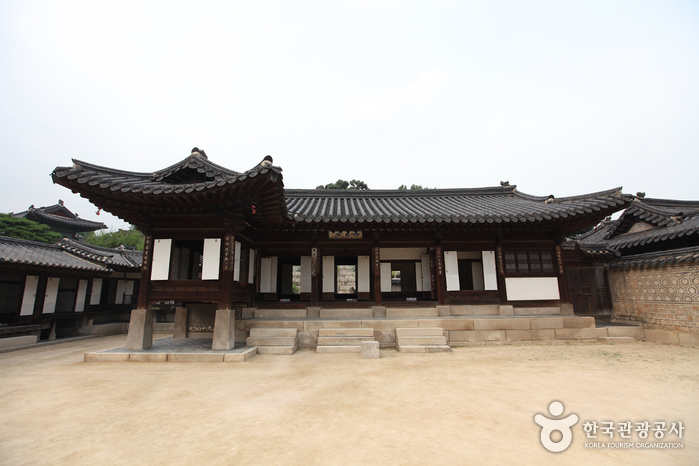
Nakseonjae Hall (낙선재)
11.5Km 2021-09-30
99, Yulgok-ro, Jongno-gu, Seoul
+82-2-2148-1822
Located inside Changdeokgung Palace, Nakseonjae Hall is a one-story structure built in ikgong style (bird wing-shaped eaves placed on top of the pillars) with a hip tiled and gable roof. It has 6 kan in the front and 2 kan (traditional unit of measurement of the space between pillars) to the sides. It originally belonged to the nearby Changgyeonggung Palace, but came to be considered a part of Changdeokgung Palace in more recent years.
The hall was constructed in 1846 (12th year of King Heonjong’s reign) and it is collectively called Nakseonjae together with the adjacent Seokbokheon Hall and Sugangjae Hall.
Behind the building is a flower garden made of stacked large stones. The chimney, the flowers, and the oddly shaped stones harmoniously blend into one another to create an outstanding landscape gardening.
![Homeplus - Bucheon Sang-dong Branch [Tax Refund Shop] (홈플러스 부천상동)](http://tong.visitkorea.or.kr/cms/resource/07/2881907_image2_1.jpg)
Homeplus - Bucheon Sang-dong Branch [Tax Refund Shop] (홈플러스 부천상동)
11.5Km 2024-04-23
118, Gilju-ro, Bucheon-si, Gyeonggi-do
-
![Olive Young - Bucheon Homeplus Sang-dong Branch [Tax Refund Shop] (올리브영 홈플러스부천상동)](http://tong.visitkorea.or.kr/cms/resource/08/2881908_image2_1.jpg)
Olive Young - Bucheon Homeplus Sang-dong Branch [Tax Refund Shop] (올리브영 홈플러스부천상동)
11.5Km 2024-04-18
118, Gilju-ro, Bucheon-si, Gyeonggi-do
-
![Changdeokgung Palace Complex [UNESCO World Heritage Site] (창덕궁과 후원 [유네스코 세계유산])](http://tong.visitkorea.or.kr/cms/resource/03/3092503_image2_1.jpg)
Changdeokgung Palace Complex [UNESCO World Heritage Site] (창덕궁과 후원 [유네스코 세계유산])
11.5Km 2025-07-21
99 Yulgok-ro, Jongno-gu, Seoul
Changdeokgung Palace was the second royal villa built following the construction of Gyeongbokgung Palace in 1405. It was the principal palace for many kings of the Joseon dynasty, and is the most well-preserved of the five remaining royal Joseon palaces. The palace grounds are comprised of a public palace area, a royal family residence building, and the rear garden. Known as a place of rest for the kings, the rear garden boasts a gigantic tree that is over 300 years old, a small pond and a pavilion.
The palace gained importance starting from the time of Seongjong, the 9th king of Joseon, when a number of kings began using it as a place of residence. Unfortunately, the palace was burned down by angry citizens in 1592 when the royal family fled their abode during the Imjin War. Thanks to Gwanghaegun, the palace was restored in 1611. Even today, it houses a number of cultural treasures, such as Injeongjeon Hall, Daejojeon Hall, Seonjeongjeon Hall, and Nakseonjae Hall.
Changdeokgung Palace’s garden behind the inner hall, called the "Secret Garden," was constructed during the reign of King Taejong and served as a rest area for the royal family members. The garden had formerly been called Bugwon and Geumwon, but was renamed Biwon Garden, or Secret Garden, after King Gojong came into power. The garden was kept as natural as possible and was touched by human hands only when absolutely necessary. Buyongjeong Pavilion, Buyongji Pond, Juhamnu Pavilion, Eosumun Gate, Yeonghwadang Hall, Bullomun Gate, Aeryeonjeong Pavilion, and Yeongyeongdang Hall are some of the many attractions that occupy the garden. The most beautiful time to see the garden is during the fall when the autumn foliage is at its peak and the leaves have just started to fall.
Though it has been treasured by Koreans for centuries, Changdeokgung Palace and its complex was recognized as a World Cultural Heritage site by the UNESCO World Cultural Heritage Committee in December of 1997 during the committee meeting in Naples, Italy.
Soseoul Hannam (소설한남)
11.5Km 2024-02-22
B-B1, 21-18 Hannam-daero 20-gil, Yongsan-gu, Seoul
Soseoul Hannam is a Korean fine-dining located in Hannam-dong. It offers modern interpretations of traditional Korean cuisine. The menu consists of lunch and dinner courses. Popular dishes include sliced raw fish served with fischer’s ragwort and aged kimchi, as well as charcoal-grilled spicy stir-fried webfoot octopus and chicken dishes. It's also known for its diverse selection of traditional liquors for pairing. In 2023, it was selected for the Michelin Guide Seoul.
Top50 Glasses [Tax Refund Shop] (으뜸50안경)
11.5Km 2024-06-27
1F, Bldg 6, 205 Sinbanpo-ro, Seocho-gu, Seoul
-
 English
 한국어
한국어 日本語
日本語 中文(简体)
 Deutsch
 Français
 Español
 Русский


