The-K Hotel Gyeongju Spa World (더케이경주호텔 스파온천)

Explanation

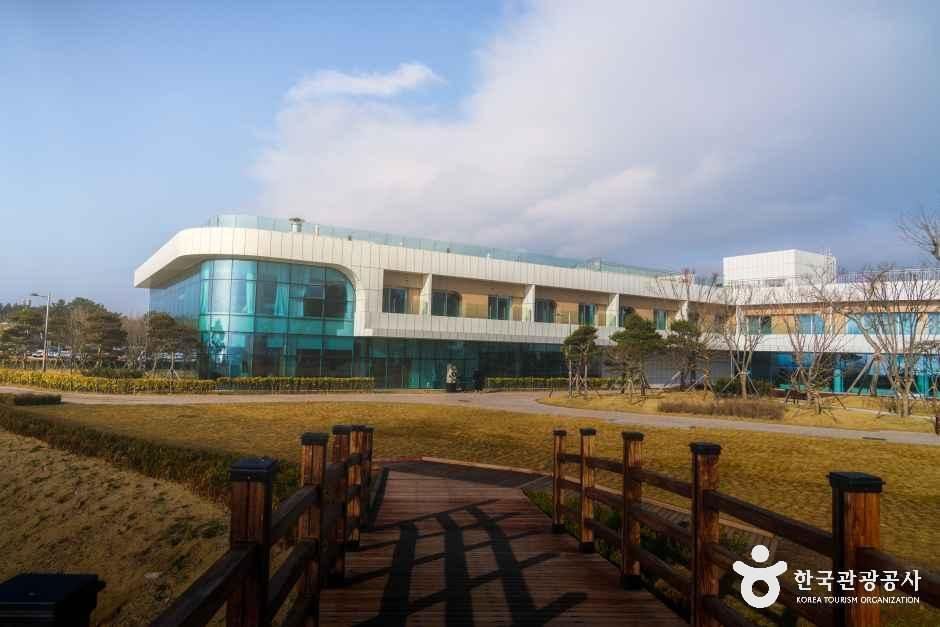
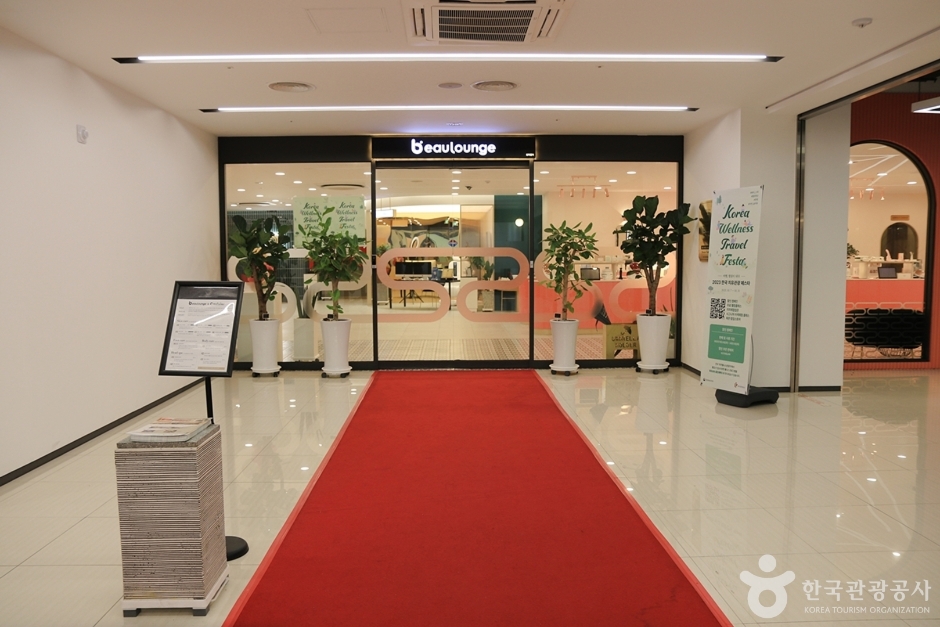
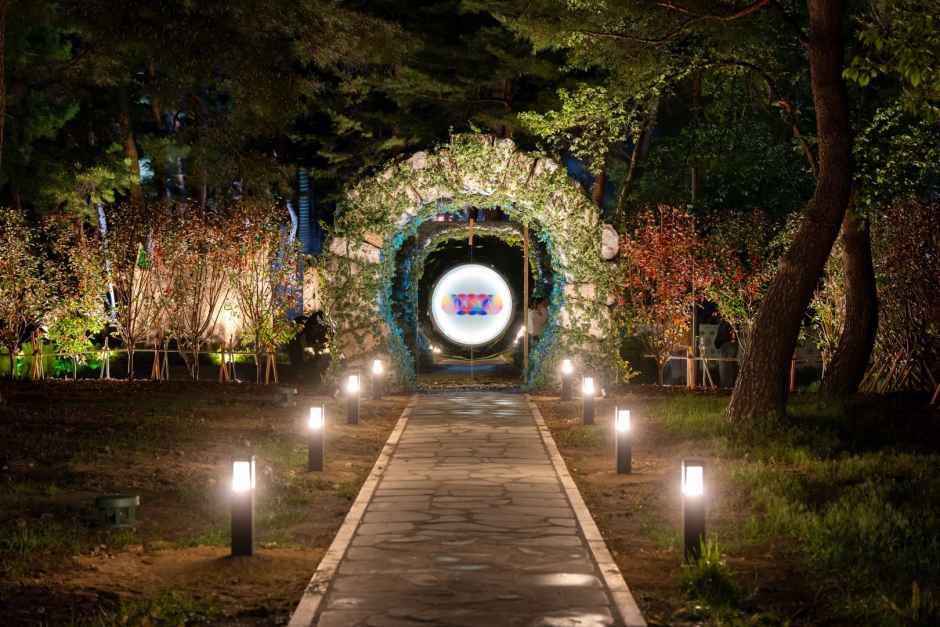
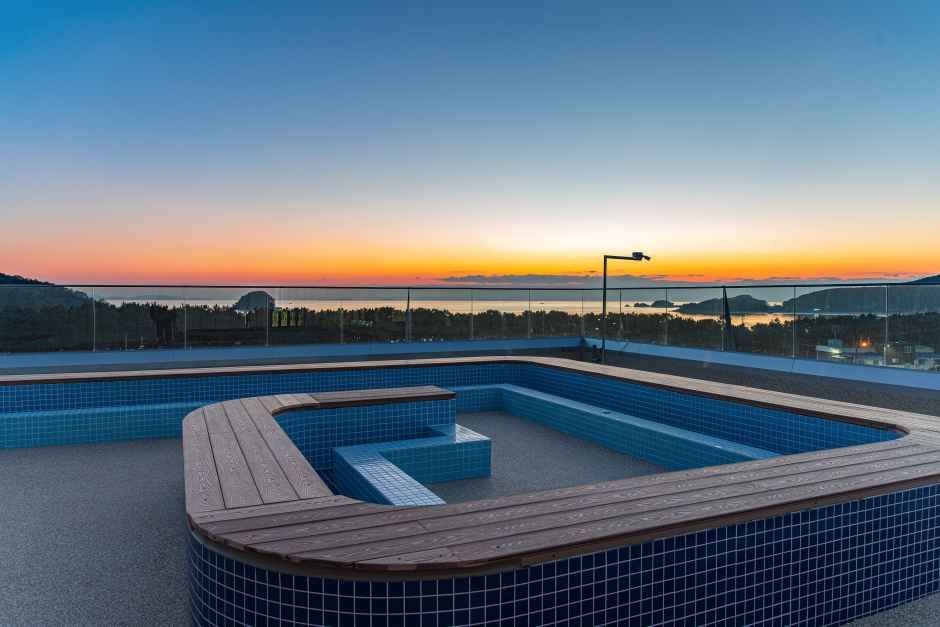
Spa World in The-K Hotel Gyeongju opened in June 2001 and aims to guarantee guest satisfaction with excellent amenities, such as their sauna facilities, hot springs, sports center, and swimming pool. The hot springs were developed by using all-natural hot spring water from 630 meters underground. Spa World's hot spring water is famous for having a high concentration of alkaline (9.12 pH). Impurities in the water are filtered out, boosting the beneficial effects of hot spring water on the skin, muscle fatigue, and back pains.


Inquiry

+82-54-770-9260


Homepage

www.thek-hotel.co.kr


Information Use

Capacities : Men 600 / Women 500

Contact and Information : • 1330 Travel Hotline: +82-2-1330
(Korean, English, Japanese, Chinese)
• For more info: +82-54-770-9260

Parking facilities : Available

Day off : Second Monday of every month

Hours : [Hot Spring] 06:00-21:00 (Last admission 20:00)
* Outdoor hot spring may be subject to closure depending on weather conditions in winter.


More information

Parking Fees
Free

Restrooms
Available

Admission Fees
[Hot Spring Sauna] 06:00-21:00 (Last admission 20:00)
Adults 13,000 won / Children 6,000 won / Preschoolers 4,000 won

[Sauna & swimming pool] Weekdays 06:00-20:30 (Last admission 19:30)
Adults 22,000 won / Children 11,000 won / Preschoolers 11,000 won

[Sauna & exercise room] 06:00-20:30 (Last admission 19:30)
Adults 22,000 won / Children 11,000 won

* Adults (middle school students and older) / Children (ages 6 - elementary school student) / Preschoolers (ages 5 and under)

Location

45, EXPO-ro, Gyeongju-si, Gyeongsangbuk-do

Yeongwol Tourism Center (영월관광센터)

Yeongwol Tourism Center (영월관광센터)

2026-04-08

126-3 Cheongnyeongpo-ro, Yeongwol-eup, Yeongwol-gun, Gangwon-do

Yeongwol Tourism Center, also called Y-Square, is a cultural complex developed to support integrated tourism in the former coal mining area of Yeongwol and to help establish travel routes throughout the region. Visitors can access information on major tourist attractions, cultural heritage, natural landscapes, and historical sites, along with a range of convenient services. The center also offers customized travel itinerary guidance based on visitors’ needs. On the second floor are exhibitions and experience halls.

Shrine for Prince Wolsan (월산대군사당)

Shrine for Prince Wolsan (월산대군사당)

2026-03-23

1243-39 Hoguk-ro, Deogyang-gu, Goyang-si, Gyeonggi-do

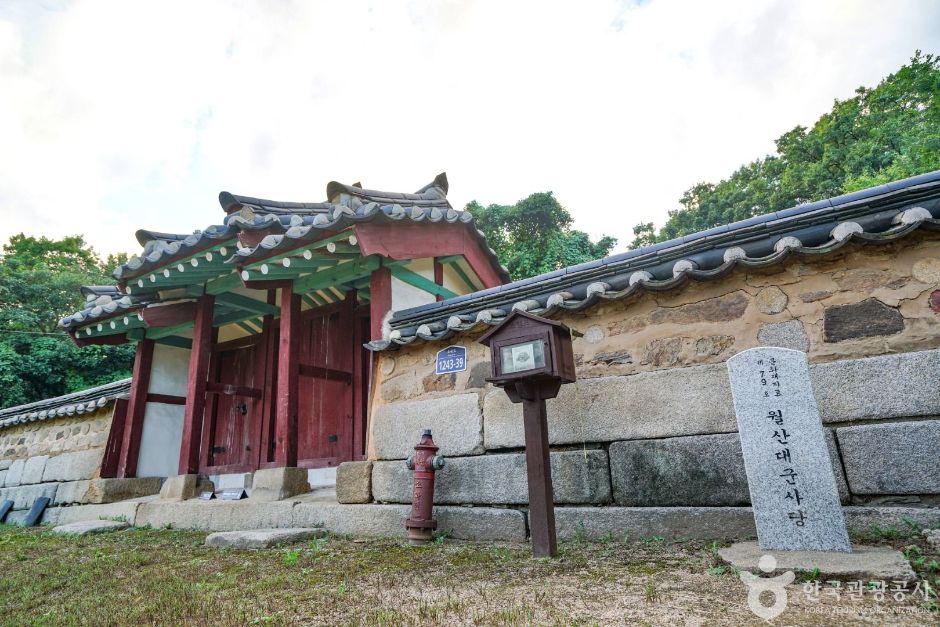
Prince Wolsan, born Yi Jeong, was the elder brother of King Seongjong, the 9th ruler of the Joseon dynasty. He was regarded as an accomplished writer, with his reputation said to have extended even to China. King Seongjong is known to have frequently visited Prince Wolsan’s residence, where he named a pavilion Pungwoljeong after the prince’s pen name. The prince is also remembered for his loyalty and close fraternal bond with the king. Adjacent to the shrine lies Prince Wolsan’s tomb. The shrine itself was established before 1693, with the current structures reconstructed in 1786. Preserved within the shrine is a small palanquin known as a yoeo, which was used to carry the prince’s spirit tablet.

Goyang Special Tourist Zone (고양관광특구)

Goyang Special Tourist Zone (고양관광특구)

2026-03-23

1271-1 Jungang-ro, Ilsandong-gu, Goyang-si, Gyeonggi-do

“Special tourist zones” are areas designated by law for the concentrated development of tourism infrastructure and services, including visitor guidance and promotional activities, with the aim of attracting international travelers. Among them is the Goyang Special Tourist Zone, which was established to draw both domestic and overseas visitors while positioning the city as an international tourism hub. The zone brings together key attractions such as KINTEX, a major venue for the MICE industry, along with Ilsan Lake Park, La Festa, Western Dome, One Mount, and Aqua Planet Ilsan. The area hosts a variety of cultural programming, including live performances, music contests, and seasonal festivals, reflecting its ongoing role as a hub for entertainment and tourism.

Jagyuru Pavilion and Gwanpungheon Hall (자규루 및 관풍헌)

Jagyuru Pavilion and Gwanpungheon Hall (자규루 및 관풍헌)

2026-03-30

61 Jungang-ro, Yeongwol-eup, Yeongwol-gun, Gangwon-do

Gwanpungheon Hall was used as a magistrate’s office to handle local affairs during the Joseon Dynasty. The site consists of an annex and a 3x3 kan building (a traditional Korean structural unit). Currently, it serves as a mission center for the Bodeoksa Temple of the Jogye Order of Korean Buddhism. About 50 meters away from the hall is Jagyuru Pavilion, where King Danjong (r. 1452–1455) stayed during his exile after losing the throne to King Sejo (r. 1455–1468). It is said that Danjong frequently visited this pavilion to write poetry known as jagyu poetry. In these works, he compared his own grief to the blood-spitting cries of the jagyu (oriental scops owl), a bird characterized by its painful and mournful call. The pavilion was originally built by County Magistrate Shin Kwon-geun in 1428 (the 10th year of King Sejong's reign) and was initially called Maejungnu. It was renamed after Danjong wrote his famous poems there. The buildings were eventually lost and forgotten until they were rediscovered and restored by Gangwon Provincial Governor Yun Sa-guk in 1791 (the 15th year of King Jeongjo's reign). (Source: National Heritage Administration)

Chungju Ecology Experience Museum (충주자연생태체험관)

Chungju Ecology Experience Museum (충주자연생태체험관)

2026-03-11

260 Jideung-ro, Dongnyang-myeon, Chungju-si, Chungcheongbuk-do

Chungju Ecology Experience Museum is an interactive space designed to foster appreciation for nature through hands-on exhibits, educational programs, and its surrounding natural environment. While geared toward children, it offers a relaxing and engaging experience for visitors of all ages. The complex includes a basement, three above-ground floors, Yonggyo Bridge Ecology Park, and an annex building. The basement features a safe indoor play area with slides and activity equipment. The first and second floors include a screening room for nature documentaries, exhibition halls introducing rare native species and their characteristics, and a collection of ecology-related books.

Chungju Seokjongsa Temple (석종사(충주))

Chungju Seokjongsa Temple (석종사(충주))

2026-03-11

271-56 Jikdong-gil, Chungju-si, Chungcheongbuk-do

Seokjongsa Temple, affiliated with the Jogye Order of Korean Buddhism, is located on the slopes of Geumbongsan Mountain on the outskirts of Chungju. The temple complex includes Daeungjeon Hall, Ohwagak Hall, a bell pavilion, meditation quarters, and several auxiliary buildings. Rather than serving only ordained monks, the temple also provides space for lay Buddhists to stay and practice. Through its Templestay programs, visitors can experience meditation and learn about Buddhism in a quiet setting. The temple also operates a Buddhist college that offers systematic education on the Buddha’s teachings for both practitioners and the general public. In addition, Seokjongsa Templ houses several cultural heritage items, including the Bulseol Sasimijang-gyeong and Incheon Anmok Gweonsang.

Chungjuho Jongdaengi Trail Suspension Bridge (충주호 종댕이길 출렁다리)

Chungjuho Jongdaengi Trail Suspension Bridge (충주호 종댕이길 출렁다리)

2026-03-11

Jongmin-dong, Chungju-si, Chungcheongbuk-do

Chungjuho Suspension Bridge can be reached while walking along Jongdaengi Trail, a scenic lakeside trail around Chungjuho Lake. After passing the second observatory, visitors must climb a steep staircase, often referred to as a “Kkaldakgogae Hill,” leading up to the bridge. From the suspension bridge, one can take in panoramic views of Chungjuho Lake, and many visitors stop here to take photos against the scenic backdrop. Continuing past the bridge and up another set of steep steps leads to a fork in the path toward the forest center and an ecological pond.

Chungju Lake Tour (충주호 유람선)

Chungju Lake Tour (충주호 유람선)

2026-03-11

3827 Worak-ro, Danseong-myeon, Danyang-gun, Chungcheongbuk-do

The best way to enjoy Chungjuho Lake is by taking the Danyangho Cruise. The cruise allows passengers to take in the eight scenic views of Danyang and the surrounding landscapes, often described as resembling a traditional landscape painting, while sailing across the vast Cheongpungho Lake, known as the “inland sea.” Chungjuho Lake, which spans Chungju, Jecheon, and Danyang, has five cruise terminals, with Janghoe Quay being the most popular. Cruises departing from Janghoe Quay offer stunning views of Danyang’s landmarks, including Oksoonbong and Gudambong peaks, Geumsusan Mountain’s Jebibong Peak, and Oksoondaegyo Bridge. The round trip takes approximately one to one and a half hours.

Sujupalbong Mountain (수주팔봉)

2026-03-11

Salmi-myeon, Chungju-si, Chungcheongbuk-do

Sujupalbong Mountain is located in Hyangsan-ri, Salmi-myeon, Chungju in Chungcheongbuk-do. Though relatively low in elevation, the eight peaks are formed of sharp, rugged rock, giving them a striking and imposing appearance. The name “Sujupalbong,” meaning “eight peaks of suju,” comes from the view across the Dalcheon Stream from Palbong Village in Munju-ri. From that vantage point, the eight peaks appear to rise in a row from the riverbank to the summit. Seen from above, the scenery resembles a traditional East Asian landscape painting. Sheer rock formations such as Songgotbawi Rock, Jungbawi Rock, and Kalbawi Rock stand like blades along vertical cliffs, creating dramatic views.

Suanbo Hot Springs Foot Bath Path (수안보온천 족욕길)

2026-03-11

35 Jujeongsan-ro, Suanbo-myeon, Chungju-si, Chungcheongbuk-do

Suanbo Hot Springs is believed to have flowed naturally since ancient times. Historical records show that it existed as early as the ninth year of King Hyeonjong of Goryeo, and the Annals of the Joseon Dynasty note that King Taejo visited the springs to treat a severe skin condition, highlighting its long history. Today, it is the only hot spring in Korea managed under a centralized system by the city of Chungju, with a strong focus on preserving its natural resources. The spring water, drawn from about 250 meters underground, is mildly alkaline and contains beneficial minerals such as calcium, sodium, fluoride, magnesium, and lithium. Foot baths using Suanbo’s mineral-rich water are known to promote circulation and metabolism, relax tense muscles, relieve fatigue and stress, and support restful sleep.