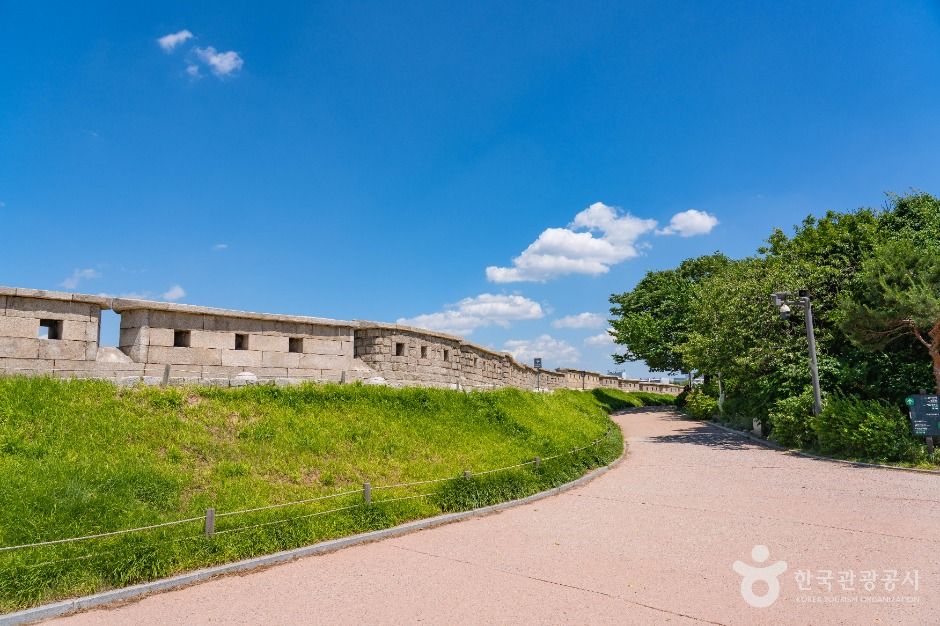
Naksan Park (낙산공원)
2025-12-16
41 Naksan-gil, Jongno-gu, Seoul
+82-2-743-7985
Naksan Mountain (alt. 125 meters) is one of the four inner mountains of Seoul, and can be accessed by following the road leading to the mountain entrance from Daehangno and Dongdaemun. It was also called Naktasan Mountain, which can be translated to Camel Mountain, because the terrain resembled a camel's back. It also had another name, Taraksan Mountain, “tarak” meaning fermented milk, because there was a royal ranch in the area that supplied milk to the palace. After the 1960s, the original appearance of Naksan Mountain disappeared due to apartments and dense housing, and the Seoul Metropolitan Government established a restoration plan. As part of this plan, a park project was carried out, and it opened Naksan Park in July 2002. Currently, Naksan Park has established itself as a resting place for citizens to feel the beautiful atmosphere of Hanyangdoseong, or the Seoul City Wall, and green forests. It has gained much popularity as a place for seeing the most beautiful night view in Seoul.
◎ Travel Information to Discover Hallyu’s Charm - Netflix Series "KPop Demon Hunters (2025)"
The fortress walls at Naksan Park served as the backdrop for Rumi and Jinu’s conversation in the Netflix series "KPop Demon Hunters." The view of the walls and the cityscape beyond adds to the unique atmosphere of the show, and visiting Naksan Park in person offers an expansive and memorable view of Seoul’s city center.
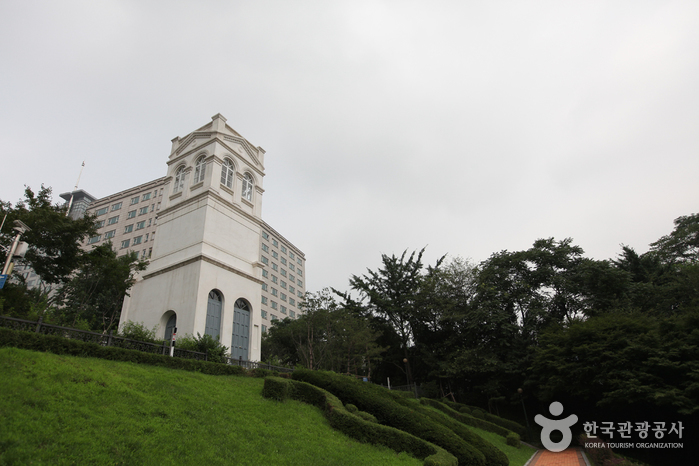
Seoul Former Russian Legation (서울 구 러시아공사관)
2020-06-18
21-18, Jeongdong-gil, Jung-gu, Seoul
+82-2-3396-5882
The Russian Legation was built in a Renaissance style in 1890. Russian architect, A. J. Scredin Sabatine designed the structure. In 1895, during the Joseon dynasty, the Eulmisabyeon Incident took place as a show of force by the Japanese.
Empress Myeongseong-hwanghu was emerging as a strong figure in Korea at a time when a power struggle between Japan, China, Russia, and other powers were taking place. Japanese Minister, Miura Goro saw her as a threat and ordered her assassination. After hearing news of the Empress’s assassination, King Gojong and the Crown Prince sought refuge in the Russian Embassy for one year.
After 1945, the Soviet Union took over the embassy until it was almost completely destroyed by a fire during the Korean War [1950~1953]. The only remaining parts of the building are the tower and basement areas. The building was restored to its current condition in 1973 and is now enjoyed by many as a public park.
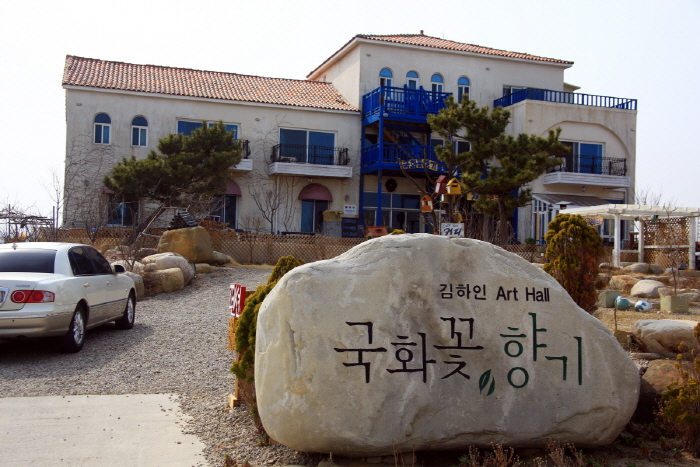
Kim Hain Art Hall Pension (김하인 아트홀 국화꽃향기)
2020-08-04
120-4, Jajakdoseonsa-gil, Goseong-gun, Gangwon-do
+82-33-636-5679
Famous as a filming site for the popular K-drama "Autumn in My Heart (2000)," Kim Hain Art Hall opened in October 2008 in dedication to Kim Hain, the novelist of "The Scent of Love." The center serves as a cultural space for students and general visitors. Spread over four floors, Kim Hain Art Hall doubles as an experience center and a pension, featuring a literature lecture room, author introduction room, a screening room, and moviestar room.
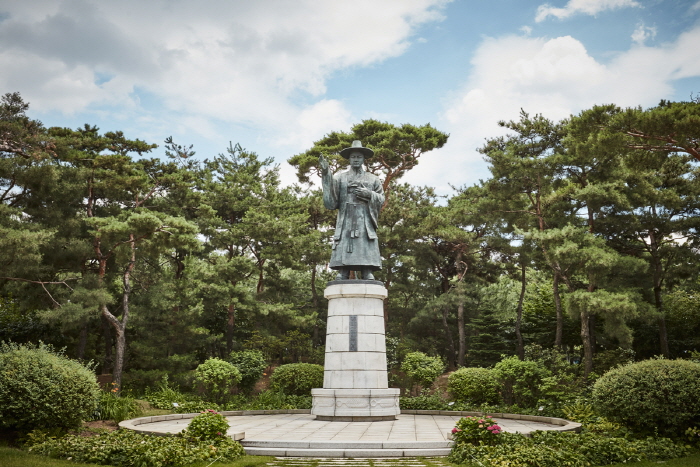
Jeoldusan Martyrs' Shrine (절두산순교성지)
2024-03-12
6 Tojeong-ro, Mapo-gu, Seoul
+82-2-3142-4434
Jeoldusan Martyrs' Shrine is the site where many Catholic believers were executed in 1866 due to persecution. In commemoration of the 100th anniversary of the martyrdom, the Korean Catholic Church opened the Memorial Hall in October 1967, exhibiting materials, relics, and souvenirs related to the Korean Catholic Church and operating a museum. Pope Johannes Paulus II visited the site in 1984, and Mother Teresa visited in 1985.
![Hwajinpo Beach [National Geopark] (화진포 (강원평화지역 국가지질공원))](http://tong.visitkorea.or.kr/cms/resource/87/217287_image2_1.jpg)
Hwajinpo Beach [National Geopark] (화진포 (강원평화지역 국가지질공원))
2021-06-23
Hyeonnae-myeon, Goseong-gun, Gangwon-do
+82-33-249-3881
Hwajinpo Lake is the largest lagoon in Korea, created by a section of the ocean being closed off when two opposing sand spits merged. This unique formation and the ecosystem that came to live on the sand bar are highly valued. The water in the lagoon was a mix of fresh and salt water, creating a special environment for aquatic animals of both types to live together. The lake is in the shape of a figure eight, with the southern lake being larger than the northern lake, although the northern lake is still connected with the ocean through a small stream.
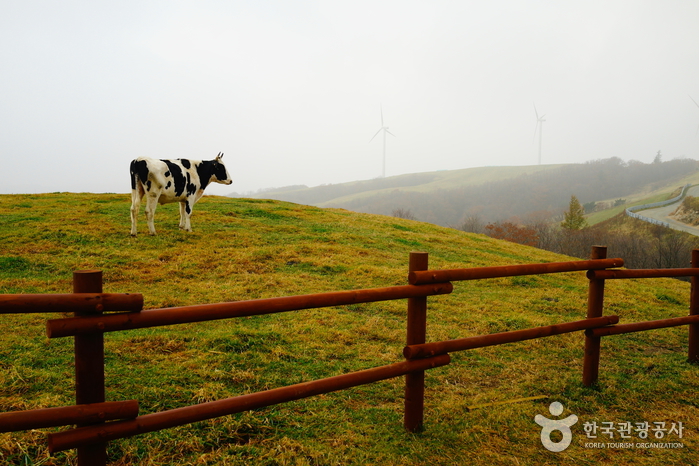
Samyang Ranch (삼양목장)
2019-02-15
708-9, Kkotbadyangji-gil, Pyeongchang-gun, Gangwon-do
+82-33-335-5044~5
Asia's largest green pasture, this vast meadow is where milking cows feed on the fresh, clean grass. The view from the 1,470m high plateau is remarkable as well. The ranch has been used as a filming site for many dramas and movies.
![Byeongsanseowon Confucian Academy [UNESCO World Heritage] (병산서원 [유네스코 세계유산])](http://tong.visitkorea.or.kr/cms/resource/63/2620863_image2_1.jpg)
Byeongsanseowon Confucian Academy [UNESCO World Heritage] (병산서원 [유네스코 세계유산])
2024-05-29
386 Byeongsan-gil, Andong-si, Gyeongsangbuk-do
82-54-858-5929
Before it became a Confucian academy, Byeongsanseowon Confucian Academy was originally located in Pungsang-hyeon under the name Pungakseodang School, which was used as a educational institution since the Goryeo dynasty by a political party known as the Sarim Party. It was moved to its current location in Byeongsan by a well-respected Confucian scholar named Yu Seong-nyong, penname Seoae, in 1572, and renamed to Byeongsanseowon in 1614.
In 1863, Byeongsanseowon was recognized by the king to receive support as a private Confucian academy. The lecture hall and shrine were reconstructed in 1921 and 1937 respectively as part of preservation efforts made during the Japanese occupation. This academy is designated as a Historic Site, housing a collection of 1,000 documents and 3,000 books, including works by Yu Seong-nyong.
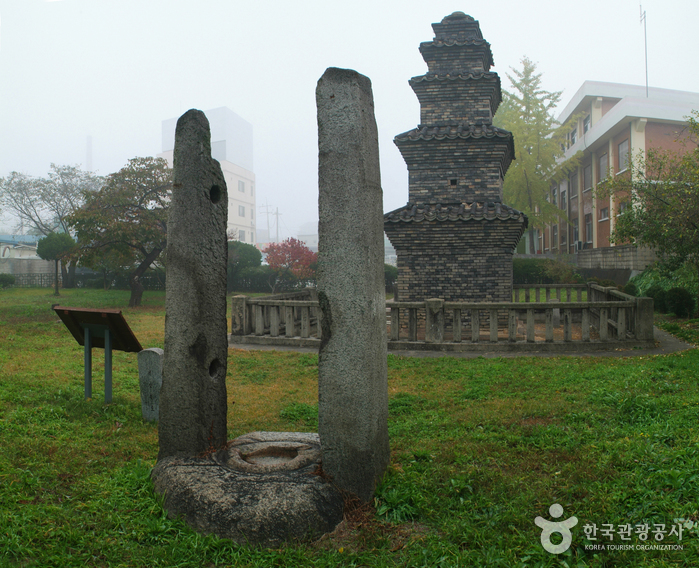
Dangganjiju (Flagpole Supports) in Unheung-dong and Five-Story Brick Pagoda in Dongbu-dong (안동 운흥동 당간지주와 오층전탑)
2020-04-02
231, Eunheung-dong, Andong-si, Gyeongsangbuk-do
+82-54-856-3013
In Dongbu-dong, there is a 8.35 meters (27 4/10 feet) high brick pagoda from the Unified Silla Kingdom Period (AD 654-935). Each brick is 27.5 cm (10 4/5 inches) long, 6 cm (2 1/3 inches) thick and 12.5 cm wide (4 9/10 inches). In the past, it was 7 stories high. In 1598, during the Japanese Invasion of Korea, the top motif was destroyed and the structure was further damaged during the Korean War. The pagoda was repaired in 1962. Rumour has it that the pagoda was once located inside the old Beomnimsa Temple. The Dangganjiju, which is located 5 meters west from the pagoda, supports this story. One can see the small place to keep sculptures of the god on each floor.
By looking at these with the tiled roof, it is possible to see what style was fashionable. On the second story from the southern viewpoint, one can see the beautiful remnants of the In Wang-sang statue. It is conveniently located on the left side of an open space at the end of the parking lot at Andong Train Station.
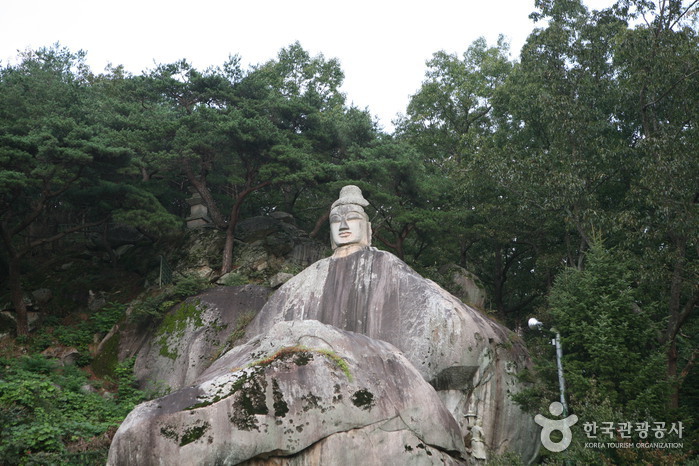
Rock-carved Standing Buddha in Icheon-dong, Andong (안동 이천동 마애여래입상)
2020-04-03
Icheon-dong, Andong-si, Gyeongsangbuk-do
+82-54-840-5225
Maaekseobulsang (Rock-carved Standing Buddha) in Icheon-dong, Andong is also referred to as Jebiwon Statue due to the small temple of the same name nearby. This statue is unique as the head and the body are not carved from the same rock. The head was carved from a different rock then placed over a large rock relief of the Buddha's body. This type of technique is frequently found in those built during the Goryeo dynasty. The distinct features and carving methods that can be observed from this particular statue are speculated to be from the 11th century. Although there is a small amount of damage on the back of the head, the statue is well-preserved overall.

Samcheong-dong Street (삼청동길)
2025-01-22
107 Samcheong-ro, Jongno-gu, Seoul
It is said that Samcheong-dong was named from the story about the three "cheong" (Chinese character meaning clean) of the area, namely the mountain, water, and people. Another theory is that the origin of the region's name came from Samcheongjeon Hall where three tablets called "Taecheong," "Sangcheong," and "Okcheong," were set up based on Taoism. Samcheong-dong Street features a mixture of old scenes of hanok buildings with traditional beauty and modern scenes of galleries and cafés, creating a unique atmosphere. Visitors can feel the abundant cultural mood at every corner of the street through the art galleries, museums, antique shops, and quiet pathways.
 English
 한국어
한국어 日本語
日本語 中文(简体)
 Deutsch
 Français
 Español
 Русский


