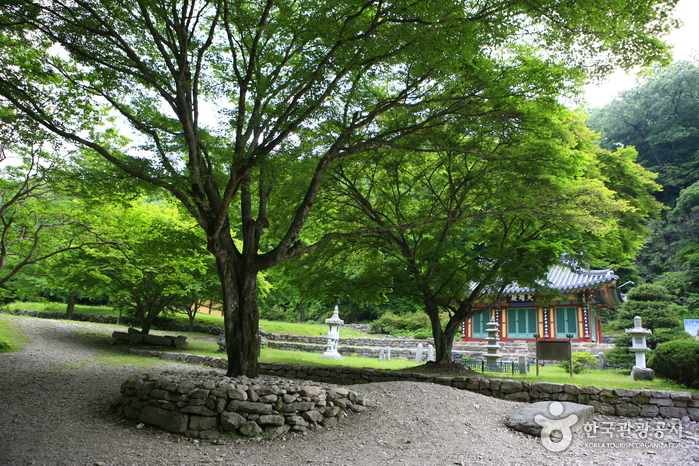
Sunchang Gangcheonsa Temple (강천사 (순창))
2024-04-07
270, Gangcheonsan-gil, Sunchang-gun, Jeonbuk-do
+82-63-652-5420
Located approximately 1.8 kilometers from the entrance of Gangcheonsan County Park, Gangcheonsa Temple was built by Monk Doseon during the first year of Queen Jinseong of Silla (AD 887). In the third year of King Chungsuk of Goryeo (1316), the temple saw the addition of a five-story stone pagoda, built by Monk Deokhyeon. At its peak, the temple was said to have had 12 hermitages and housed 1,000 monks. It was burned down during the Imjin War (1592-1598), leaving only the pagoda, but was rebuilt a few years later by Monk Soyo during the 37th year of King Seonjo (1604). Unfortunately, the temple was burned down again in the Korean War, but was once again restored to its original state in 1959.
Cultural assets found at the temple include Stone Guardian Post of Chungsin-ri & Namgye-ri, Sunchang Guesthouse, and the Three-story Stone Pagoda of Sunhwa-ri. Nearby tourist attractions include Geumseongsanseong Fortress, Yongsopokpo Falls, Gangcheonho Lake, Damyangho Lake, Chuwolsan Mountain, Huimunsan Mountain, and Naejangsan National Park.
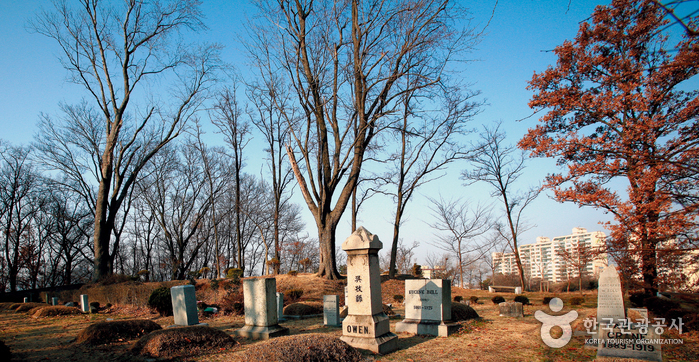
Yangnim-dong Missionary Cemetery (양림동 선교사 묘지)
2021-05-28
77, Jejung-ro, Nam-gu, Gwangju
+82-62-607-2333
The Yangnim-dong Missionary Cemetery is the final resting place of 23 missionaries who brought Christianity to Gwangju and led the movement to free the nation from under Japanese colonial rule. Yangnim-dong in Gwangju Metropolitan City was the main area in which Priest Bae Yu-ji and Dr. Clement Owen carried out their work as the first missionaries to Jeollanam-do.
Located nearby is a monument dedicated to Priest Bae Yu-ji and the Owen Memorial Building, built in honor of Dr. Owen and his grandfather. Both memorials are cultural assets and particularly prized by locals of the Christian faith.
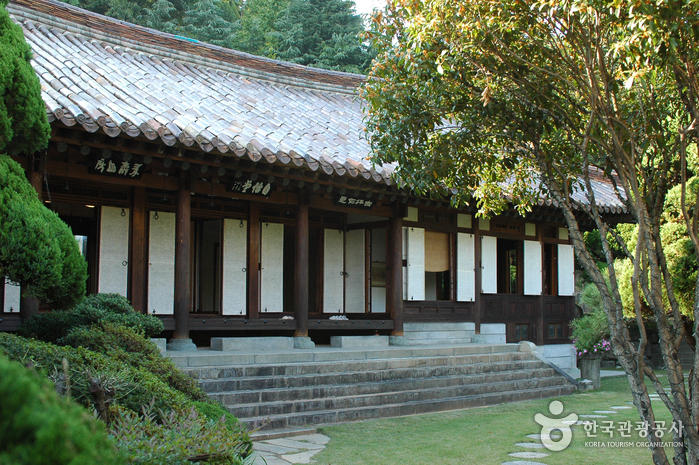
House of Choi Seung-hyo (최승효가옥)
2023-03-08
29-4, Yangchon-gil, Nam-gu, Gwangju
+82-62-607-2332
The House of Choi Seung-hyo is a traditional residential building located on the southeastern slopes of Yangnimsan Mountain. The rectangular building is open to the east, has 8 kan (the space between two pillars) in the front and 4 kan to the sides, and is graced by a traditional hipped and gabled roof. Since the building was constructed in the 1920s, it offers a valuable glimpse into the architectural style of Korean houses at the end of the Japanese colonial period. Choi Sang-hyeon was an activist who offered his attic as a place of refuge for other activists.
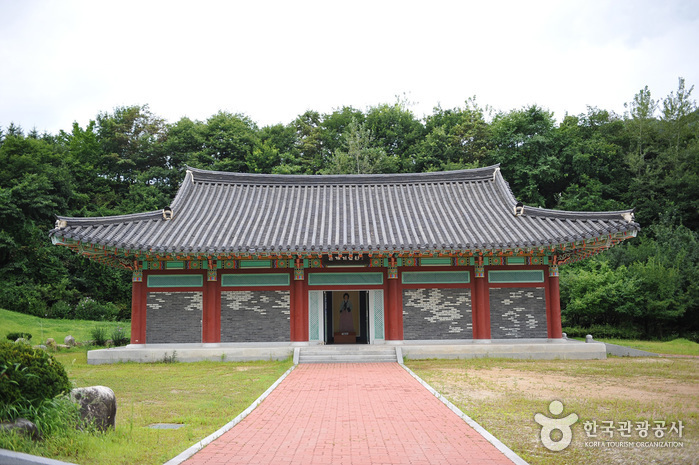
Birthplace of Nongae (논개생가)
2024-04-07
558, Uiam-ro, Jangsu-gun, Jeonbuk-do
+82-63-350-1636
Nongae was born in Juchon Village in the 7th year of King Seonjo (September 3, 1575). A clever and beautiful young lady, Nongae voluntarily registered as a gisaeng (female entertainer) at the age of 19 when the nation was at risk of invasion during the Imjin War. While entertaining one evening, she led Japanese general Keyamura Rokusuke to the edge of a cliff and flung her arms around him, casting both herself and the general to their deaths in the Jinju Namgang River.
To commemorate her faithfulness and allegiance to her country, a project to restore her place of birth was completed in September 2000, drawing many visitors. Nearby Nongae’s birthplace are many tourist attractions, including Deogyusan Mountain and Odongje Pass and a hiking trail that connects Jangansan County Park, Jijigyegok Valley, and Donghwa Dam.

Eco Land Theme Park (에코랜드테마파크)
2026-03-19
1278-169 Beonyeong-ro, Jocheon-eup, Jeju-si, Jeju-do
+82-64-802-8000
Eco Land Theme Park is built in the 1 km² Gotjawal primeval forest. Visitors can explore around in a train that looks like an 1800s steam-powered Baldwin train. The seven Baldwin train look-alikes (Lincoln Train) operated in the park were specially ordered and manually manufactured in the UK. In the large Gotjawal forest with railway trails, visitors can see a variety of plants, animals, and insects living in the mysterious Gotjawal forests, while touring around by special train. It also has a lake for visitors to experience the ecosystem of the forest, take a walk and enjoy a picnic. Besides, there are many things to enjoy including Eco Bridge, Eco Windmill, Picnic Garden, Kid’s Town, Eco Road, Bare Foot on Scoria, Floating Café, and topiary artworks.

Goryeosan Mountain (고려산)
2020-04-27
Gocheon-ri, Ganghwa-gun, Incheon
+82-32-930-3515
Goryeosan Mountain, once referred to as Oryeonsan, is a mountain rich in folklore. Legend has it that in the year 416 (during the reign of King Jangsu of Goguryeo), a Buddhist monk named Cheonchukguk climbed Goryeosan Mountain and found Oryeonji Pond where the five-colored lotus flowers bloomed. The monk picked the lotus flower petals and blew them into the air. He then built a temple where each of the petals had landed, naming the temples according to their corresponding color: Jeokseoksa Temple, formerly Jeokryeonsa Temple (red lotus), Baengnyeonsa Temple (white lotus), Cheongryeonsa Temple (blue lotus), Hwangryeonsa Temple (yellow lotus), and Heungnyeonsa Temple (black lotus).
Around 130 dolmens are distributed along the foot of Goryeosan Mountain. Sirumisan Mountain, on the northern side of Goryeosan Mountain is said to have been the birthplace of General Yeongaesomun of the Goguryeo Kingdom.
Hambaeksan Mountain (함백산)
2022-10-18
4246-55, Taebaeksan-ro, Taebaek-si, Gangwon-do
+82-33-550-2828
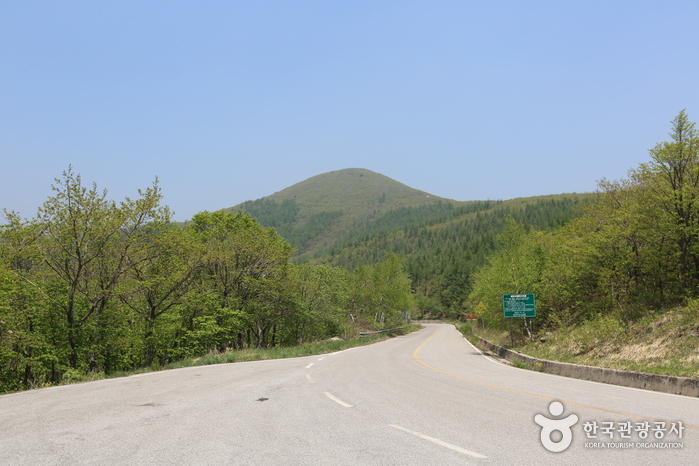
With an elevation of 1,573 meters above sea level, Hambaeksan Mountain is the tallest mountain in the eastern part of Gangwon-do. The main ridge of the mountain stretches between the city of Taebaek to the east and Yeongwol and Jeongseon counties to the west. The mountain offers a fine vantage point from which to get a sweeping look at the entire region (including Taebaeksan and Baegunsan mountains) and commands a striking view of the sunrise over East Sea. Hambaeksan Mountain is particularly well known for its breathtaking snowscapes and extensive wildflower beds.

Camellia Hill (카멜리아힐)
2026-02-12
166 Byeongak-ro, Seogwipo-si, Jeju-do
Camellia Hill is a camellia arboretum that was created on a 172,000 square meter plot of land in Sangchang-ri, Jeju-do. The arboretum is home to 6,000 camellia trees of 500 different species including species that are known to produce the world’s largest and earliest blossoms. In addition to camellia trees, the arboretum also boasts palm trees, wildflowers, and other plants as well as a sprawling grass plaza and an ecological pond. Auxiliary facilities include a gallery exhibiting camellia-themed crafts and a multipurpose seminar room. Camellia Hill also offers a variety of lodging facilities ranging from thatched-roof cottages and wooden cabins to steel houses and a condominium-type resort.◎ Travel information to meet Hallyu’s charm - variety show "EXchange / Transit Love 3"This is where Ju-won and Yu-jeong had their memorable date, making many viewers feel excited for them. The arboretum is beautiful year-round but is especially spectacular in winter when the red camellias are in bloom.
Jehwangsan Park (제황산공원)
2021-11-01
52, Jungwondong-ro, Jinhae-gu, Changwon-si, Gyeongsangnam-do
+82-55-712-0442
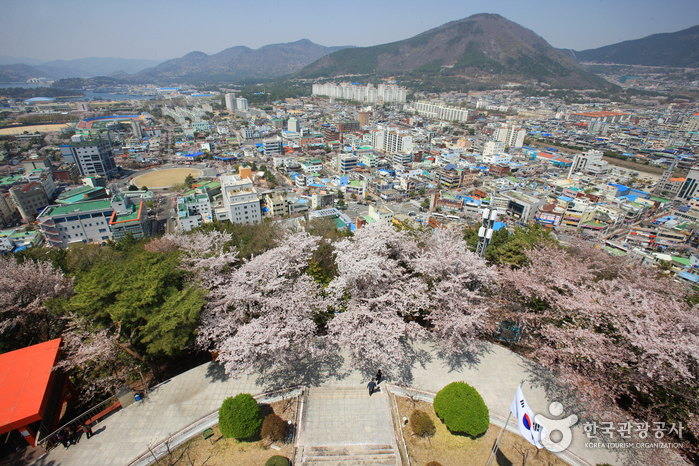
Jehwangsan Park, located on Jehwangsan Mountain at the heart of Jinhae, is home to the nine-story Jinhae Tower. The tower, which symbolizes a Korean naval warship, stands at the top of a 365-step staircase and commands a splendid view of both the city and the coastline. On the first and second floors of the tower is the Jinhae City Museum, exhibiting folk models and relics excavated from Jinhae.
Jinhae is Korea’s representative naval port city and is rife with cultural relics related to Admiral Yi Sun-Sin (1545-1598), a Korean hero who led the nation to victory in naval battles against Japanese forces during the Imjin War (1592-1598). The city is also known as the venue of the famous Jinhae Gunhangje Festival, which is widely known as the nation’s largest cherry blossom festival.

Semiwon (세미원)
2023-01-19
93, Yangsu-ro, Yangpyeong-gun, Gyeonggi-do
+82-31-775-1835
Semiwon is a botanical garden solely focused on lotus flowers. The garden houses the world’s only museum dedicated to showcasing lotus flowers in daily living, cooking, and writing. The 180,000 square-meter park consists of ponds through which water is filtered and purified before flowing back into the Hangang River. The park is most beautiful in summer when the lotus blossoms are in full bloom but is also decorated with seasonal flowers throughout the year. Additional facilities at Semiwon include the Environment Learning Center, Experience Center, and exhibition areas.
 English
 한국어
한국어 日本語
日本語 中文(简体)
 Deutsch
 Français
 Español
 Русский


