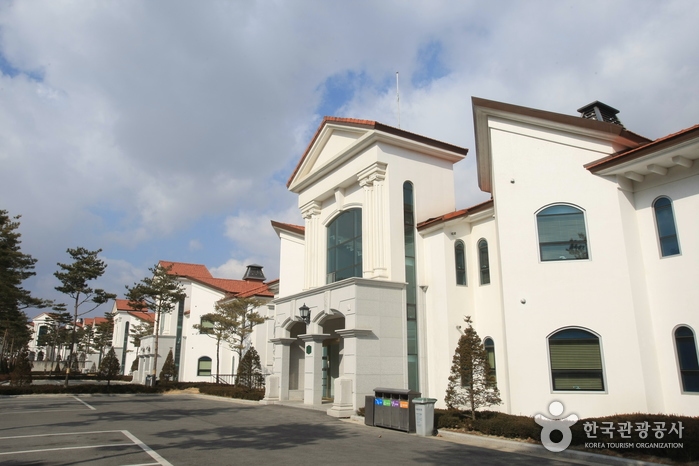
Pine Ridge Resort Villa (파인리즈리조트 빌라)
2025-03-16
267, Jaembeoridong-ro, Goseong-gun, Gangwon-do
+82-33-630-6700
Pine Ridge Resort Villa is an independent high-class golf and spa resort with 168 rooms located on the golf course. The villa offers comfort and relaxation in a European-style villa. The rooms provide open views to the beautiful natural landscape of the surrounding golf course.
The resort’s spa facility uses a hot spring for its water source that is rich in alkaline with an optimal temperature at 45 degrees Celsius. Guests can enjoy the utmost comfort and convenience through these superb facilities and services. Subsidiary facilities include golf practice range, banquet hall, Azalea retail shop, restaurants, café, and more.
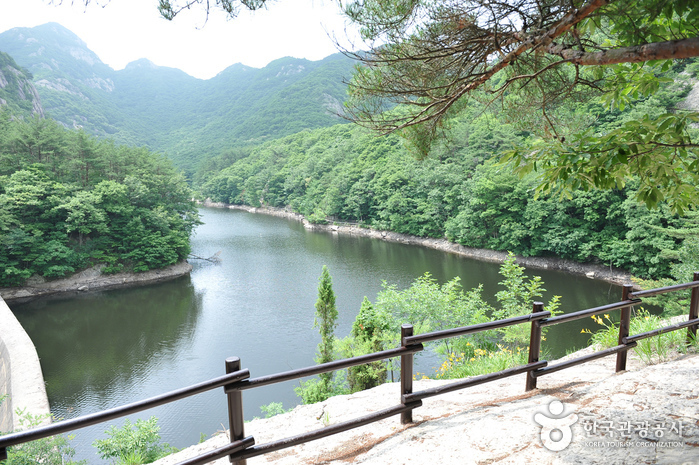
Naebyeonsan Mountain (내변산)
2024-04-07
232, Naebyeonsan-ro, Buan-gun, Jeonbuk-do
+82-63-584-7808
The Byeonsanbando Peninsula has a shoreline that stretches 99 kilometers, protruding into the west sea in Jeollabuk-do, with the Saemangeum, the world’s longest man-made sea barrier, to the north and Gomsoman Bay at its south shore. The peninsula is part of Byeonsanbando National Park, which is widely known for its natural beauty. Its interior mountain range is known as Naebyeonsan Mountain (Inner Byeonsan Mountain.) while the outer region near the sea is known as Oebyeonsan Mountain (Outer Byeonsan Mountain).
The center of Mountain Naebyeonsan includes the highest peak of Byeonsanbando peninsula, Uisangbong Peak (509 meters) and Nakjodae (Sunset Viewpoint), Wolmyeongam Hermitage, Bongnaegugok Valley as well as Jiksopokpo Waterfall. The surrounding mountains and valleys of Byeonsan Mountain are not particularly high, standing at an altitude of around 400-500 meters, but the magnificent formation of mountains and valleys as well as the breathtaking view of the sunset from Nakjodae make it a must-see sight.
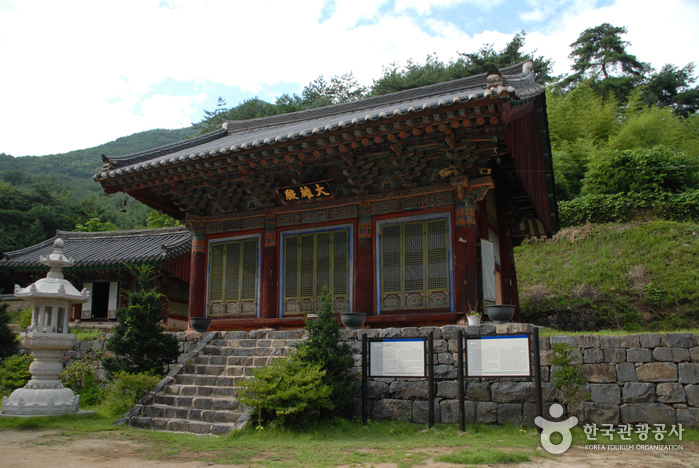
Geumsan Boseoksa Temple (보석사 (금산))
2021-11-29
30, Boseoksa 1-gil, Geumsan-gun, Chungcheongnam-do
+82-41-753-1523
Located on the southeastern slope of Jinaksan Mountain (732 meters), about six kilometers away from Geumsan-eup, Boseoksa Temple was founded by the great Buddhist monk Jogu Daesa in 866 (12th year of King Heongang) during the Silla Kingdom. The temple’s name Boseoksa (boseok meaning jewelry) comes from the statue of Buddha in the temple that was cast from gold found in the mountain facing the temple.
The temple is comprised of Daeungjeon Hall, Euiseongak Shrine and Sansingak Shrine. Close to the temple grounds are 12 stunning waterfalls. Visitors can also see a 1,100 year-old ginkgo tree or take a pleasant stroll along a 300-meter long fir tree road.
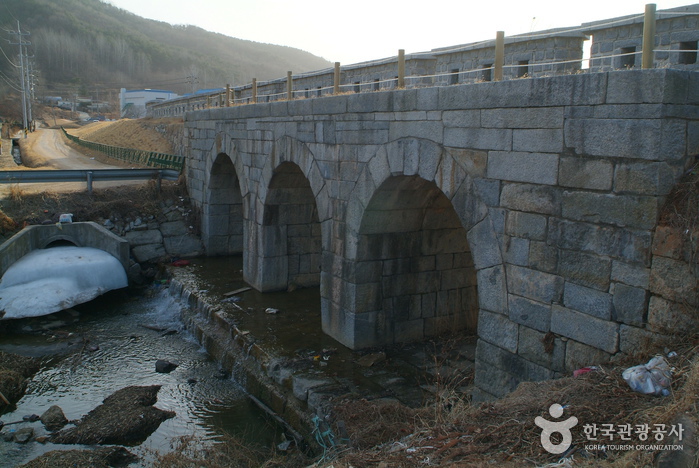
Ganghwa Seoksumun Gate (강화 석수문)
2020-02-06
Gukhwa-ri, Ganghwa-gun, Incheon
+82-32-930-4571
Seoksumun is a floodgate on the Dongnakcheon Stream, which flows through the town of Ganghwa-eup. The floodgate was built in 1711 (37th year of King Sukjong’s reign during the Joseon Period) and it is connected to the inner walls of the Ganghwasanseong Fortress. It is an arched structure with a design of three rainbows coming together. Made of granite, the floodgate measures 18.2 meters in length and 2.7 meters in x_height, while the arches are 1.7 meters tall, and 3 meters wide.
Inwangsa Temple (인왕사 (서울))
2020-04-02
16-1, Tongil-ro 18ga-gil, Jongno-gu, Seoul
+82-2-737-4434
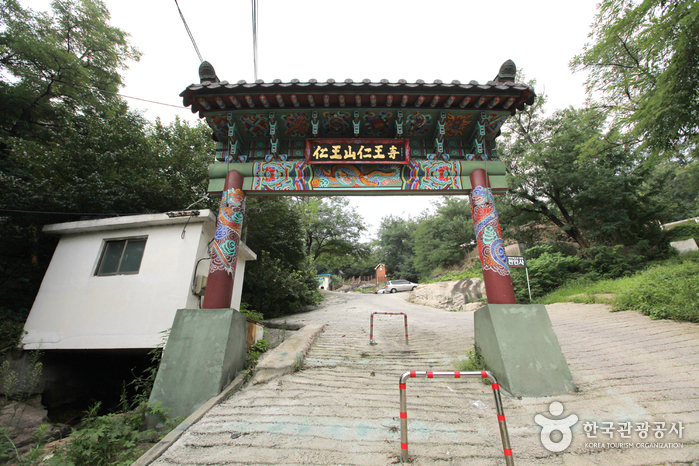
Inwangsa Temple refers to the entire cluster of small Buddhist temples located on Inwangsan Mountain (alt. 338m) in the heart of Seoul. The eastern foot of the mountain has many scenic spots with its distinctively cozy and tasteful atmosphere, and the northern area called Mugye-dong also offers beautiful scenery. Inwangsa Temple was established in the early Joseon period (1392-1910) to guard the national palace Gyeongbokbung. The temple is comprised of 11 shrines from five different Buddhist orders. The unique design of each shrine adds pleasure to hikers on their way up to Seonbawi, an unusual rock formation that is a site of many folk beliefs and shamanist rites.
Seoul Daehan Hospital (서울 대한의원)
2021-12-23
101, Daehak-ro, Jongno-gu, Seoul
+82-2-2148-1842
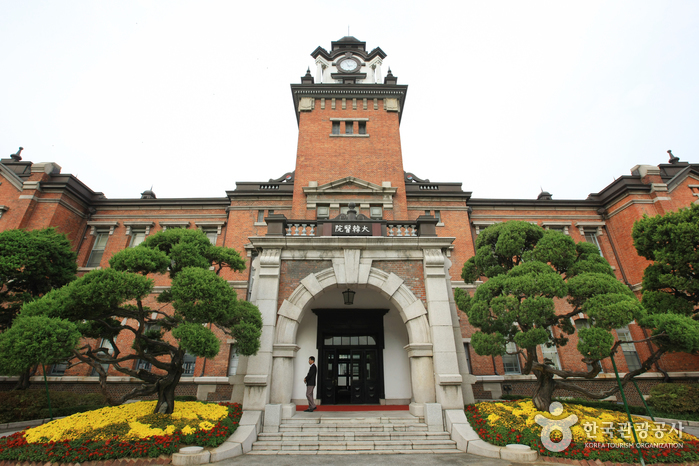
Daehanuiwon (Daehan Medical Center) is an antique two-story brick building within the grounds of Seoul National University Hospital. It was established under the direct administration of the Uijeongbu (State Council), combining the Gwangjewon (under the Home Ministry), Gyeongseong Medical School and the Korean Red Cross Hospital (under the Royal Household).
Built in the Madubong Hill area, this location where Hamchunwon, the outer garden of Changgyeonggung Palace, once stood in 1484 (15th year of King Seongjong), was also once the site of Gyeongmogung Palace, where King Jeongjo enshrined the mortuary tablet of his birth father Crown Prince Sado Seja in 1776 (the year King Jeongjo ascended to the throne).
These places that held importance for the royal family were destroyed as the Japanese built Gyeongseong Empire University in its place. In 1907, with the announcement of the plan to establish Daehan Medical Center, construction began on the main building, seven wards and affiliated buildings. Construction was completed in November 1908.
The Daehan Medical Center opened in Gwangjewon, but upon Japanese colonization in 1910, its name was changed to the Japanese Viceroyalty Hospital. In 1926, it was included as a part of Gyeongseongjeguk University to become a university hospital. Since the liberation of Korea in 1945, it has been a hospital affiliated with Seoul National University.

Namsan Outdoor Botanical Garden (남산 야외식물원)
2022-12-16
323, Sowol-ro, Yongsan-gu, Seoul
+82-2-798-3771
Namsan Outdoor Botanical Garden opened its doors on February 18, 1997 in Hannam-dong, where the residential complex for foreigners once stood before it was demolished in 1994. Covering an area of around 59 ㎡, it is divided into 13 themed gardens with a total 117,132 plants from 269 species. Among this diversity, 60,912 plants from 129 species are tree types and 56,220 plants from 140 species are grass types.
Jecheon Baengnyeonsa Temple (백련사(제천))
2021-10-25
414, Myeongam-ro 5-gil, Jecheon-si, Chungcheongbuk-do
+83-43-653-4996
Baengnyeonsa Temple is located at the foothills of Gamaksan Mountain in Jecheon, Chungcheongbuk-do. The temple is currently composed of the main hall Daeungjeon, Samseonggak Shrine, Muyeomdang Hall, Boeungmun Gate, and residential houses. Daeungjeon Hall enshrines a wooden statue of a sitting Buddha, is an artifact from the Joseon period (1392-1910).
The history of the temple dates back to 662 (the second year of King Munmu’s reign during the Silla Kingdom), when a small shrine called Baengnyeonam Hermitage was built by the great monk Uisang on the east side of Baengyeonji Site. The temple has been reconstructed and restored numerous times throughout the course of several wars. The temple once encompassed many branch temples and shrines such as Mireuksa, Sinheungsa, Cheonsuam, Eunjeokam, and Cheongnyeonam, but only their foundation sites remain today.
Ganghwa Deokjinjin Fortress (강화 덕진진)
2026-02-03
31-9 Deokjin-ro, Bureun-myeon, Ganghwa-gun, Incheon
+82-32-930-7074
Deokjinjin Fortress was the key strategic point of the outer fortress wall used for defending the Ganghwa Straits during the Goryeo dynasty (918-1392). It was originally a military camp commanded by an official with the rank of Cheomsa under the command of the Korean naval base. In 1677, an official with the rank of Manho was assigned to this camp along with 26 military officials, 100 soldiers, 2 battle ships, and other military equipment. In 1679, the Namjangpodae and Deokjinpodae batteries were stationed here. Deokjinjin Fortress was the scene of fierce battles that took place during Byeonginyangyo (the French invasion in 1866) and Shinmiyangyo (the American invasion in 1871). The battlements and gatehouse of Deokjinjin that had all been destroyed during Sinmiyangyo were restored in 1977. At the Namjangpodae Battery, cannons used by the Joseon military have been reproduced and installed for display.
Incheon Grand Park (인천대공원)
2025-01-10
236 Munemi-ro, Namdong-gu, Incheon
+82-32-466-7282
Incheon Grand Park is an urban nature park located in Jangsu-dong, Namdong-gu, Incheon. The park is surrounded by Gwanmosan Mountain and Sangasan Mountain. Spanning across 727 acres of land, Incheon Grand Park is the only large-scale natural green park in Incheon. The park provides a pleasant atmosphere for citizens to escape from the city life and enjoy the natural surroundings. Over 4 million people visit the park every year to take in the clean air and relax in nature.
 English
 한국어
한국어 日本語
日本語 中文(简体)
 Deutsch
 Français
 Español
 Русский


