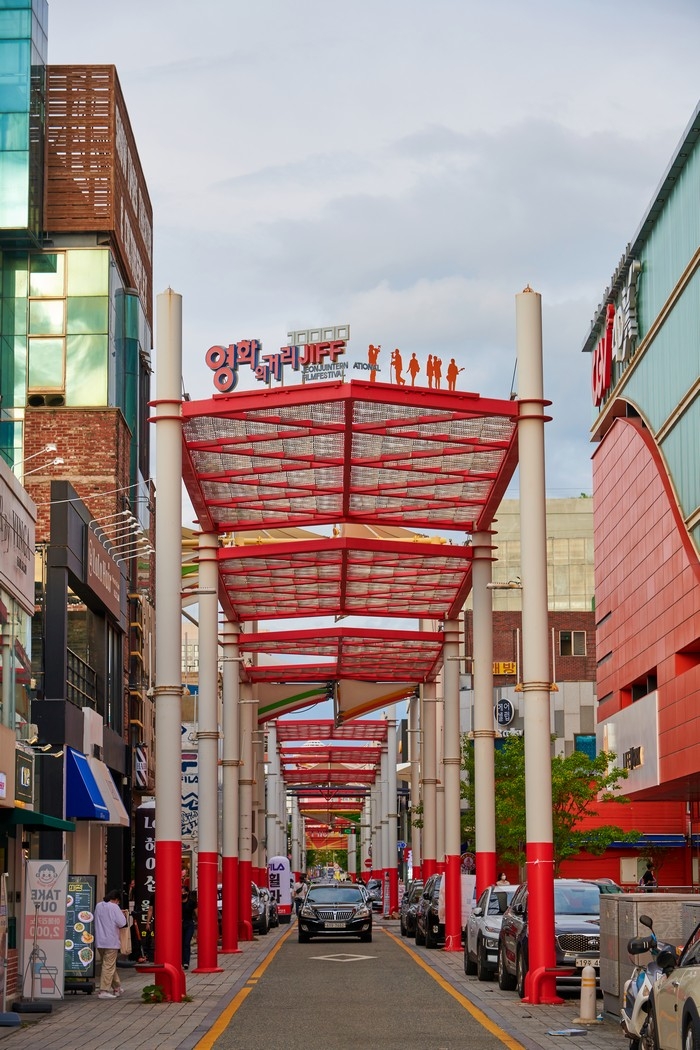
Jeonju Movie Street (전주 영화의 거리)
2025-11-05
Gosa-dong, Wansan-gu, Jeonju-si, Jeonbuk-do
Jeonju Movie Street is the venue of Jeonju International Film Festival that is connected to Gaeksa Street, a representative shopping street in the original downtown of Jeonju. Gaeksa Street has a unique atmosphere where various shops and cute cafes are combined with buildings showing traces of time. When the Jeonju International Film Festival is held, the red-colored streets become more dynamic with crowds from all over the country to watch movies.

Penguin Village
2023-11-22
7 , Cheonbyeonjwa-ro 446beon-gil, Nam-gu, Gwangju
BTS mural and penguin bread
Since the 1970s and 1980s, 4 to 5 elderly people who lived in old villages started to decorate with scrap metal works, and it turned into a craft street and reached what it is today. There are two murals of j-Hope, whose hometown is Gwangju, and they are the only murals in the village that depict a specific person. It was produced with the support of Chinese fans in commemoration of his birthday in 2020. There is a mural near the village cooperative society cafe, so buying penguin bread at the cafe after viewing the mural is popular.
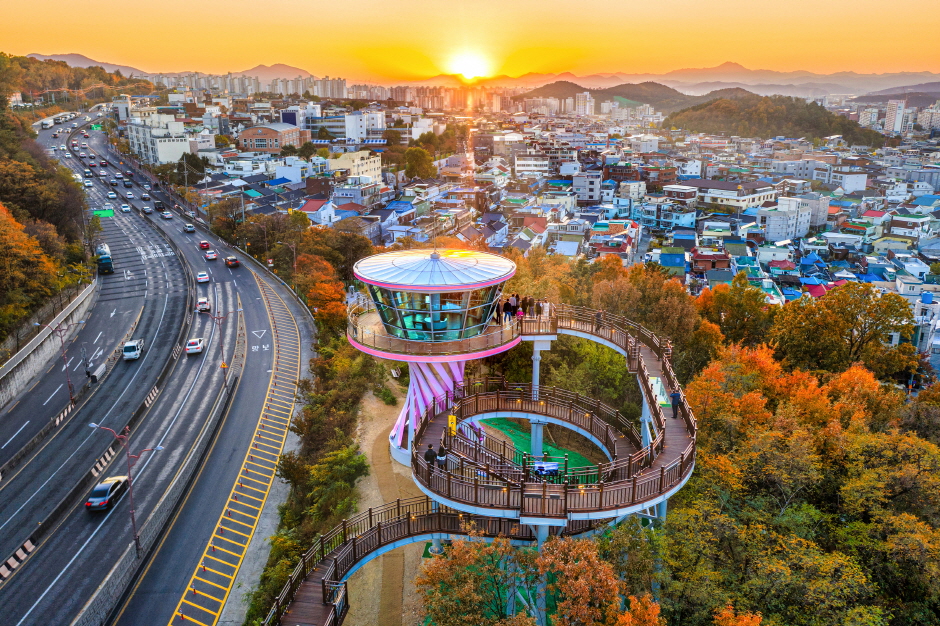
Apsan Mountain Haeneomi Observatory (앞산 해넘이전망대)
2023-08-28
Daemyeong-dong, Nam-gu, Daegu
Apsan Mountain Haeneomi Observatory, where you can see the scenery of Daegu along with the sunset, is located in Apsan Ppallaeteo Park in Nam-gu. Incorporating the history and symbolism of Apsan Ppallaeteo Park, the observatory's design embodies laundry wring. The ramp leading to the observatory is perfect for walking as you can see the panoramic view of Apsan Mountain and the surrounding landscape.
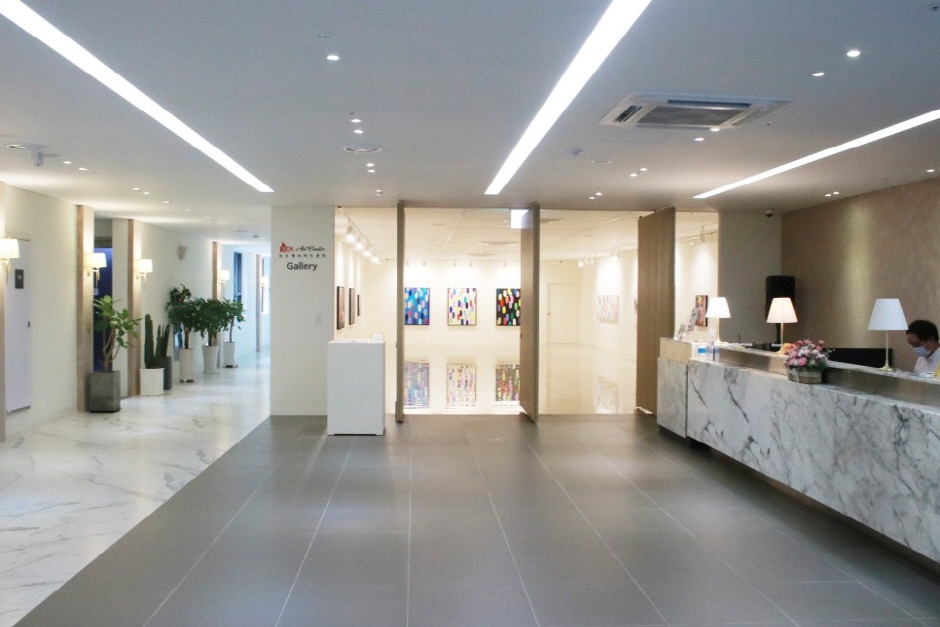
BOK Art Center (비오케이아트센터)
2025-05-20
12, Gukchaegyeonguwon 3-ro, Sejong-si
BOK Art Center is located in Bangok-dong, Sejong-si. It was opened in 2019 with the management philosophy of CEO I Gyu-sun, 'Let's create a happier living space.' The center is equipped with a performance hall where various performances are held, a gallery where various exhibitions are held, a hobby factory specialized for kidults, a Ccume Baking Class where you can enjoy baking, a bookstore, and a cafe.

Sejong National Arboretum (국립세종수목원)
2026-02-03
136 Sumogwon-ro, Sejong-si
The Sejong National Arboretum, designed as the first urban arboretum in Korea, was built adjacent to the Sejong Government Complex, where several government ministries are located. It is largely divided into three sections: the community program center, the educational center, and the garden exhibition center. Each center consists of different themed gardens that exhibit a variety of plant species that align with the center's purpose.
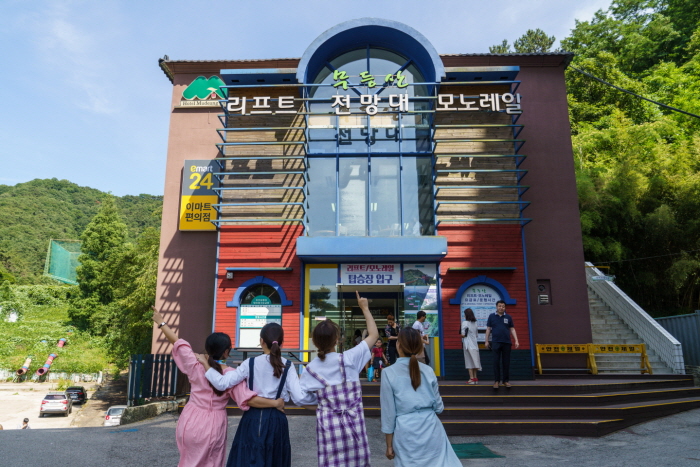
Jisan Recreation Area (지산유원지)
2026-06-30
35-1, Jiho-ro 164beon-gil, Dong-gu, Jeonnam-Gwangju Special Metropolitan City
Jisan Recreation Area reopened around December 2016, resuming monorail operation after 11 years. The unique rattle of a monorail running on one rail gives passengers a thrill. If you ride the monorail, you can see the panoramic view of Gwangju and the top of Mudeungsan Mountain at a glance. The monorail starts on the mountainside, 50 meters away from the end point of the lift, along the forest road, and runs to and from the top of the mountain in Jisan Recreation Area, where the octagonal pavilion is located. After reopening, it became popular among the younger generation through social media and word of mouth as a unique amusement facility where you can enjoy thrills on Mudeungsan Mountain in Gwangju.

Dinosaur Park (공룡공원)
2023-01-25
43, Yongdu 2-gil, Nam-gu, Daegu
At the Dinosaur Park, located in Gosangol of Apsan Mountain, Nam-gu, Daegu, you can see life-size dinosaur models such as Tyrannosaurus, Spinosaurus, Stegosaurus, and Brachiosaurus. In addition, there is a photo zone with dinosaur eggs and baby dinosaurs where you can take pictures freely. Also, if you use the augmented reality app on your smartphone, you can see the dinosaur fossil creation process in a video for a more vivid dinosaur experience.
Hwawon Park (화원동산)
2024-04-08
40-14 , Samunjin-ro 1-gil, Dalseong-gun, Daegu
Hwawon Park, a vast park beside the Nakdonggang River, is steeped in history. The river, once bustling with Samunjin Quay, where ships laden with goods frequented, now features Samunjin Ferries. Visitors can access Dalseong Marsh Ecological Park via a floating walkway across the river. In the vicinity, the Samunjin Jumakchon Village offers traditional beverages and delicacies, including makgeolli (unrefined rice wine) and pajeon (green onion pancake). With well-maintained walking trails, cafés, and picnic spots, the park serves as an ideal destination for family outings.
Hwanbyeokdang Pavilion (환벽당)
2026-06-30
10, Hwanbyeokdang-gil, Buk-gu, Jeonnam-Gwangju Special Metropolitan City
Hwanbyeokdang Pavilion was built by Yeongcheonja Sinjam and was also called Byeokgandang, which is recorded in Go Gyeong-myeong's Yuseoseongnok. The building has a hipped-and-gabled roof with three bays in the front space and two bays in the inside space. It is a modified form in which the two rooms in the middle are used as rooms, and the front and right sides are floors. Originally, it was a traditional pavilion, but it seems to have changed to its current form as it was expanded later. A tablet written by Uam Song Si-yeol hangs here, and the poems of Seokcheon Im Eok-ryeong and Jo Ja-i are on a signboard. There are two poems written by Jeong Cheol about Hwanbyeokdang Pavilion, which are published in Songgangsokjip and Gwangjumokji. Jeong Cheol's 4th-generation descendant Jeong Su-hwan bought it from Kim Yun-je's descendants, and Yeon Il-jeong's family is currently managing it.
Chungjangsa Shrine (충장사)
2026-06-30
13, Songgang-ro, Buk-gu, Jeonnam-Gwangju Special Metropolitan City
When you reach Baejae along the tourist road leading up to Wonhyosa Temple, you can see the well-maintained tomb and the magnificent building of Chungjangsa Shrine on the left. It was built in 1975 as a memorial to General Kim Deok-ryeong, born in Mudeungsan Mountain. In the precincts, there are the shrine, where Kim Deok-ryeong's portrait and command paper are enshrined; the east room and west room; Eullyun Monument and Commentary Monument, the relics hall; Chungyongmun Gate; and Ikomun Gate. In the relics hall, the clothes of 'General Kim Deok-ryeong,' designated as Important Folk Material, and the coffin excavated from the general's tomb, as well as his handwriting, are on display. On the hill behind the shrine is Kim Deok-ryeong's tomb and tombstone, as well as his family's tomb.
 English
 한국어
한국어 日本語
日本語 中文(简体)
 Deutsch
 Français
 Español
 Русский


