
Hyewonjeongsa Temple (혜원정사)
18.8Km 2024-02-22
47 Gobun-ro 68beon-gil, Yeonje-gu, Busan
The "jeongsa" of Hyewonjeongsa Temple refers to a temple, meaning a place where practitioners dwell and dedicate themselves to spiritual cultivation. It houses various halls such as Daeungbojeon, Manbuljeon, Samseonggak, Bell Pavilion, Yosachae, and Statue of Avalokitesvara Bodhisattva. There is a hiking trail leading to the summit of Myobongsan Mountain, from where one can enjoy a panoramic view of Busan city.
B-Con Ground (비콘그라운드)
18.8Km 2025-11-17
49-1 Mangmibeonyeong-ro, Suyeong-gu, Busan
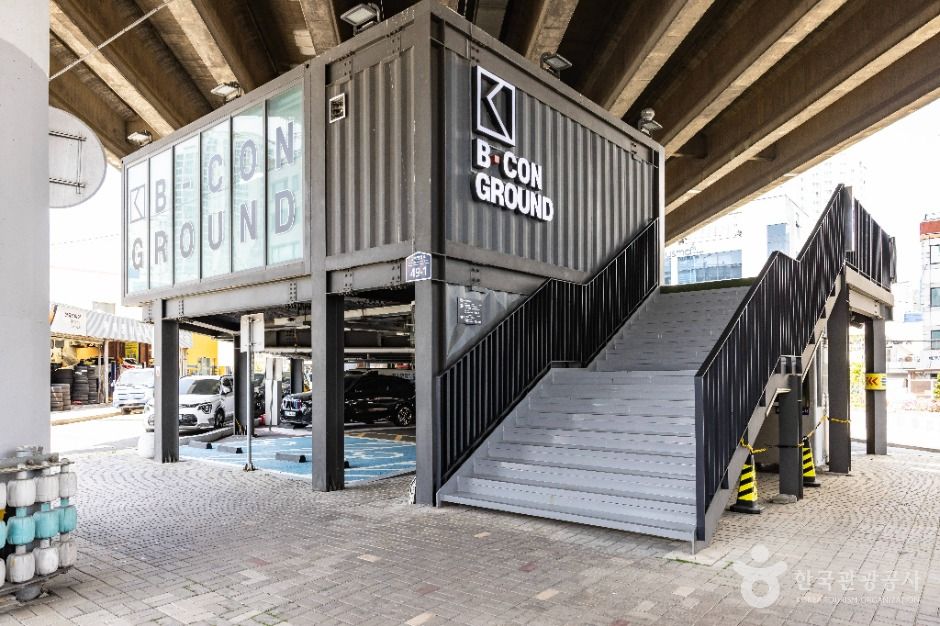
B-Con Ground is a cultural complex in Busan, built by utilizing the empty space under an overpass. The complex is a cultural hub offering various exhibitions, cultural events, activities, and creative spaces for visitors. From playground and shopping ground to cafes, restaurants, art galleries, and a family deck, it truly offers all under one roof. Moreover, it provides a space for exhibition for disabled artists, as well as a venue for social entrepreneurs to hold exhibitions, cultural events, and sell artwork.
Olive Young - Busan Suyeong Branch [Tax Refund Shop] (올리브영 부산수영)
18.9Km 2024-04-18
703, Suyeong-ro, Suyeong-gu, Busan
-
Millak Waterfront Park (민락수변공원)
19.0Km 2025-08-11
Millak-dong, Suyeong-gu, Busan
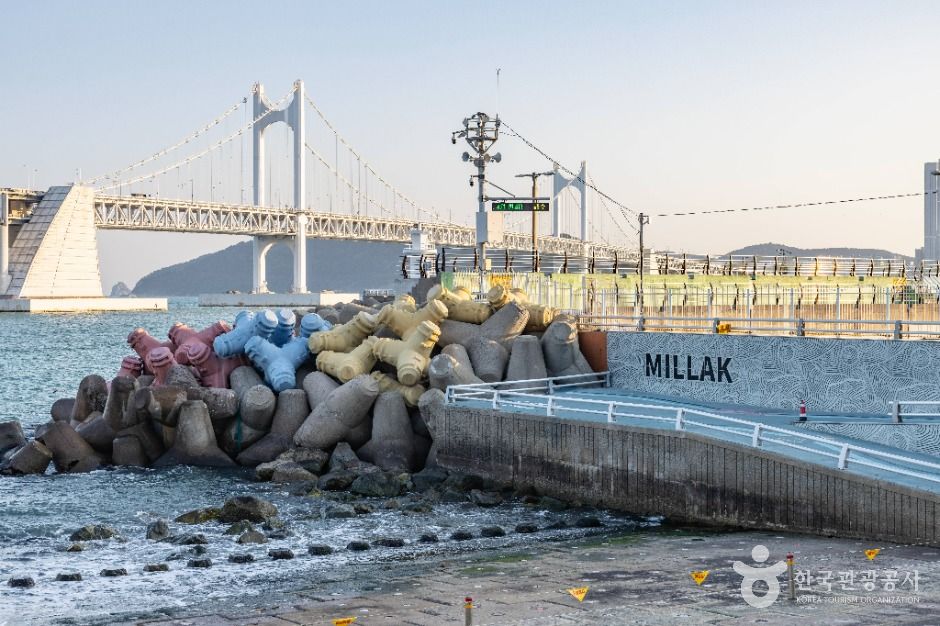
Suyeong-gu is well known for its long history and traditions, and has beautiful scenery. Geumnyeonsan Mountain has a lush forest and Gwangalli Beach is located in the front. During the Joseon dynasty, this location was a strategically important region. The Millak Waterfront Park was built between August 1992 and May 1997. The park is 543 meters long and 60 meters wide. Located between Haeundae Beach and Gwangalli Beach, it is the first park in Korea to combine the oceanfront with public rest and leisure facilities. The park (about 33,000 ㎡) can accommodate up to 40,000 people and boasts convenience facilities such as gardens, shaded rest areas, and benches. The 3,040 ㎡ platform from which visitors can overlook the beach also serves as a place where people can dip their feet in the ocean when the tide is high.
Suyeong Sajeok Park (수영사적공원)
19.0Km 2021-08-06
43, Suyeongseong-ro, Suyeong-gu, Busan
+82-51-610-4372
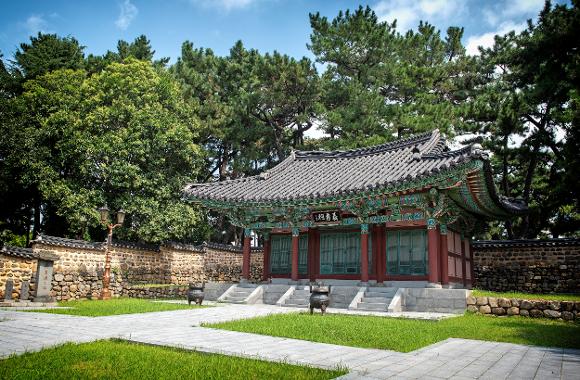
Suyeong-gu of Busan is a historical district nestled between Geumnyeonsan Mountain and Gwangalli Beach. It was the site of the Gyeongsang Jwado Marine Headquarters during the Joseon dynasty. In fact, its name 'Suyeong' was derived from 'Sugunjeoldosayeong,' meaning 'marine headquarters.'
The Suyeong Sajeok Park was established in commemoration of the spirit of the Suyeong residents. It is designed to show their maritime lifestyle.
Subyeon Choego Dwaeji Gukbap Millak Main Store (수변최고돼지국밥 민락본점)
19.2Km 2024-12-26
부산광역시 수영구 광안해변로370번길 9-32
The signature dish is hangjeong gukbap (pork neck and rice soup) made with pork neck. The soup is known for its rich flavor, as it is prepared by simmering pork bones to extract a deep broth.
Mangmidangil Street (망미단길)
19.3Km 2025-11-17
Suyeong-dong, Suyeong-gu, Busan
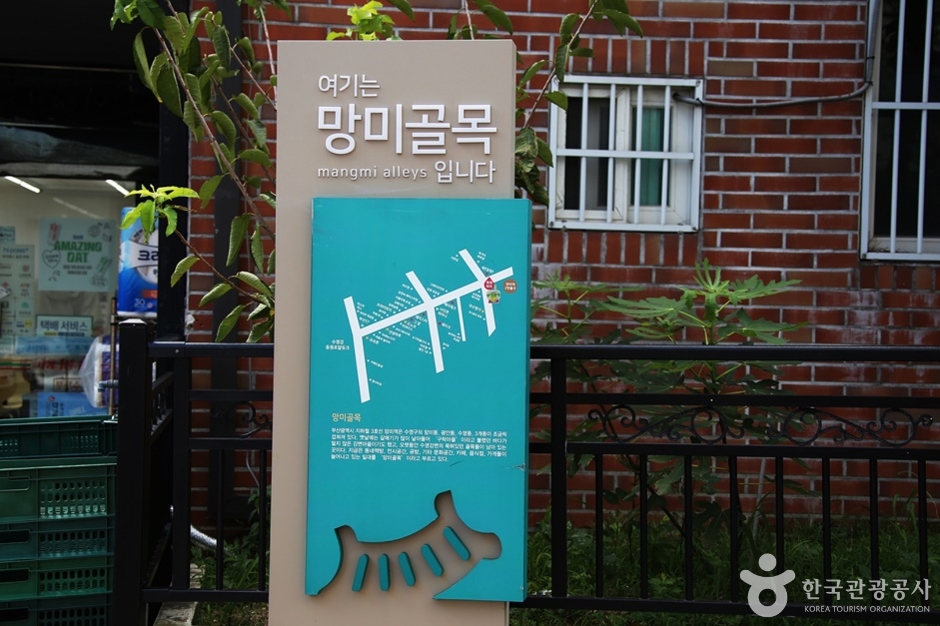
Mangmidangil Street referst to the main street that connects the cultural alleys in Suyeong-gu, Busan. The area is home to a variety of cozy cafes, photo studios, book stores, indie stores, workshop spaces, and clothing stores, attracting many visitors. Nearby attractions include B-Con Ground, a cultural complex featuring various facilities, and Suyeong Sajeok Park, an ideal spot to unwind and explore local history.
Gimhae Lotte Water Park (김해 롯데워터파크)
19.4Km 2025-05-19
555 Jangyu-ro, Gimhae-si, Gyeongsangnam-do
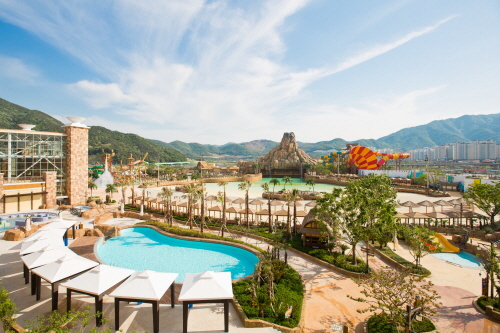
Gimhae Lotte Water Park is the largest water park in Korea, featuring a Polynesian theme with 17 types and 43 water attractions. It includes a giant volcano-shaped structure called Giant Volcano, along with indoor and outdoor water parks that can be enjoyed year-round, as well as Rapids River Zone and Torrent River Zone. Facilities include wave pool, lazy river pool, spa pool, swing slide, and more, making it a must-visit leisure destination in Busan.
Olive Young - Yeonsan Togok Branch [Tax Refund Shop] (올리브영 연산토곡점)
19.4Km 2024-06-26
112 Gwajeong-ro, Yeonje-gu, Busan
-
F1963
19.5Km 2025-11-17
20 Gurak-ro 123beon-gil, Suyeong-gu, Busan
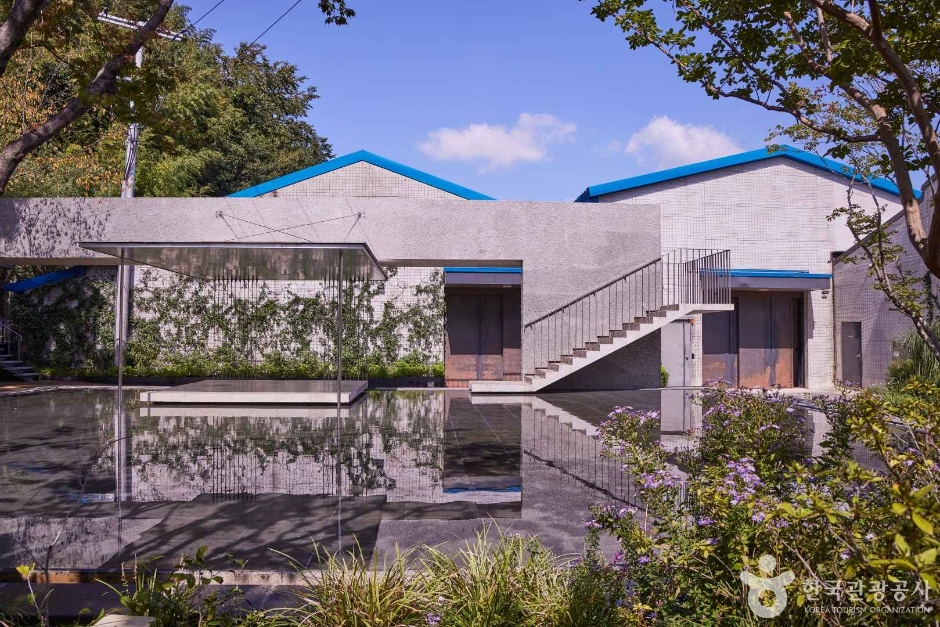
F1963 is a representative cultural complex and an emerging landmark in Busan. This factory produced wires in the past for about 45 years from 1963 to 2008. 2016 Busan Biennale was a turning point for this building as the building was transformed into a space for art and culture; various cultural events take place and it has an art library, exhibition hall, and concert hall. The base design and framework from the old factory were preserved during the renovation, leaving traces of the old building that give its unique atmosphere. Regenerated architecture and walking trails outside the space are designed to offer a pleasant walk. Visitors can also enjoy food, drinks, and activities inside the building from renowned branch stores such as Terarosa, a famous cafe in Gangneung; Boksoondoga, where one can taste the essence of traditional Korean fermented makgeolli (unrefined rice wine), and Hwasumok Flower & Garden, where visitors can take gardening and flower classes.
 English
 한국어
한국어 日本語
日本語 中文(简体)
 Deutsch
 Français
 Español
 Русский


