![GGPX - Hyundai City Outlets Daegu Branch [Tax Refund Shop] (GGPX현대아울렛대구)](http://tong.visitkorea.or.kr/cms/resource/01/2883901_image2_1.jpg)
GGPX - Hyundai City Outlets Daegu Branch [Tax Refund Shop] (GGPX현대아울렛대구)
14.6Km 2024-04-23
454, Dongdaegu-ro, Dong-gu, Daegu
-

![Space M - Hyundai Outlets Daegu Branch [Tax Refund Shop] (스페이스M 현대아울렛 대구점)](http://tong.visitkorea.or.kr/cms/resource/84/2883884_image2_1.jpg)
Space M - Hyundai Outlets Daegu Branch [Tax Refund Shop] (스페이스M 현대아울렛 대구점)
14.6Km 2024-04-22
454, Dongdaegu-ro, Dong-gu, Daegu
-
![I Love J [Tax Refund Shop] (I LOVE J)](http://tong.visitkorea.or.kr/cms/resource/92/2883892_image2_1.jpg)
![Hyundai City Outlets - Daegu Branch [Tax Refund Shop] (현대시티아울렛 대구)](http://tong.visitkorea.or.kr/cms/resource/83/2883883_image2_1.jpg)
Hyundai City Outlets - Daegu Branch [Tax Refund Shop] (현대시티아울렛 대구)
14.6Km 2024-04-18
454, Dongdaegu-ro, Dong-gu, Daegu
-
![Olive Young - Daegu Chimsan Branch [Tax Refund Shop] (올리브영 대구침산)](http://tong.visitkorea.or.kr/cms/resource/36/2888036_image2_1.jpg)
Olive Young - Daegu Chimsan Branch [Tax Refund Shop] (올리브영 대구침산)
14.6Km 2024-04-17
124, Chimsan-ro, Buk-gu, Daegu
-
Geumgang Station Rail Café (Banyawol Lotus Village Cooperative) (금강역 레일 카페(반야월 연꽃마을 협동조합))
14.8Km 2024-02-15
153 Geumgang-ro, Dong-gu, Daegu
Geumgang Station Rail Café, located right next to Geumgang Station on the Daegu Line, is a unique café housed in two Saemaeul-ho train cars. It offers affordable coffee and beverages, along with muffins and cookies made from lotus roots. Adjacent to the café is a lotus field, and during the summer, the beauty of blooming lotus reaches its peak.
![E-Mart - Chilseong Branch [Tax Refund Shop] (이마트 칠성)](http://tong.visitkorea.or.kr/cms/resource/99/2888199_image2_1.jpg)
E-Mart - Chilseong Branch [Tax Refund Shop] (이마트 칠성)
14.9Km 2024-04-23
93, Chimsan-ro, Buk-gu, Daegu
-
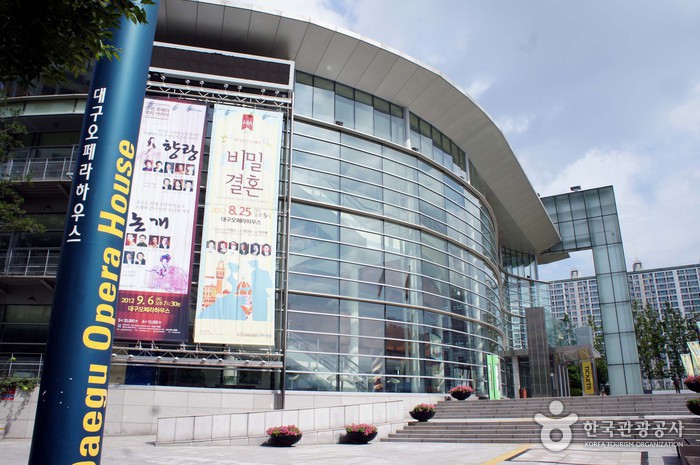
Daegu Opera House (대구오페라하우스)
14.9Km 2021-11-09
15, Hoam-ro, Buk-gu, Daegu
+82-53-666-6000
Daegu Opera House is the first municipal opera house that opened in Korea. It is equipped with high-tech audio and lighting system, a revolving stage and an audience seats arranged in a horseshoe shape. The exterior of building is also quite exquisite, with a curvy glass roof designed to resemble a grand piano. The opera house holds a wide range of programs that are entertaining and affordable. There are also special performances for international visitors to ensure all who spend a night out at the opera have an enjoyable evening.
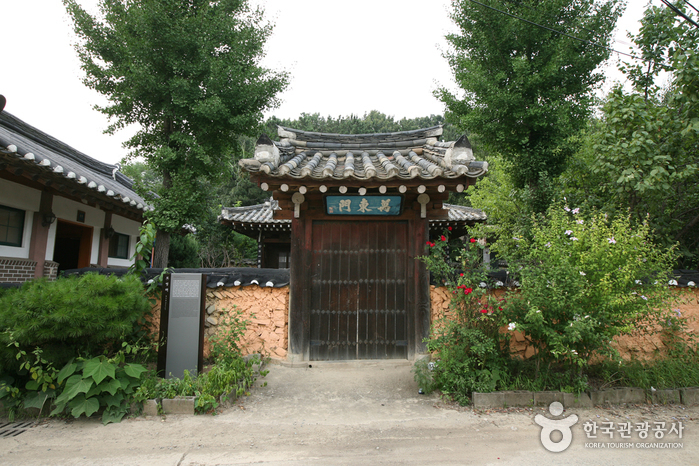
Korean Traditional Culture Center (한국전통문화체험관)
15.2Km 2025-10-23
13-5 Dalgubeol-daero 527-gil, Suseong-gu, Daegu
+82-53-666-4930
Momyeongjae is an ancestral shrine built by the Dureung Doo clan to honor Doo Sa-chung, who had joined the Ming Dynasty's reinforcement troops during the Imjinwaeran (Japanese invasion of Korea, 1592) and later became naturalized in Joseon Dynasty. The name 'Momyeongjae' means 'longing for the Ming Dynasty,' expressing Doo Sa-chung's affection for his home country.
Doo Sa-chung, who was from Duling, China, went to Joseon under the command of General Li Rusong from the Ming Dynasty. Doo Sa-chung took the position titled Suryuk Jihoek Jusa and was responsible for selecting locations to establish a stronghold in consideration of the terrain. As a senior adviser to Li Rusong, he closely discussed strategies and tactics with the Joseon army as well.
When the war was over, Doo Sa-chung returned to China but went to Joseon again during the Jeongyujaeran (Japanese invasion of Korea, 1597). He brought his two sons -- Doo San and Doo Il-geon -- along with his brother-in-law, Admiral Chen Lin. When the war was over, Doo Sa-chung and his two sons naturalized in Joseon. The government of Joseon granted him land, which is the current Gyeongsang Gamyeong Park area.
When the Gyeongsang Gamyeong (Gyeongsang provincial office) was relocated to this area, Doo Sa-chung offered his land to the government and moved to Gyesan-dong.
Longing for his wife and brothers he had left in China, he moved again to a village near Daedeoksan Mountain (then Choejeongsan Mountain) and named the area Daemyeong-dong (meaning the Great Ming). He built a platform and on the first day of every month, he would bow in the direction of the Forbidden City in China, where the Emperor of the Ming Dynasty resided.
Momyeongjae is built on a rectangular plot and faces south. It features a hip-and-gable roof with double-layer eaves and has four rooms in the front and two rooms on the side. The daecheongmaru (wooden floor hall) has two ondol (floor heated) rooms on each of its side, with a half-sized bay at the front. Momyeongjae exemplifies the early 20th-century ancestral shrine style commonly found in the Daegu area.
The building was originally constructed in 1912 when Doo Sa-chung’s descendants moved wooden materials from the dismantled Gyeongsangaeksa (local government building) and used them to build Momyeongjae in front of Doo Sa-chung's tomb. The shrine was later renovated in 1966 as it was in poor condition.
Momyeongjae is one of the first destinations visited by Chinese tourists in Daegu. It was recently renovated as part of a redevelopment project. The Korean Traditional Culture Center opened nearby, where visitors can experience tea ceremonies, hanbok (traditional Korean clothing), archery, and cooking dishes based on Donguibogam, a traditional Korean medical encyclopedia. Joining a program at the center will be a valuable experience.
 English
 한국어
한국어 日本語
日本語 中文(简体)
 Deutsch
 Français
 Español
 Русский


