
House of Yi Sang-hwa (이상화 고택)
1.2Km 2023-01-06
6-1, Seoseong-ro, Jung-gu, Daegu
+82-53-256-3762
Yi Sang-hwa was a nationalist poet, who resisted the Japanese colonialism. This was his house from 1939 until his death in 1943. His house was neglected after he died, until a citizens' movement in 1999 to preserve the house urged the Military Mutual Aid Association to purchase it, and donate it to the City of Daegu on October 27, 2005. It has been restored and opened to the public, serving as the center for education of the poet's brave spirit and work.
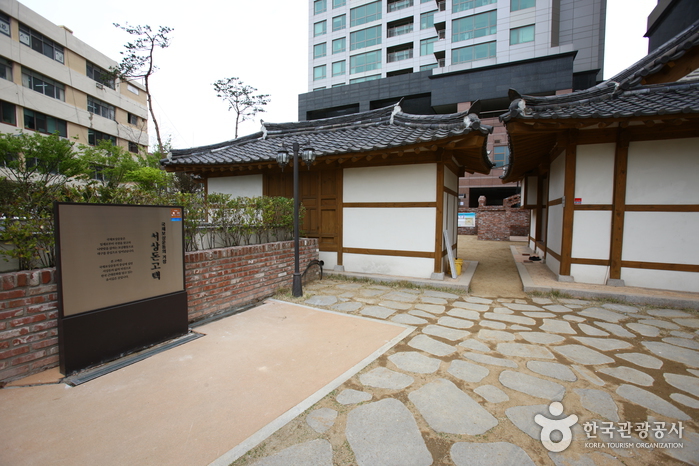
House of Seo Sang-don (서상돈 고택)
1.2Km 2021-07-01
6-1, Seoseong-ro, Jung-gu, Daegu
+82-53-256-3762
The house of entrepreneur and activist Seo Sang-don is located in the heart of Daegu. In 1907, in an effort to repay national debt and to gain independence from Japan, Seo launched the National Debt Repayment Movement as well as a nationwide campaign calling for people to quit smoking.
In celebration of Seo's leadership, the City of Daegu restored Seo's old house and opened it to the public. The City also built the National Debt Repayment Park and erected a statue of Seo in his honor.
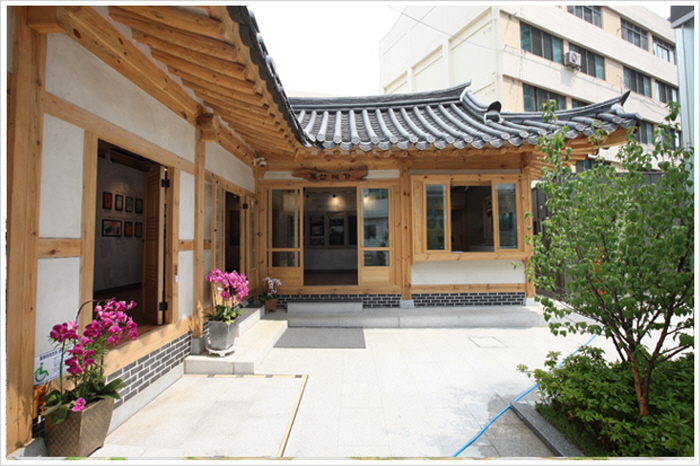
Modern History Experience Hall Gyesanyega (근대문화체험관 계산예가)
1.2Km 2021-04-27
6-1, Seoseong-ro, Jung-gu, Daegu
+82-53-661-3323
Modern History Experience Hall Gyesanyega opened in 2012 is a public space designed for rest and education. Visitors can enjoy a moment of relaxation while touring Daegu Modern Culture Alley, as well as learn more about the history of the area through the video hall and about the houses featured along the way, such as House of Yi Sang-hwa and House of Seo Sang-don, at the hanok exhibition hall.
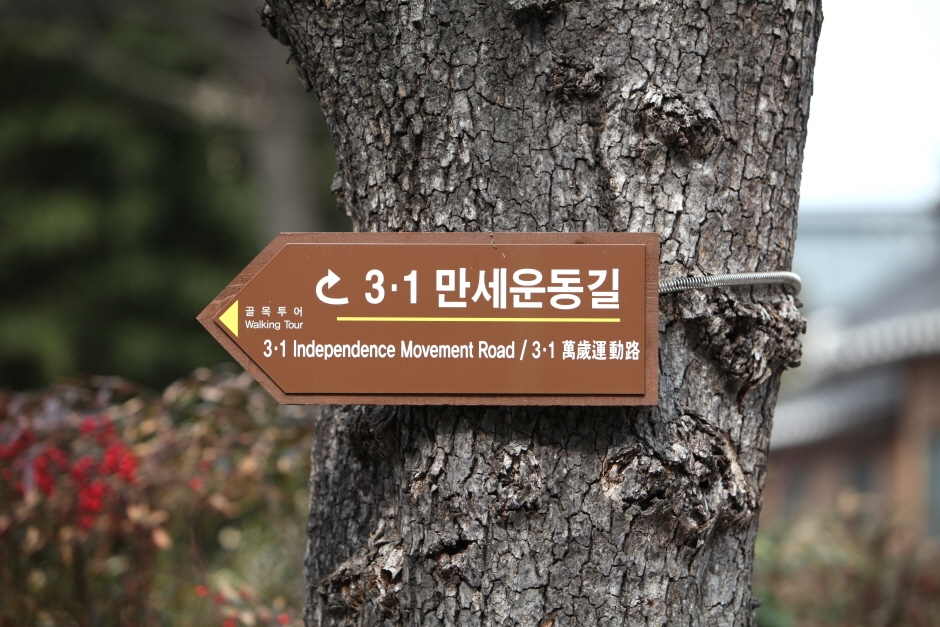
March 1st Independence Movement Road (3·1만세운동길)
1.2Km 2023-01-20
Dongsan-dong, Jung-gu, Daegu
March 1st Independence Movement Road is a historical location where Daegu citizens gathered for the independence movement on March 8, 1919, and the midpoint of Daegu Modern Alley Tour Course 2. Passing Cheongna Hill Missionary's House and Jeil Church, you will come to a road with murals of the independence movement. The March 1st Independence Movement Road is a hilly road leading to Gyesan Cathedral. It is also called 90 Stairs because there are 90 steps. On the wall of the stairs, there is an augmented reality (AR) experience zone along with site photos from history. By scanning the QR code is a 3D video that vividly reproduces the independence movement, enabling a realistic experience of history. Follow the signs of the Daegu March 8th Independence Movement marching road to reach the main road and it will lead to the the 100th anniversary monument of the March 1st Movement and the starting point of the March 8 Movement. A guided alley tour is available for free with an online reservation on the official website.
Aritaum - Daegu Banwoldang Jungang Branch [Tax Refund Shop] (아리따움 대구반월당중앙)
1.3Km 2024-04-16
B2100 Dalgubeol-daero, Jung-gu, Daegu
-
Bongsan Cultural Center (봉산문화회관)
1.4Km 2022-12-26
77, Bongsanmunhwa-gil, Jung-gu, Daegu
+82-53-661-3500
Bongsan Cultural Center is a comprehensive culture and arts complex located on Bongsan Culture Street in downtown Daegu. The center serves to provide cultural entertainment to the community as well as contribute to the development of traditional culture and local art. The center also provides opportunities for the public to participate in well-being recreational activities and acquire life-long education related to culture and arts.
The center has five modern exhibition halls (Exhibition Hall
No. 1-4 and Art Space) and two performance halls (Gaon Hall with 442 seats and Space Raon with 90 seats). As the center is located near Banwoldang Station (Daegu Subway Line 1), it is easily accessible by public transportation.
Dongsan Cheongna Hill (동산청라언덕)
1.4Km 2025-10-24
2029 Dalgubeol-daero, Jung-gu, Daegu
+82-53-627-1337
Cheongna Hill is the place where Christian missionaries resided during the early 20 century, planting many ivies along the site. It is also called Dongsan Cheongna Hill for being on the eastern side of Daegu's center. There are many attractions in this beautiful garden including Chamness’ House, Switzer’s House, Blair’s House, 90 stairs, Daegu 3.1 Independence Movement Road, Daegu's first western apple tree, a memorial stone inscribed with the song "Thinking of My Friend” , and the cemetery of the missionaries and their family. Cheongna Hill is also the starting point of Daegu's Street Tour Course 2 as well as a popular drama film location.
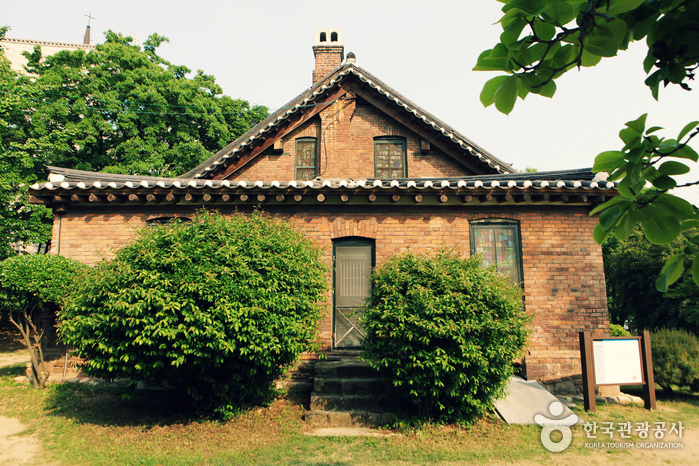
House of Missionary Switze (선교사스윗즈주택)
1.4Km 2024-08-05
2029 Dalgubeol-daero, Jung-gu, Daegu
The House of Missionary Switze served as home for a host of American missionaries. Built between 1906 and 1910, the home is a Western-style structure with two above-ground floors and one basement level. In 1981, the house was used as company housing for doctors at the nearby Dongsan Hospital, at which point changes were made to the interior and exterior of the house. It was later changed into a missionary museum, displaying items used by the missionaries who lived in.
House of Missionary Chamness (선교사챔니스주택)
1.4Km 2022-09-06
2029, Dalgubeol-daero, Jung-gu, Daegu
+82-53-661-2193
House of Missionary Chamness was the home of American Christian missionary Chamness and his family. It was built in the Western-style and provides a glimpse into the daily life of American missionaries in Korea. The house, a simple building in comparison with the houses of America at the time, is now considered a very important treasure of Korea's modern history. The building has been converted into a small museum using artifacts from the missionaries to bring the past to life.
NUNE EYE HOSPITAL (누네안과병원)
1.4Km 2025-11-21
2179 Dalgubeol-daero, Jung-gu, Daegu
Nune Eye Hospital is a specialized ophthalmology hospital designated by the Ministry of Health and Welfare (2024 to 2026)
The hospital is equipped with the human and material infrastructure to treat a variety of eye conditions. It maintains a staff of 24 ophthalmology specialists across detailed sub-fields, including Refractive Surgery, Cataract, Retina, Glaucoma, and Pediatric/Neuro-Ophthalmology.
Key equipment includes the SCHWIND ATOS and AMARIS RED SPT for vision correction, and the LENSAR and CENTURION for cataract procedures.
The hospital features precision examination rooms, consultation rooms, sterile operating theaters, and inpatient wards, enabling a comprehensive ONE-STOP process for diagnosis, treatment, and surgery.
 English
 한국어
한국어 日本語
日本語 中文(简体)
 Deutsch
 Français
 Español
 Русский


