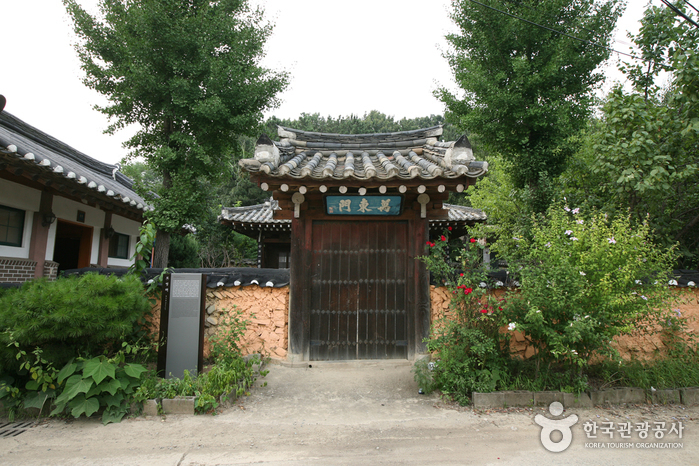
Korean Traditional Culture Center (한국전통문화체험관)
7.6Km 2025-10-23
13-5 Dalgubeol-daero 527-gil, Suseong-gu, Daegu
+82-53-666-4930
Momyeongjae is an ancestral shrine built by the Dureung Doo clan to honor Doo Sa-chung, who had joined the Ming Dynasty's reinforcement troops during the Imjinwaeran (Japanese invasion of Korea, 1592) and later became naturalized in Joseon Dynasty. The name 'Momyeongjae' means 'longing for the Ming Dynasty,' expressing Doo Sa-chung's affection for his home country.
Doo Sa-chung, who was from Duling, China, went to Joseon under the command of General Li Rusong from the Ming Dynasty. Doo Sa-chung took the position titled Suryuk Jihoek Jusa and was responsible for selecting locations to establish a stronghold in consideration of the terrain. As a senior adviser to Li Rusong, he closely discussed strategies and tactics with the Joseon army as well.
When the war was over, Doo Sa-chung returned to China but went to Joseon again during the Jeongyujaeran (Japanese invasion of Korea, 1597). He brought his two sons -- Doo San and Doo Il-geon -- along with his brother-in-law, Admiral Chen Lin. When the war was over, Doo Sa-chung and his two sons naturalized in Joseon. The government of Joseon granted him land, which is the current Gyeongsang Gamyeong Park area.
When the Gyeongsang Gamyeong (Gyeongsang provincial office) was relocated to this area, Doo Sa-chung offered his land to the government and moved to Gyesan-dong.
Longing for his wife and brothers he had left in China, he moved again to a village near Daedeoksan Mountain (then Choejeongsan Mountain) and named the area Daemyeong-dong (meaning the Great Ming). He built a platform and on the first day of every month, he would bow in the direction of the Forbidden City in China, where the Emperor of the Ming Dynasty resided.
Momyeongjae is built on a rectangular plot and faces south. It features a hip-and-gable roof with double-layer eaves and has four rooms in the front and two rooms on the side. The daecheongmaru (wooden floor hall) has two ondol (floor heated) rooms on each of its side, with a half-sized bay at the front. Momyeongjae exemplifies the early 20th-century ancestral shrine style commonly found in the Daegu area.
The building was originally constructed in 1912 when Doo Sa-chung’s descendants moved wooden materials from the dismantled Gyeongsangaeksa (local government building) and used them to build Momyeongjae in front of Doo Sa-chung's tomb. The shrine was later renovated in 1966 as it was in poor condition.
Momyeongjae is one of the first destinations visited by Chinese tourists in Daegu. It was recently renovated as part of a redevelopment project. The Korean Traditional Culture Center opened nearby, where visitors can experience tea ceremonies, hanbok (traditional Korean clothing), archery, and cooking dishes based on Donguibogam, a traditional Korean medical encyclopedia. Joining a program at the center will be a valuable experience.

Aayang Gichatgil (아양기찻길)
7.6Km 2021-08-10
82, Haedong-ro, Dong-gu, Daegu
+82-53-627-8986
After 78 years of operating, Ayang Railroad Bridge was discontinued and turned into a cultural space with a name Ayang Gichatgil. This attraction is 277 meters in length, 14.2 meters in x_height and total area of 427.75㎡. Visitors can enjoy the observatory, exhibitions, cafe and other facilities. The attraction was award Red Dot Design Award for restoring a discontinued railraod bridge using public design. Nearby attractions include Simni Cherry Blossom Road, Gomoryeongbi Monument, Dongchong Resort, and Onggijonggi Happy Village.
Keimyung University Dongsan Hospital (계명대학교 동산병원)
7.7Km 2025-10-23
1035 Dalgubeol-daero, Dalseo-gu, Daegu
Established in 1899 as Daegu's first Western medical institution, Keimyung University Dongsan Hospital is a cutting-edge, eco-friendly facility offering 37 specialties. It features top centers for cancer, robotic surgery, cardiocerebrovascular diseases, and organ transplants. In 2023, it won the Medical Korea Award for cancer care. The International Healthcare Center has been providing personalized services to international patients since 1967.
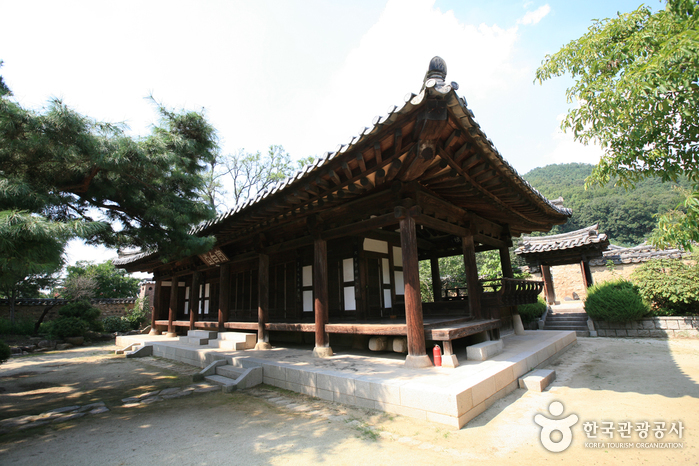
Village of the Nampyeong Mun Clan in Bon-ri (남평문씨본리세거지)
8.0Km 2021-03-16
16, Inheung 3-gil, Dalseong-gun, Daegu
+82-53-668-3162
The Village of the Nampyeong Mun Clan in Bon-ri was built on what used to be part of a temple, but was organized following a well-field system to make the area a residence for many generations. As of now, nine houses and two pavilions remain, as well as a low wall along the road.
The main building of the village is Subongjeongsa, located in the center of the area. It was used for meeting guests, as well as a gathering place for the family, and features beautiful gardens. Gwanggeodang Hall was an educational place for studies and refinement. Insumungo Storage Building preserves about 10,000 books and clan treasures. It started out as a small building but later was expanded, including an additional building constructed just to read books.
Ayang Art Center (아양아트센터(구, 동구문화체육회관))
8.1Km 2021-04-24
24, Hyodong-ro 2-gil, Dong-gu, Daegu
+82-53-951-3300
With the aim of enriching the lives of Dong-gu district’s residents, Ayang Art Center is equipped with a wide range of facilities for hosting performances, exhibitions, culture classes, sport events, and more. Available facilities include a grand performance hall, variable black box theater, an outdoor performance hall, recreation ground, exhibition hall, culture and arts educational facilities, a wedding hall, sports center with a swimming pool, and a fitness center. As of March 1, 2013, the center's name has been changed from Donggu Arts & Sports Center to Ayang Art Center.
Dalseong Marsh (대구 달성습지)
8.2Km 2025-06-10
88 Gura 1-gil, Hwawon-eup, Dalseong-gun, Daegu
Dalseong Marsh is located in the meeting point of Nakdonggang River, Geumghogang River, Jincheoncheon Stream, and Daemyeongcheon Stream. Spanning an area of 2 ㎢, the marsh comprises wetlands and freshwater lake where various seasonal aquatic plants are grown. It is also home to several different species of migratory birds.
![Enjoy the World Hotel Inter-Burgo [Tax Refund Shop] (즐거운세상인터불고호텔)](http://tong.visitkorea.or.kr/cms/resource/38/2884138_image2_1.jpg)
Enjoy the World Hotel Inter-Burgo [Tax Refund Shop] (즐거운세상인터불고호텔)
8.5Km 2024-04-22
212, Palhyeon-gil, Suseong-gu, Daegu
-
![Patagonia - Daegu Chilgok Branch [Tax Refund Shop] (파타고니아 대구칠곡직영점)](http://tong.visitkorea.or.kr/cms/resource/09/2883909_image2_1.jpg)
Patagonia - Daegu Chilgok Branch [Tax Refund Shop] (파타고니아 대구칠곡직영점)
8.6Km 2024-04-23
1F, 379, Chilgokjungang-daero, Buk-gu, Daegu
-
Hwawon Park (화원동산)
8.7Km 2024-04-08
40-14 , Samunjin-ro 1-gil, Dalseong-gun, Daegu
+82-53-659-4465
Hwawon Park, a vast park beside the Nakdonggang River, is steeped in history. The river, once bustling with Samunjin Quay, where ships laden with goods frequented, now features Samunjin Ferries. Visitors can access Dalseong Marsh Ecological Park via a floating walkway across the river. In the vicinity, the Samunjin Jumakchon Village offers traditional beverages and delicacies, including makgeolli (unrefined rice wine) and pajeon (green onion pancake). With well-maintained walking trails, cafés, and picnic spots, the park serves as an ideal destination for family outings.
![Homeplus Stores - Dongchon Branch [Tax Refund Shop] (홈플러스스토어즈 동촌)](http://tong.visitkorea.or.kr/cms/resource/36/2883836_image2_1.jpg)
Homeplus Stores - Dongchon Branch [Tax Refund Shop] (홈플러스스토어즈 동촌)
8.7Km 2024-04-23
127, Dongchon-ro, Dong-gu, Daegu
-
 English
 한국어
한국어 日本語
日本語 中文(简体)
 Deutsch
 Français
 Español
 Русский


