![Chamjoeun Pharmacy [Tax Refund Shop] (참좋은약국)](http://tong.visitkorea.or.kr/cms/resource/42/2879942_image2_1.jpg)
Chamjoeun Pharmacy [Tax Refund Shop] (참좋은약국)
11.7Km 2024-04-16
103, 17, Teheran-ro 87-gil, Gangnam-gu, Seoul
-
![Unipair - Apgujeong Branch [Tax Refund Shop] (유니페어 압구정)](http://tong.visitkorea.or.kr/cms/resource/75/2879575_image2_1.jpg)
Unipair - Apgujeong Branch [Tax Refund Shop] (유니페어 압구정)
11.7Km 2024-04-18
1F, 37-1, Eonju-ro 164-gil, Gangnam-gu, Seoul
-
![Sony - Sinsa Branch [Tax Refund Shop] (소니 신사)](http://tong.visitkorea.or.kr/cms/resource/18/2889118_image2_1.jpg)
Sony - Sinsa Branch [Tax Refund Shop] (소니 신사)
11.7Km 2024-04-22
801, Seolleung-ro, Gangnam-gu, Seoul
-

GS25 - Samseong Hanul Branch [Tax Refund Shop] (GS25삼성한울점)
11.7Km 2024-06-27
37, Samseong-ro 119-gil, Gangnam-gu, Seoul,
-
![Fitzroy [Tax Refund Shop] (핏츠로이)](http://tong.visitkorea.or.kr/cms/resource/96/2890696_image2_1.jpg)
Kitchen Maillard (키친마이야르)
11.7Km 2024-02-15
B1, 22 Eonju-ro 170-gil, Gangnam-gu, Seoul
Kitchen Maillard is a Western cusine situated in Apgujeong Rodeo Street, renowned for its creative and distinctive fusion dishes. The standout item on the menu is the saeukkang tonggolbaengi naengpasta (sea snail cold pasta), a unique combination of sea snail, deep-fried dried pollack, and peanuts. Operating on a seasonal basis, the menu showcases nine signature dishes, including the salmon poke and the Shanghai cream risotto - a delightful blend of Shanghai cream sauce and shrimp. Additionally, the restaurant introduces limited-time offerings that can be savored during specific periods.
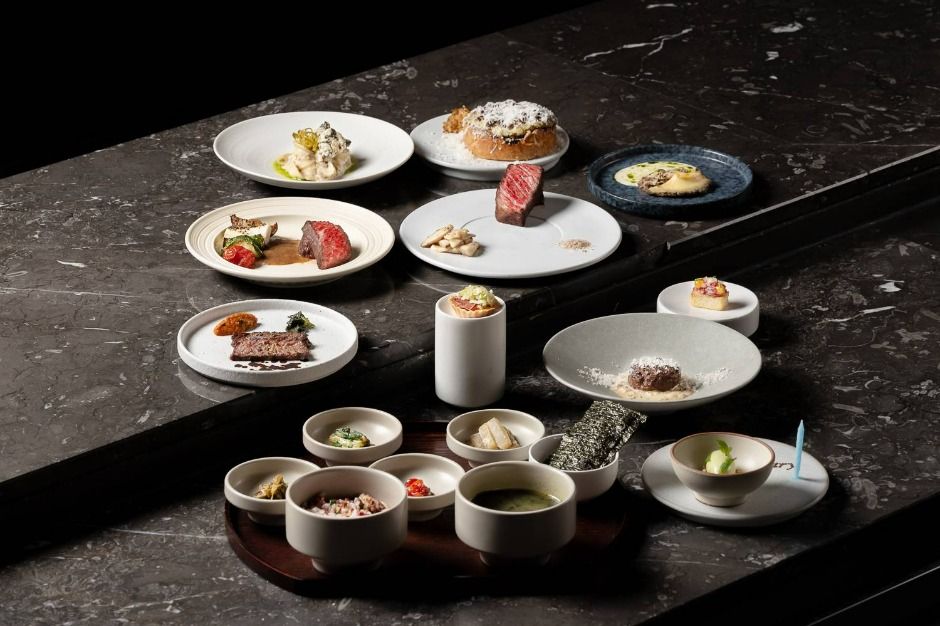
Wumok (우모크)
11.7Km 2025-10-27
22 Eonju-ro 170-gil, Gangnam-gu, Seoul
Wumok is a hanu (Korean beef) omakase restaurant that reinterprets Korean beef through fire and smoke, with its core philosophy centered on fire, wood, Korean beef, and smoke. The hanu used is a premium-grade hanu from Goryeong, Gyeongsangbuk-do. All dishes are prepared meticulously, balancing the texture and flavor. The interior is composed of dark wood and soft lighting, creating a quiet and focused dining environment.
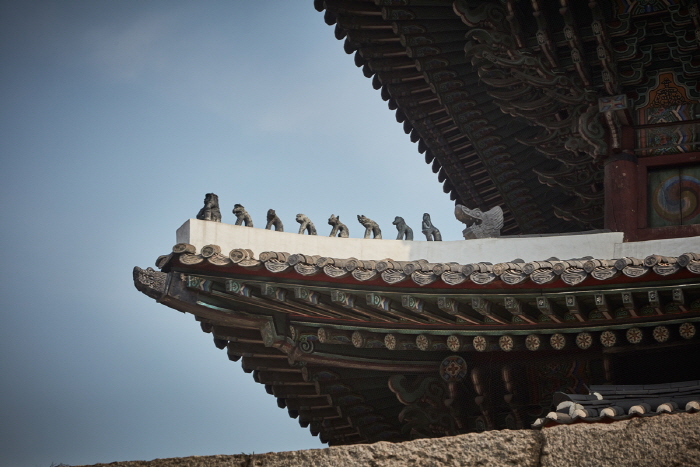
Heunginjimun Gate - Dongdaemun Gate (흥인지문)
11.7Km 2025-10-23
288, Jong-ro, Jongno-gu, Seoul
+82-2-2148-1842
Heunginjimun Gate was built to protect Hanseongbu, which historically housed essential government facilities. Heunginjimun Gate was the gate on the east side of the outer wall of Seoul Fortress among eight gates. It is referred to as Dongdaemun Gate as well. The gate was constructed during King Taejo’s 5th year in 1396, remodeled during the reign of King Danjong in 1453, and was newly built in 1869 during the sixth year of King Gojong’s reign in 1869.
The gate features a hipped roof with five front and two side compartments on a two-storied building. The thin and weak bracket system supports the eaves and is excessively decorated, reflecting the construction features of the late Joseon period. Also, outside of the fortress is the half-circle-shaped Ongseong, a small wall, to protect the gate.
One of the unique factors of Heunginjimun Gate is that it is the only gate among Seoul’s eight to have Ongseong, further exhibiting the style of construction used during the late Joseon period.
![Renew Surgery [Tax Refund Shop] (리뉴외과의원)](http://tong.visitkorea.or.kr/cms/resource/23/3314223_image2_1.jpg)
Renew Surgery [Tax Refund Shop] (리뉴외과의원)
11.7Km 2024-06-27
11F & 12F, J MEDI TOWER. 335, Dosan-daero, Gangnam-gu, Seoul
-
![Lee Moon Won Hair Lab [Tax Refund Shop] (이문원헤어랩)](http://tong.visitkorea.or.kr/cms/resource/50/2890550_image2_1.jpg)
Lee Moon Won Hair Lab [Tax Refund Shop] (이문원헤어랩)
11.7Km 2024-04-22
33, Seolleung-ro 132-gil, Gangnam-gu, Seoul
-
 English
 한국어
한국어 日本語
日本語 中文(简体)
 Deutsch
 Français
 Español
 Русский


