Owl Museum (부엉이박물관)
19.8Km 2022-09-19
143, Bukchon-ro, Jongno-gu, Seoul
+82-2-3210-2902
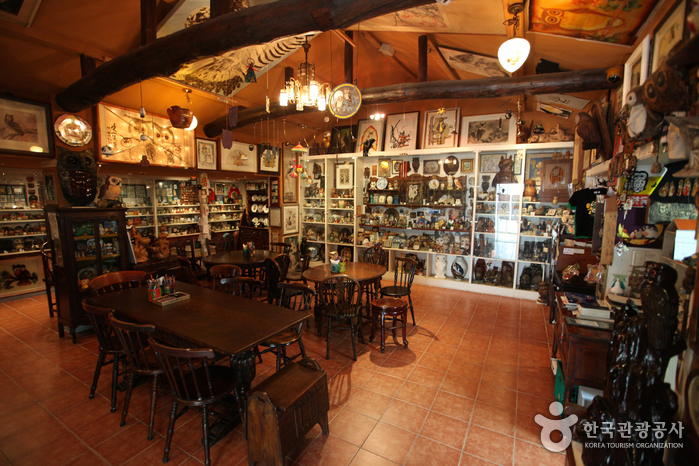
The Owl Museum is filled with over 2,000 pieces of owl-themed arts and crafts collected from all over the world by the owner. Renovated from a house, the museum has a feel of an antique café as the owner offers a cup of coffee or tea to visitors. Located near the city, those interested in owls should stop for a view and a drink. Various stories of how the collection was gathered as well as information on owls are also interesting.
![Changdeokgung Palace Complex [UNESCO World Heritage Site] (창덕궁과 후원 [유네스코 세계유산])](http://tong.visitkorea.or.kr/cms/resource/03/3092503_image2_1.jpg)
Changdeokgung Palace Complex [UNESCO World Heritage Site] (창덕궁과 후원 [유네스코 세계유산])
19.8Km 2025-07-21
99 Yulgok-ro, Jongno-gu, Seoul
Changdeokgung Palace was the second royal villa built following the construction of Gyeongbokgung Palace in 1405. It was the principal palace for many kings of the Joseon dynasty, and is the most well-preserved of the five remaining royal Joseon palaces. The palace grounds are comprised of a public palace area, a royal family residence building, and the rear garden. Known as a place of rest for the kings, the rear garden boasts a gigantic tree that is over 300 years old, a small pond and a pavilion.
The palace gained importance starting from the time of Seongjong, the 9th king of Joseon, when a number of kings began using it as a place of residence. Unfortunately, the palace was burned down by angry citizens in 1592 when the royal family fled their abode during the Imjin War. Thanks to Gwanghaegun, the palace was restored in 1611. Even today, it houses a number of cultural treasures, such as Injeongjeon Hall, Daejojeon Hall, Seonjeongjeon Hall, and Nakseonjae Hall.
Changdeokgung Palace’s garden behind the inner hall, called the "Secret Garden," was constructed during the reign of King Taejong and served as a rest area for the royal family members. The garden had formerly been called Bugwon and Geumwon, but was renamed Biwon Garden, or Secret Garden, after King Gojong came into power. The garden was kept as natural as possible and was touched by human hands only when absolutely necessary. Buyongjeong Pavilion, Buyongji Pond, Juhamnu Pavilion, Eosumun Gate, Yeonghwadang Hall, Bullomun Gate, Aeryeonjeong Pavilion, and Yeongyeongdang Hall are some of the many attractions that occupy the garden. The most beautiful time to see the garden is during the fall when the autumn foliage is at its peak and the leaves have just started to fall.
Though it has been treasured by Koreans for centuries, Changdeokgung Palace and its complex was recognized as a World Cultural Heritage site by the UNESCO World Cultural Heritage Committee in December of 1997 during the committee meeting in Naples, Italy.
Gobundari Market (고분다리 전통시장)
19.8Km 2023-12-22
8 Gucheonmyeon-ro 34-gil, Gangdong-gu, Seoul
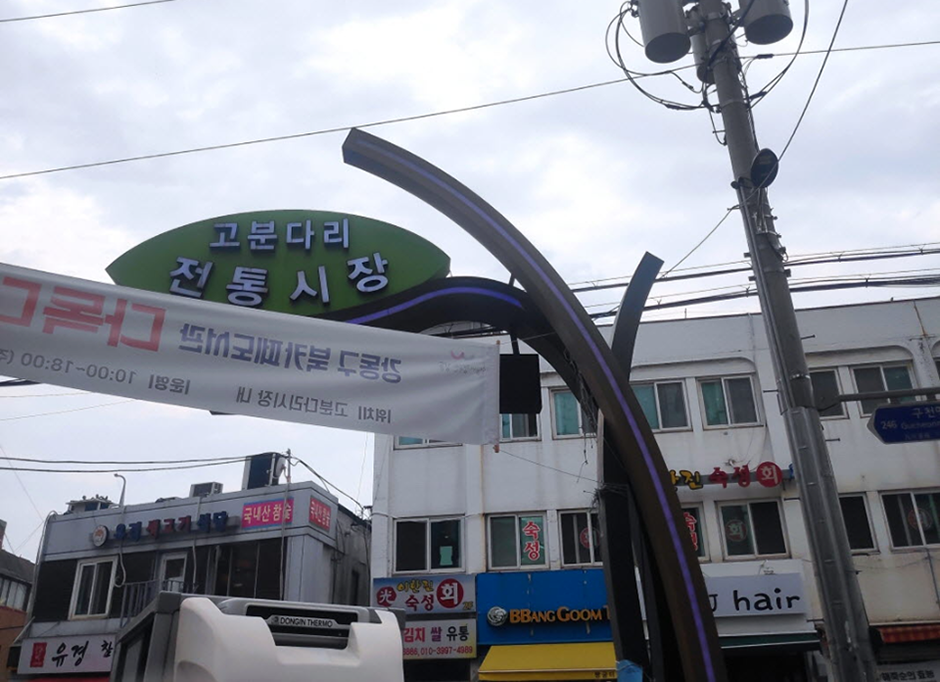
Gobundari Market is a traditional market that takes care of food, clothing, and shelter for residents in Cheonho-dong. Because it is located in the center of the neighborhood, it is also a market where one can get a closer look into the daily lives of locals. One characteristic that stands out from this traditional market is none other than the murals. Murals of various themes that decorate the market area add eclectic energy to the quaint neighborhood. Like any other traditional markets, there are stores where visitors can purchase Koreans’ all-time favorite snacks.
![E-Mart - Hanam Branch [Tax Refund Shop] (이마트 하남)](http://tong.visitkorea.or.kr/cms/resource/00/2888500_image2_1.jpg)
E-Mart - Hanam Branch [Tax Refund Shop] (이마트 하남)
19.8Km 2024-04-22
70, Deokpungseo-ro, Hanam-si, Gyeonggi-do
-
Choong Ang High School (중앙고등학교)
19.8Km 2025-10-23
164 Changdeokgung-gil, Jongno-gu, Seoul
+82-2-742-1321
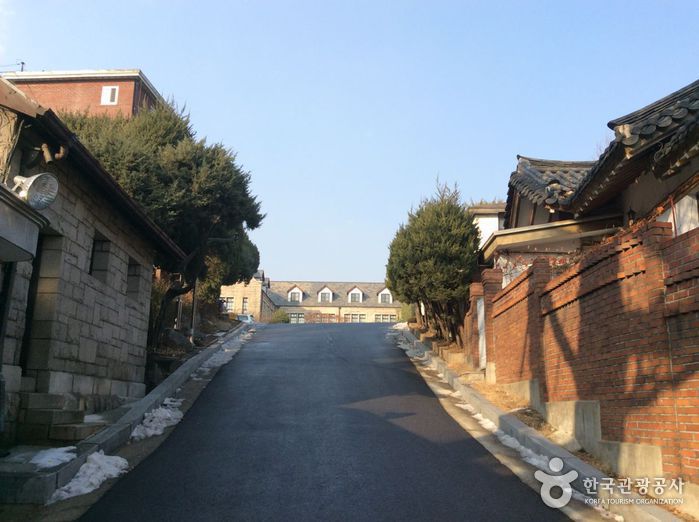
Choong Ang High School is located in Jong-ro near Samcheongdong-gil. It was built to educate the public at the beginning of the 20th century. The school’s main building was reconstructed in 1937 after the original two-story brick house was destroyed in 1934. The main building situated in front of the main gate is a two-story H-shaped granite stone building in Gothic style, with a four-story tower in the middle.
The school holds historical significance because it was designed by Park Dong Jin, one of Korea's first modern architects and the designer of Korea University’s main building, library, and the Chosun Ilbo Newspaper Company building. The main building of Choong Ang High School is designated as Historic Site No. 281. Many national leaders were educated at the gothic building during the grim period when Korea was trying to escape Japanese colonial rule.

White Spring (화이트스프링)
19.8Km 2024-02-21
19 Gyeonggang-ro 849beon-gil, Wabu-eup, Namyangju-si, Gyeonggi-do
031-521-7777
White Spring is a large brunch café operated by a chef with a background in hotels. Their signature dish is eggs benedict. They also serve a Korean menu item, gangdoenjang bibimbap (seasoned soybean paste bibimbap), providing a hearty meal option. Ordering a meal includes a discount on americano coffee. Its proximity to the Hangang River makes it a popular spot for drives just outside Seoul.
![Samsung Digital Plaza - Wangsimni Branch [Tax Refund Shop] (삼성 디지털 왕십리점)](http://tong.visitkorea.or.kr/cms/resource/44/2890544_image2_1.jpg)
Samsung Digital Plaza - Wangsimni Branch [Tax Refund Shop] (삼성 디지털 왕십리점)
19.8Km 2024-04-18
217, Gosanja-ro, Seongdong-gu, Seoul
-
Jinkwang Sports [Tax Refund Shop] (진광스포츠)
19.8Km 2024-06-27
298, Cheonggyecheon-ro, Jung-gu, Seoul
-
Songwol Naengmyeon (송월냉면)
19.9Km 2023-12-22
26 Gucheonmyeon-ro 29-gil, Gangdong-gu, Seoul
Songwol Naengmyeon is a cold noodle restaurant passed down for two generations, from 1988 to the present. It is a restaurant specializing in naengmyeon, or cold buckwheat noodles. It has three simple menu items: yeolmu naengmyeon (cold buckwheat noodles with young summer radish kimchi), mul naengmyeon (cold buckwheat noodles), and bibim naengmyeon (spicy buckwheat noodles). Yeolmu is the stem of young radish and is used as an ingredient in kimchi, one of the traditional Korean fermented foods, as well as salads, naengmyeon, and bibimbap. Harvest usually begins in early summer, so it can often be found on dinner tables in the summer. The combination of naengmyeon with ice, young radish, and cool dongchimi (radish water kimchi) creates a wholesome and refreshing taste. This restaurant is also popular among locals and visitors may have to wait in line during peak hours, but manages their table turnover in an organized fashion so their customers in queue won’t have to wait for too long.
Olive Young - Children's Grand Park Station Branch [Tax Refund Shop] (올리브영 어린이대공원역점)
19.9Km 2024-06-26
1F and 2F, 388, Gwangnaru-ro, Gwangjin-gu, Seoul
-
 English
 한국어
한국어 日本語
日本語 中文(简体)
 Deutsch
 Français
 Español
 Русский


