Deoksugung Palace (덕수궁)
13.8Km 2025-06-25
99 Sejong-daero, Jung-gu, Seoul
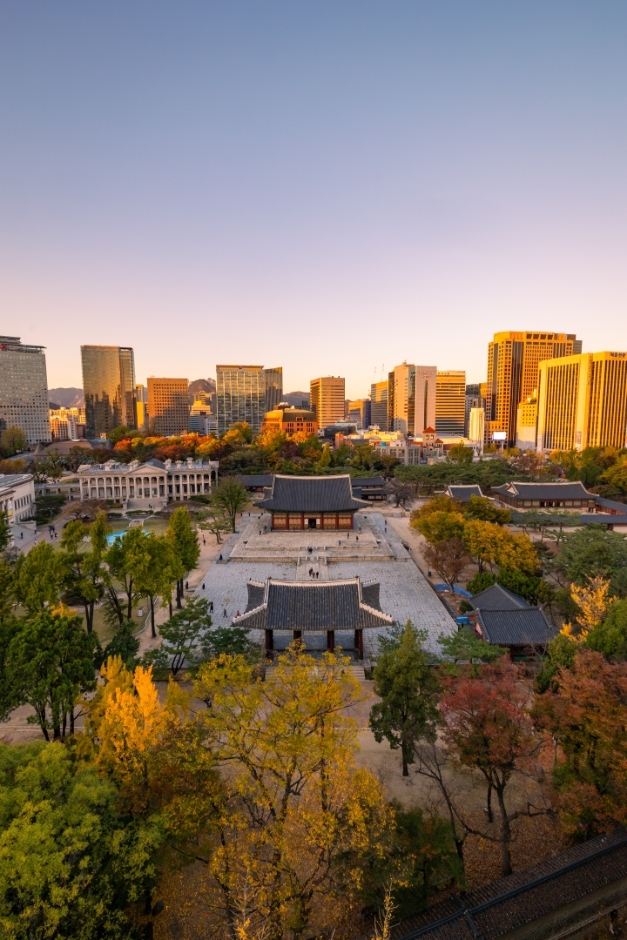
Registered as a Historic Site, Deoksugung Palace was initially not a royal palace, but the residential home of Grand Prince Wolsan (1454-1488), the older brother of King Seongjong (1469-1494) of the Joseon dynasty. It wasn't until 1593 that the palace was used as a temporary palace of the royal family after their home was burned down during the Imjin War. King Seonjo also stayed at Deoksugung Palace after returning to the city. It became a proper palace when Gwanghaegun (1575-1641) ascended to the throne and gave this royal residence the name Gyeongungung Palace in 1611. Over the following decades, the palace alternated between being an official palace and a temporary residence. The name did not change officially to Deoksugung Palace, meaning the “palace of virtuous longevity,” until 1907. While the palace once encompassed a vast area with many buildings, the current palace grounds are just a small shadow of the prior splendor, with very few structures remaining.
King Sejong Statue (세종대왕 동상)
13.8Km 2024-03-04
175, Sejong-daero, Jongno-gu, Seoul
+82-2-2133-7713
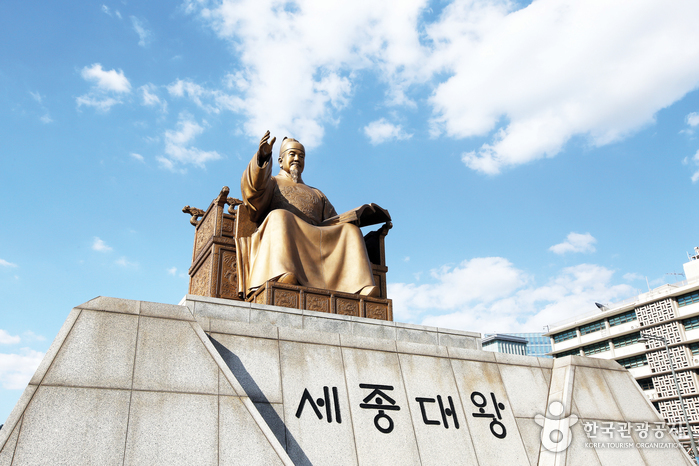
King Sejong Statue can be found at Seoul’s Gwanghawmun Square. The statue commemorates King Sejong the Great (1397-1450, reign 1418-1450), the fourth king of Joseon (1392-1897). He is thought to be the greatest king in Korean history, for he is credited with great developments in science and technology, expansion of Joseon’s territory, and the creation of the Korean script, [Hangeul]. King Sejong’s likeness can be found on the 10,000 won bill as well.
Deoksugung Stone Wall Path (덕수궁 돌담길)
13.8Km 2025-01-10
24 Sejong-daero 19-gil, Jung-gu, Seoul
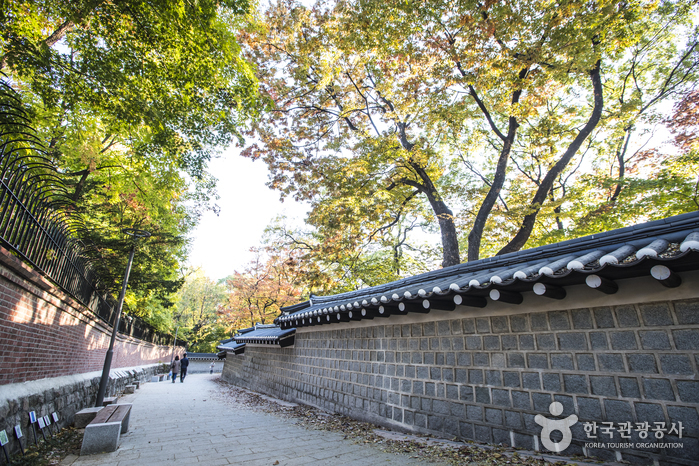
The Deoksugung Stone Wall Path runs along the wall of Deoksugung Palace. It is beautifully lit and landscaped, giving it a romantic atmosphere even at night. There are street performances and flea markets, and the area boasts many famous cafes and restaurants along Jeongdong street. In autumn, the ginkgo trees and walls form a stunning scene. Close to major cultural facilities such as the Seoul Museum of Art and Seoul Museum of History, it attracts numerous visitors come for a stroll.
![National Museum of Modern and Contemporary Art, Deoksugung [MMCA Deoksugung] (국립현대미술관 덕수궁)](http://tong.visitkorea.or.kr/cms/resource/09/2991509_image2_1.jpg)
National Museum of Modern and Contemporary Art, Deoksugung [MMCA Deoksugung] (국립현대미술관 덕수궁)
13.8Km 2023-06-23
99, Sejong-daero, Jung-gu, Seoul
+82-2-2022-0600
The National Museum of Modern and Contemporary Art, Deoksugung [MMCA Deoksugung] was originally built as an annex to the National Museum of Contemporary Art. The museum specializes in seeking out and researching modern art, exhibiting and preserving it, supporting and developing educational programs, and furthering publications and international exchanges. Located within Deoksugung Palace, the center maintains a unique traditional atmosphere. The museum planned and showcased a total of 38 unique exhibitions from 1998 to 2005. Besides the exhibitions, the center has various performances such as music and mime, as well as lectures or seminars on artists' works.
Statue of Admiral Yi Sun-Shin (충무공 이순신 동상)
13.8Km 2024-03-04
175, Sejong-daero, Jongno-gu, Seoul
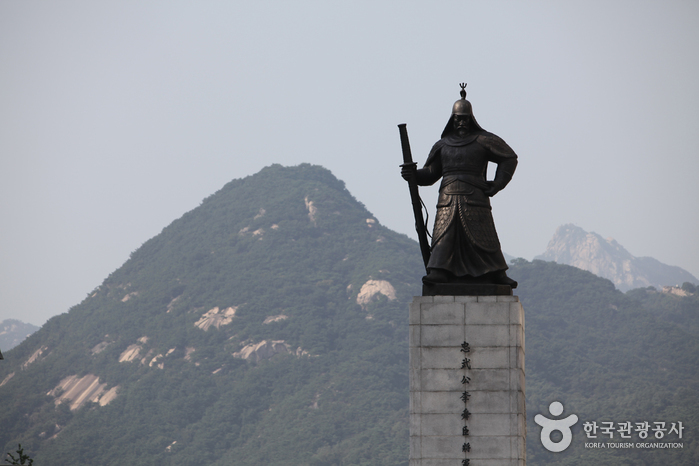
The Statue of Admiral Yi Sun-Shin can be found at Gwanghwamun Square in Seoul. Admiral Yi Sun-shin (1545-1598) was a naval commander who served during the Japanese invasion of Korea (also known as Imjin War: 1592-1598). The undefeated admiral achieved 23 victories against the Japanese navy using innovative tactics, and he is thus considered as one of the greatest generals in the history of Korea. Admiral Yi’s likeness can be found on the 100 won coin.
Gwanghwamun Plaza (광화문 광장)
13.8Km 2025-03-13
172 Sejong-daero, Jongno-gu, Seoul
+82-2-120
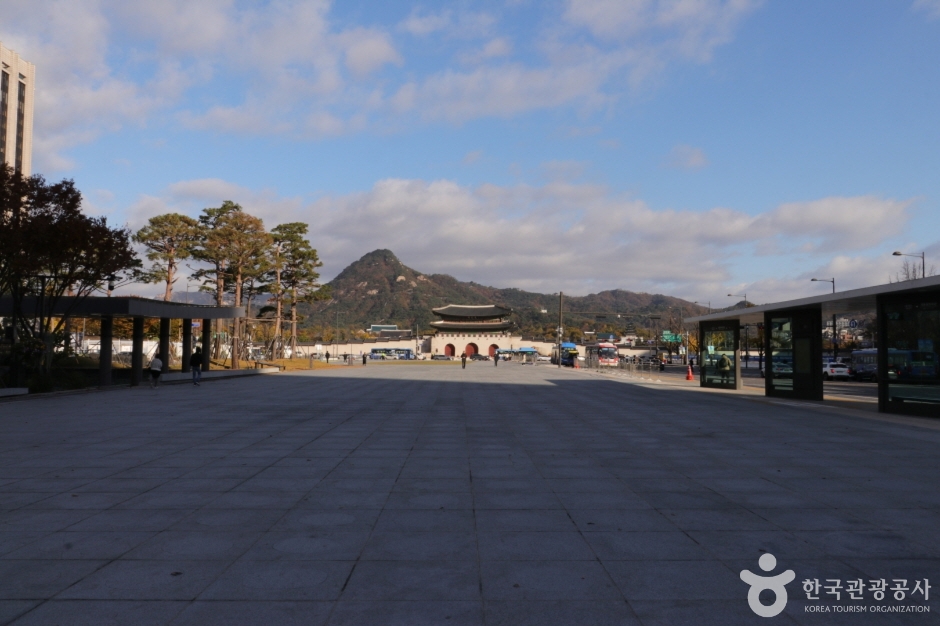
Gwanghwamun Plaza was opened to the public in August 2022 after renovation. Sejong-ro, the main street of Seoul with 600 years of history, has been reborn as a space for historical and cultural experiences by restoring Yukjo Street. Woldae (Elevated Ceremonial Stage) was reconstructed at the entrance of the "Plaza that Recovers the History of Gwanghwamun," and the statue of Haetae, an imaginary animal that judges good and evil, has been restored. In addition, traces of Yukjo Street, the main street of Hanyang in the past, were restored in the ‘Plaza that recreates the scenery of Yukjo Street’ near Sejong-ro Park, with a scale model installed. This is an excellent place for a stroll with beautiful scenery, including Gyeongbokgung Palace and Bugaksan Mountain.
Samcheong Sujaebi (삼청동수제비)
13.9Km 2024-03-04
101-1 Samcheong-ro, Jongno-gu, Seoul
+82-2-735-2965
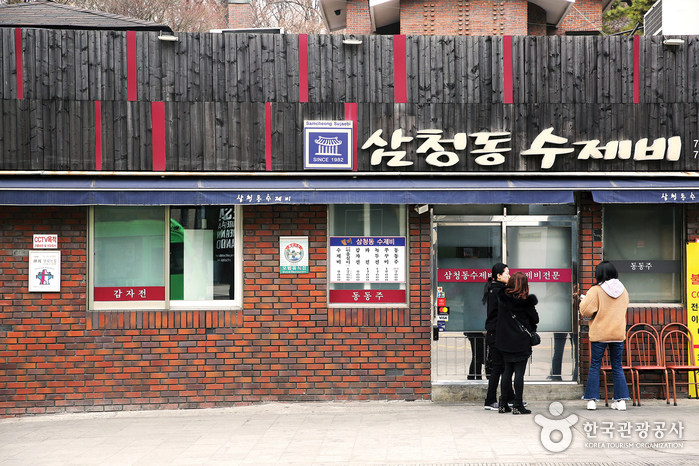
Samcheong Sujaebi is a handmade sujebi (hand-pulled dough soup) specialty restaurant located in Samcheong-dong. Sujebi is a dish made by tearing hand-pulled dough into pieces and boiling it in anchovy broth, among other broths. The signature menu features sujebi with sliced pumpkin, clams, and potatoes, all boiled together and served in a pot. Another specialty is the potato pancake made exclusively from 100% potatoes. Nearby attractions include Bukchon Hanok Village, the National Museum of Modern and Contemporary Art, and Gyeongbokgung Palace.
Gwanghwamun Gukbap (광화문국밥)
13.9Km 2024-06-19
53 Sejong-daero 21-gil, Jung-gu, Seoul
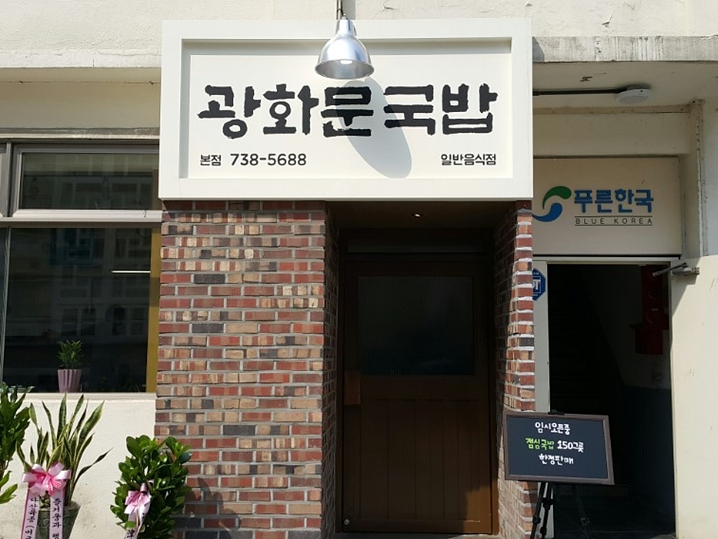
Gwanghwamun Gukbap is a dwaeji gukbap (pork and rice soup) restaurant operated by Chef Park Chanil. Its distinctive feature lies in using only black pork loin and shoulder to enhance the flavor. The signature dish is the dwaeji gukbap, which boasts a mild, clean, and deep flavor. In addition to that, they also offer dwaeji suyuk (boiled pork slices) and pisundae (sundae with pork blood). Known for its authentic taste of rice soup and rich broth, it's a popular destination for many.
Owl Museum (부엉이박물관)
13.9Km 2022-09-19
143, Bukchon-ro, Jongno-gu, Seoul
+82-2-3210-2902
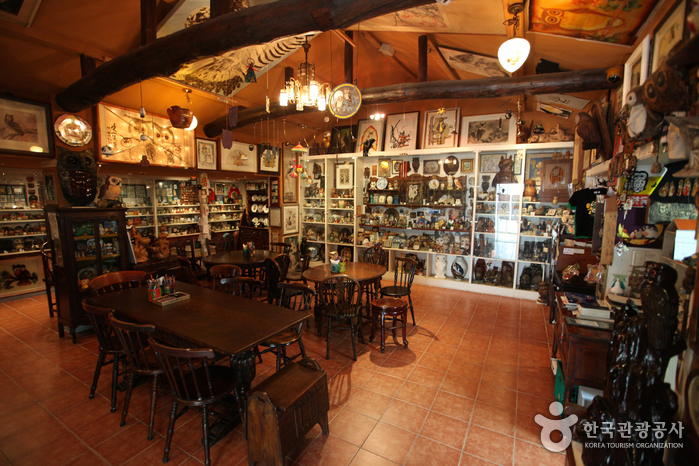
The Owl Museum is filled with over 2,000 pieces of owl-themed arts and crafts collected from all over the world by the owner. Renovated from a house, the museum has a feel of an antique café as the owner offers a cup of coffee or tea to visitors. Located near the city, those interested in owls should stop for a view and a drink. Various stories of how the collection was gathered as well as information on owls are also interesting.

Samcheong-dong Street (삼청동길)
13.9Km 2025-01-22
107 Samcheong-ro, Jongno-gu, Seoul
It is said that Samcheong-dong was named from the story about the three "cheong" (Chinese character meaning clean) of the area, namely the mountain, water, and people. Another theory is that the origin of the region's name came from Samcheongjeon Hall where three tablets called "Taecheong," "Sangcheong," and "Okcheong," were set up based on Taoism. Samcheong-dong Street features a mixture of old scenes of hanok buildings with traditional beauty and modern scenes of galleries and cafés, creating a unique atmosphere. Visitors can feel the abundant cultural mood at every corner of the street through the art galleries, museums, antique shops, and quiet pathways.
 English
 한국어
한국어 日本語
日本語 中文(简体)
 Deutsch
 Français
 Español
 Русский


