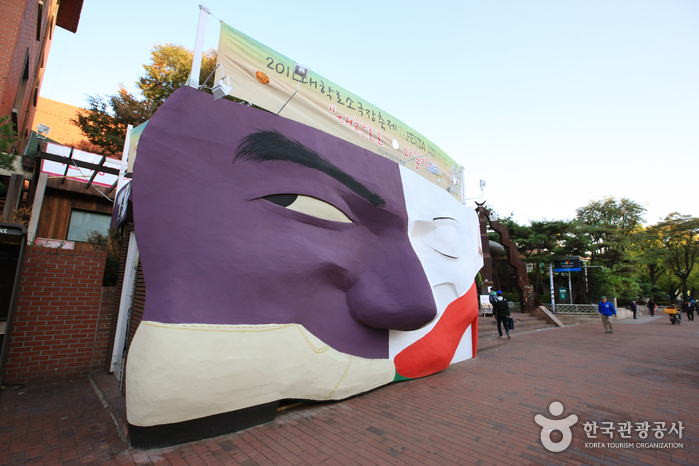
Daehangno (University Street) (대학로)
12.0Km 2021-03-25
104, Daehak-ro, Jongno-gu, Seoul
+82-2-2148-1114
Daehangno is an artistic neighborhood that stretches 1.1 kilometers from Jongno 5-ga Intersection to Hyehwa-dong Rotary. The area is filled with culture and performing arts facilities, with the center of all this being Marronnier Park. Visitors can find performances taking play every day at the many theaters large and small, as well as restaurants serving a range of cuisines. The area is especially active on weekends and during the street festival period.

Daehakro Arts Theater (대학로예술극장)
12.0Km 2021-07-05
17, Daehak-ro 10-gil, Jongno-gu, Seoul
+82-2-3668-0007
Daehakro Arts Theater is a venue for performing arts that is comprised of a main hall and small hall. The main hall fills the first and second floors and has a proscenium stage with seating arranged in fan-shape. In an effort to present a more contemporary theater experience, the seats here are placed closer to the stage than those of a standard theater, allowing the audience to experience performances more vividly.
![ABC-Mart - Itaewon Branch [Tax Refund Shop] (ABC마트 ST이태원)](http://tong.visitkorea.or.kr/cms/resource/73/2878473_image2_1.jpg)
ABC-Mart - Itaewon Branch [Tax Refund Shop] (ABC마트 ST이태원)
12.0Km 2024-04-22
159-1, Itaewon-ro, Yongsan-gu, Seoul
-
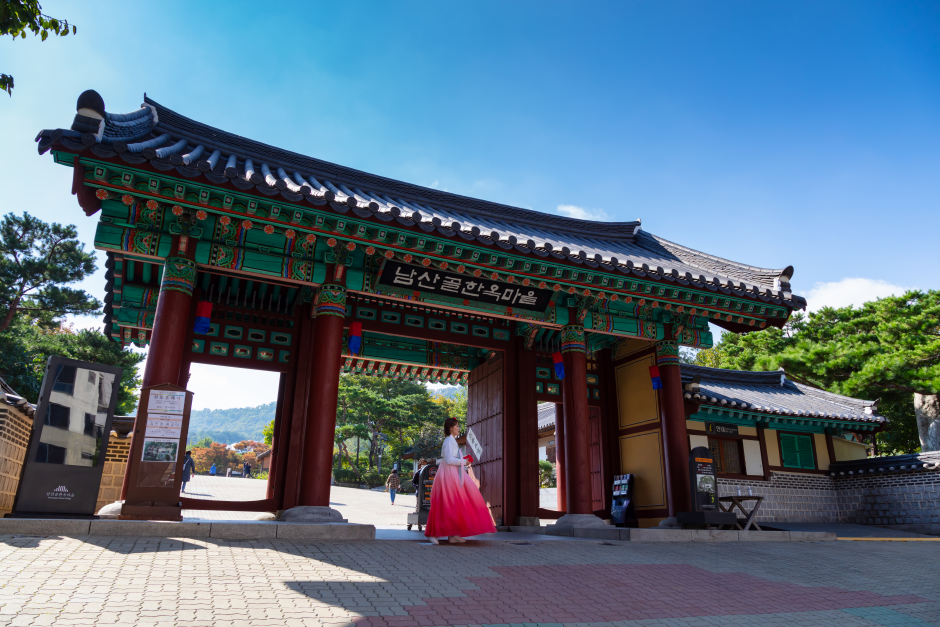
Namsangol Hanok Village (남산골한옥마을)
12.0Km 2025-07-14
28 Toegye-ro 34-gil, Jung-gu, Seoul
Namsangol Hanok Village opened in 1998 on the northern side of Namsan Mountain in the center of the capital. This village has five restored hanok (traditional Korean house) premises, a pavilion, a traditional garden, a performance art stage, and a time capsule plaza, making it a perfect spot for locals and tourists to take a leisure walk. Upon entering from the front gate, visitors will get a taste of Korea's traditional life while escaping from bustling city life. The traditional garden with its pavilion and old houses creates a peaceful ambiance before the forested Namsan Mountain. A time capsule commemorating Seoul’s 600th anniversary was buried in 1994 at the highest point of the village and is scheduled to be reopened 400 years later in 2394.
The five hanok premises at Namsangol Hanok Village once belonged to aristocrats and government officials of the Joseon dynasty. Each house was originally located in a different neighborhood, but they were all moved to this area and restored to their original form. The houses were rebuilt using their original materials, except for one house, where the materials were too old and deteriorated to be reused. The premises were carefully restored and replicated according to their original form to depict the owners’ social class and personality. These buildings are now used as an exhibit to portray the living environment during the Joseon dynasty and as a venue for educational and cultural programs for children and tourists.
Some of the unique programs and activities to participate in include wearing hanbok, folding hanji (traditional Korean paper), writing in Korean, traditional tea ceremony, traditional etiquette school, and herbal medicine experience. There are also taekwondo demonstrations and other various performances held around the village. Visitors can also try traditional games such as yunnori (traditional board game), or understand more about the area through a guided tour.
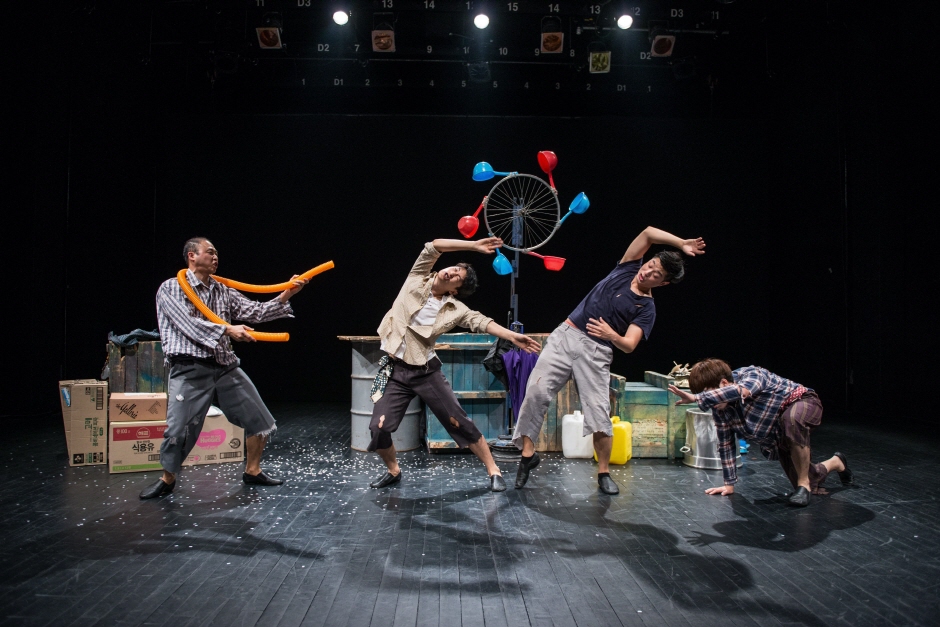
D. Festa: Daehakro Street Performance Festival (대학로 거리공연축제)
12.0Km 2025-06-16
1, Daehak-ro 8-gil, Jongno-gu, Seoul
• 1330 Travel Hotline: +82-2-1330 (Korean, English, Japanese, Chinese) • For more info: +82-2-741-4188
Started in 2015, Daehakro Street Performance Festival provides various performances including plays, dances, mimes and more. The festival aims to provide hope and changes in daily life through diverse performances.
Seoul National University Hospital (서울대학교병원)
12.0Km 2025-10-23
101 Daehak-ro, Jongno-gu, Seoul
Seoul National University Hospital, a national central hospital that has led Korean medicine for over 130 years, is a top-tier hospital equipped with world-class medical professionals and cutting-edge systems. For 25 consecutive years, it has ranked first in brand power in the hospital sector. The hospital is renowned for its cancer research, the most comprehensive pediatric care in the country, and treatments for rare and intractable diseases. Through patient-centered, personalized services, it has established itself as a trusted healthcare institution.
Sporado Adidas - Lotte Mia Branch [Tax Refund Shop] (스포라도 아디다스 롯데미아)
12.0Km 2024-04-23
5F, 62, Dobong-ro, Gangbuk-gu, Seoul
-
 English
 한국어
한국어 日本語
日本語 中文(简体)
 Deutsch
 Français
 Español
 Русский


