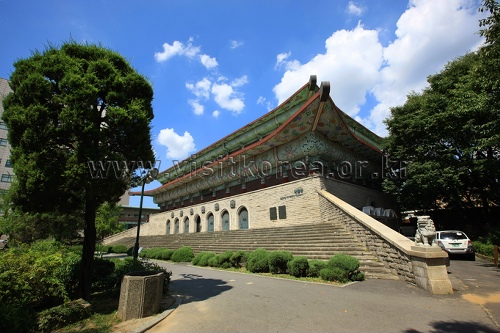
Sejong University Museum (세종대학교 박물관)
4.9Km 2022-09-16
209, Neungdong-ro, Gwangjin-gu, Seoul
+82-2-3408-3876
Sejong University Museum exhibits folk art, wooden crafts, clothing, accessories, pottery, paintings and calligraphy collected for over 40 years by the couple who founded the present day Sejong University, Dr. Ju Young-ha and Dr. Choi Ok-ja. This museum has its origins in the Soodo Gallery, which was built in Chungmuro, the campus’ original location, in 1959. Needing more space to house additional artifacts, the museum moved to its current location, which first opened on May 5, 1973 in a four-story concrete building inspired by traditonal tower design from the Baekje era. This building was later expanded on May 20, 1977.
After the university’s name was changed to Sejong University in 1979, the museum was also renamed the Sejong University Museum. The museum showcases unique artifacts to both scholars and students from home and abroad in contribution to the research of Korea’s culture, arts, and archeology.

Mouse Rabbit (마우스래빗)
4.9Km 2025-10-30
10, Neungdong-ro 11-gil, Gwangjin-gu, Seoul
SUPER JUNIOR Yesung
SUPER JUNIOR’s Yesung, who loves coffee, opened this cafe with her younger brother. It is also called 'Yesung Cafe' and is visited by domestic fans as well as foreign customers. Yesung serves himself, and it is decorated like a hideout. The cafe building, which consists of the first basement floor and the second floor above ground, catches the eye with a different theme for each floor. Ssamanko Smoothie and Icy Blue Smoothie are popular menu items.

Yongma Falls Park (용마폭포공원)
5.1Km 2024-02-20
250-12 Yongmasan-ro, Jungnang-gu, Seoul
Yongma Falls Park is situated on the mid-slope of Yongmasan Mountain, established following the closure of an aggregate collection plant. The park showcases three artificial waterfalls: Cheongnyongpokpo Falls, Baengmapokpo Falls, and Yongmapokpo Falls. Each waterfall comprises two tiers, with x_heights ranging from 21m to 51.4m. The park is equipped with various amenities, including ponds, tennis courts, soccer fields, a wildflower garden, walking trails, and a barefoot walking trail.
YOU&I Clinic Kundae (유앤아이의원 건대점)
5.2Km 2025-11-24
2nd Floor, 219 Achasan-ro, Gwangjin-gu, Seoul
YOU&I Clinic is a trusted dermatology and aesthetic clinic with extensive experience and expertise accumulated since 2006.
At YOU&I Clinic, we are committed to using authentic products, providing precise and honest treatments, and offering personalized services tailored to each individual’s needs.
We welcome clients not only from Korea but also from Japan, China, and Thailand, and offer Japanese and Chinese interpretation services. All foreign clients receive treatments at the same prices as Korean clients.
YOU&I Clinic specializes in lifting, petite procedures, and skin boosters, as well as a wide range of aesthetic skin treatments. We also provide thorough aftercare to ensure the highest level of satisfaction for every client.
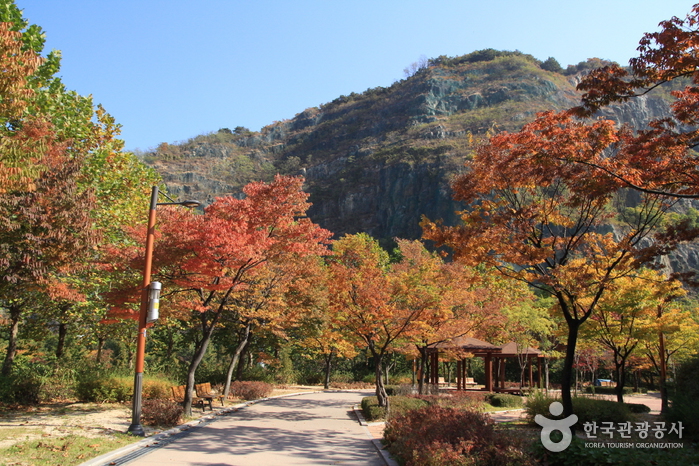
Yongmasan Mountain (용마산)
5.3Km 2021-06-18
53, Yongmasan-ro 62-gil, Jungnang-gu, Seoul
+82-2-2094-2344
With an altitude of 348 meters, Yongmasan Mountain is the highest peak of Achasan Mountain. The mountain stretches through the ridges of Manguri Park and Junggok-dong, with trails connecting to Achasan Mountain Fortress and the back gate of Children’s Grand Park. Nearby parks include Yongmapokpo Park and Yongmasan Sagajeong Park.
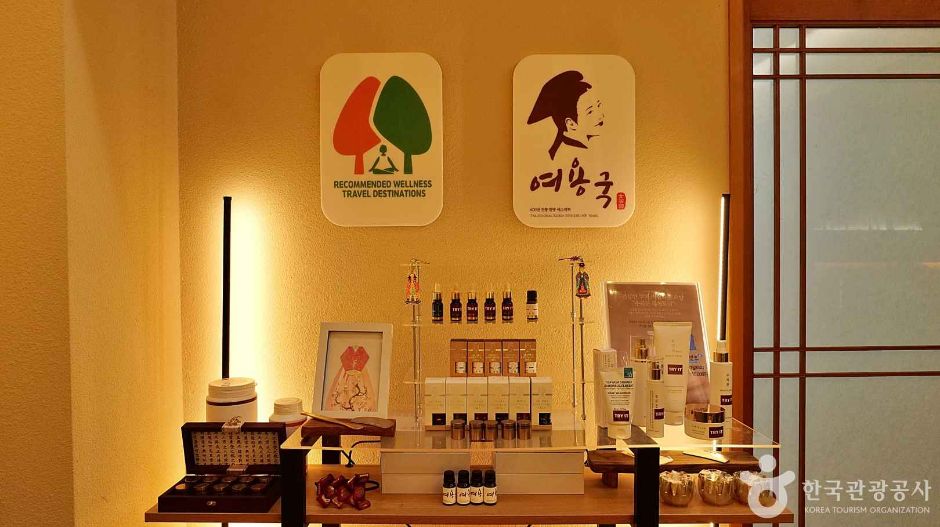
Korean Spa Yeo Yong Guk (여용국 한방스파)
5.3Km 2025-10-23
60 Seokchonhosu-ro 12-gil, Songpa-gu, Seoul
Korean Spa Yeo Yong Guk was created under the philosophy of "a woman taking care of her face is akin to a king running a country." It was inspired by the ancient Korean novel titled "Yeoyonggukjeon" written by Ahn Jeong-bok from the Joseon Dynasty. Korean Spa Yeo Yong Guk understands that people have different body types, therefore applying the same massage method or medicinal herb to everyone will not always have the same effect. Different medicinal herbs and massage techniques should be applied according to one's body type.
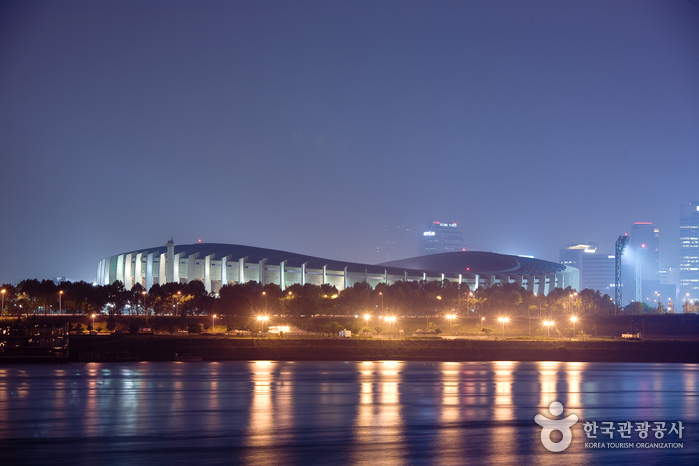
Seoul Sports Complex (Jamsil Sports Complex) (서울종합운동장(잠실종합운동장))
5.3Km 2024-12-02
25 Olympic-ro, Songpa-gu, Seoul
Seoul Sports Complex, located in Songpa, Seoul, hosted the 1986 Asian Games and the 1988 Summer Olympics. It consists of a main stadium, a baseball stadium, an indoor stadium, a students' gymnasium, an indoor swimming pool, and auxiliary stadiums. It serves as the venue for professional baseball and basketball games in Korea, as well as frequent K-pop concerts. Conveniently linked to subway lines 2 and 9, it offers easy access for visitors.
Common Ground (커먼그라운드)
5.5Km 2025-10-23
200 Achasan-ro, Gwangjin-gu, Seoul
+82-2-467-2747
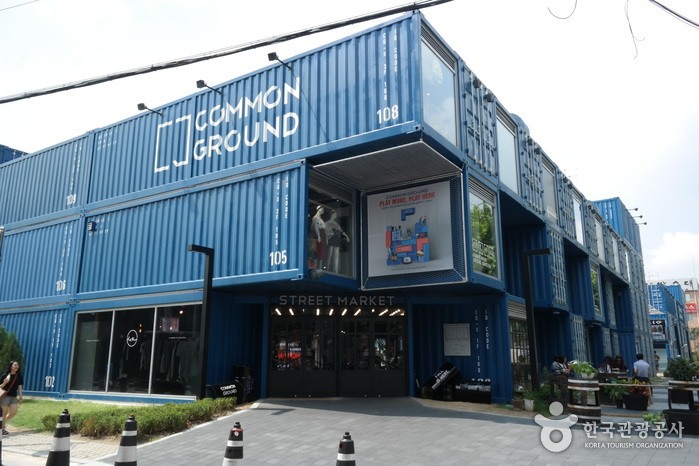
Korea's first pop-up store built with shipping containers,
Common Ground is approximately 5,300 square meters in scale, made up of 200 large containers and is capable of transforming into different structures or moving into different places. Mega-sized mainstream brands are hard to spot in Common Ground. Instead, new and trendy mid-sized shops by up-and-coming new designers and editorial shops can be found here.
On the central square of the ground market, a weekend market is held with different themes. In addition, various events such as exhibitions and performances continue to entertain shoppers while playing its role as a cultural space. On the third floor terrace, famous restaurants sprawl along the sides of the alley. If you feel like having a light snack, you can also pop down to the food trucks on the market ground that offers an exotic gastronomic dining experience.
Munjeong-dong Rodeo Street (문정동 로데오거리)
5.5Km 2025-03-29
10, Dongnam-ro 4-gil, Songpa-gu, Seoul
+82-2-400-1633
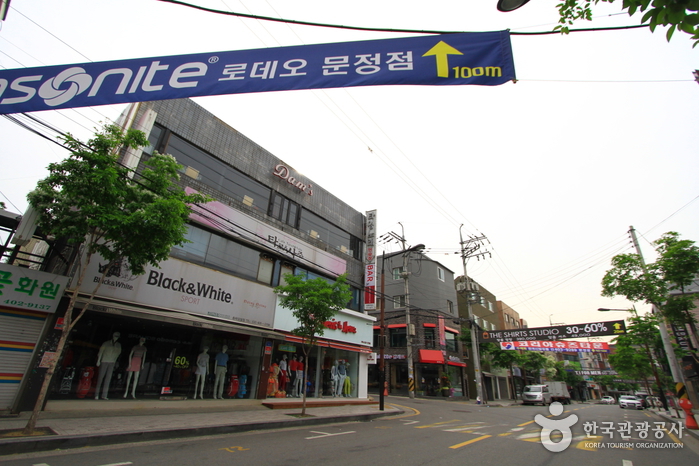
Munjeong-dong Rodeo Street is a large shopping district containing over 200 brand-name discount stores. The street is T-shaped, with a 1-kilometer-long main street connected to a 400-meter-long alley, and the Munjeong 1-dong Resident Center located at the center. For shoppers’ convenience, there is a public parking lot (if visitors purchase goods at Rodeo Street, they can park here for free) and a parking lot for foreign tourists only (free of charge). Munjeong-dong Rodeo Street is one of Korea’s major shopping streets with customers ranging from teenagers to adults, since discount stores stocking sports wear, casual wear, shoes, men’s and ladies’ suits, and golf wear are all located on this street. Moreover, this is a great place to find deals on famous brands, at prices lower than at a department store. On some items you can get discounts of up to 70-80%.
Since most of the goods are stock from previous seasons, it might be better to purchase the more classic styles rather than the trendy fashions. In some cases, the goods might have been slightly crumpled or stained during the transfer from warehouse storage, but taking them to the dry-cleaners should fix most problems. However you should be careful when looking at the sewing quality, and check for missing buttons.
One more thing to bear in mind is the shopping season. Even discount stores have periods when stock runs low. The best time to shop is immediately after the stores in Rodeo Street restock their merchandise. This is done at about the same time as department stores. There is also an enormous variety of goods to choose from during the Rodeo Festivals in May and September. The purchased goods are exchangeable but non-refundable, so check the quality of the products carefully before purchasing.
In addition, Munjeong-dong Rodeo Street has a wide selection of restaurants and entertainment facilities. There are a number of pizza places, coffee shops, and food courts, as well as internet cafes and game rooms in the alleys behind the stores. Visitors can also relax in the surrounding parks. There’s a park with a 600-year-old zelkova tree right behind the Munjeong 1-dong Resident Center.
Munjeong Rodeo Street is not just a shopping district; it’s a cultural area. The ‘Munjeong-dong Cultural Festival’ takes place every year in May, and the ‘Munjeong-dong Rodeo Festival’ takes place in May every other year. During these festivals, visitors can watch traditional Korean performances, traditional wedding ceremonies, international fashion parades, hip-hop dancing, and more.
A charity sale is held on weekends and national holidays on the open-air stage of the Munjeong 1-dong Resident Center, and merchandise is sold for even bigger discounts.
Jangja Lake Park (장자호수공원)
5.5Km 2022-01-01
878, Topyeong-dong, Guri-si, Gyeonggi-do
+82-31-550-2472
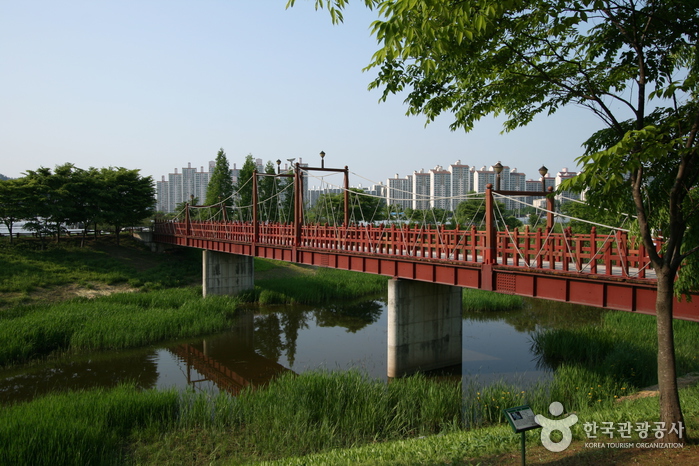
Guri City worked to improve the water quality of Jangja Lake in order to form the Jangja Lake Park and in the process an ecological zone was created. A 3.6 km tree-lined walking trail runs through the park and is frequently used by people enjoying an outing or getting some light exercise. Concerts, exhibitions, and other events are held on the outdoor stage on weekends and the park is widely used as a place to relax by local residents.
* Size - Area 107,385 m², average water depth 2.2 m (0.2 m~4.7 m), and walkway 4.6 km
 English
 한국어
한국어 日本語
日本語 中文(简体)
 Deutsch
 Français
 Español
 Русский


