Woori Art Hall (우리금융아트홀)
2.2Km 2025-04-01
424 Olympic-ro, Songpa-gu, Seoul
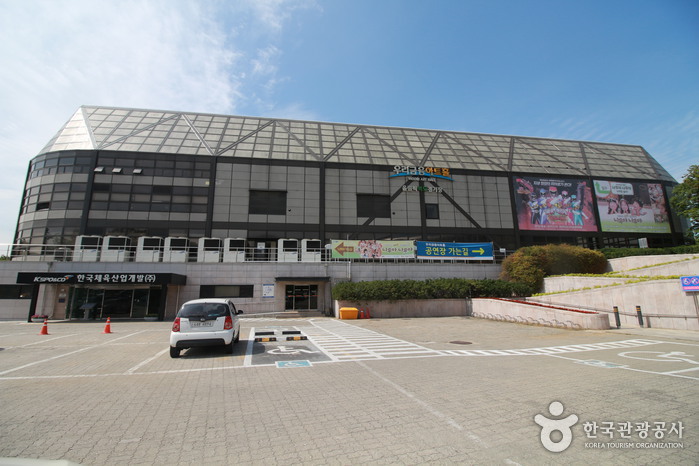
Woori Art Hall is a cultural art space located within Olympic Park, opened in November 2009 after a two-year renovation project from the previous Yeokdo Stadium. The 1,184-seat hall is primarily for musicals, but can also host a range of performances including plays, dance, classical, and modern music.

Asan Medical Center (서울아산병원)
2.2Km 2025-10-23
(Pungnap-dong), 88 Olympic-ro 43-gil, Songpa-gu, Seoul
Opened in June 1989, Asan Medical Center is the largest tertiary hospital in Korea with 2,764 beds. In 2023, we treated an average of 13,260 outpatients and 2,539 inpatients per day, and performed 70,892 surgeries throughout the year.
With three specialty hospitals–Cancer Institute, Heart Institute, and Children's Hospital–and more than 50 specialized centers, we lead the world in cancer, organ transplantation, and cardiac care. In recognition of our efforts, we have topped the list of Korea's Most Admired Hospitals for 18 consecutive years and ranked NO. 1 in Korea for six consecutive years in U.S. Newsweek's World's Best Hospitals.
As a "quarternary hospital" serving critically ill patients from Korea and abroad who come to us as their last hope, Asan Medical Center treats more than 20,000 international patients from around 100 countries, including the United States, United Arab Emirates, and Mongolia. Medical professionals from developed countries visit us to learn our advanced medicine. Over the past decade, more than 3,700 professionals from nearly 90 countries have visited us to learn the latest medical techniques.
Iljasan Mountain Natural Park (일자산자연공원)
2.3Km 2021-04-23
660, Dongnam-ro, Gangdong-gu, Seoul
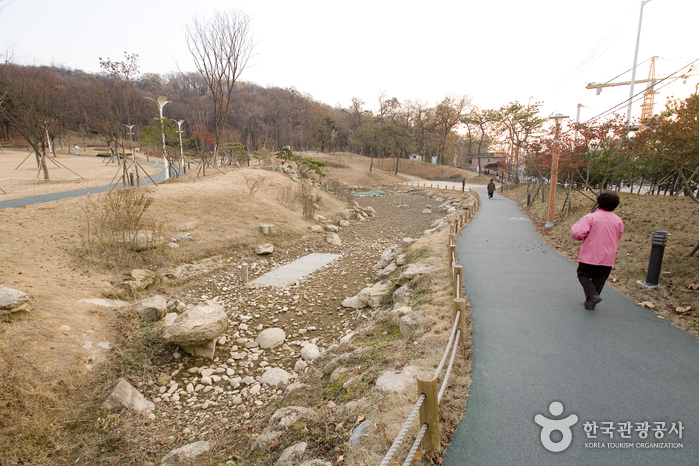
Iljasan Mountain is the tallest peak in Gangdong-gu, Seoul, providing the western boundary between Gangdong-gu and Hanam-si, Gyeonggi-do. Iljasan Mountain is one of the best spots in Seoul to watch the sunrise. Located on the mountain is the house of Master Lee Jip (pen-name Dunchon), providing a good getaway spot for local residents. Lee Jip was a loyal government official during the reign of King Gongmin during the late Goryeo dynasty. He was forced to move to an underground tunnel in the southwest side of Iljasan Mountain to avoid entrapment by Shin Don, a person of influence at the time. While living in hiding, he took the pen-name Dunchon (meaning drawing back to the countryside) to symbolize the hardships he was going through. The nearby area was named after him, being called Dunchon-dong.
Paradise Casino Walker Hill (파라다이스 카지노 워커힐)
2.3Km 2025-05-16
177, Walkerhill-ro, Gwangjin-gu, Seoul
+82-1899-0700
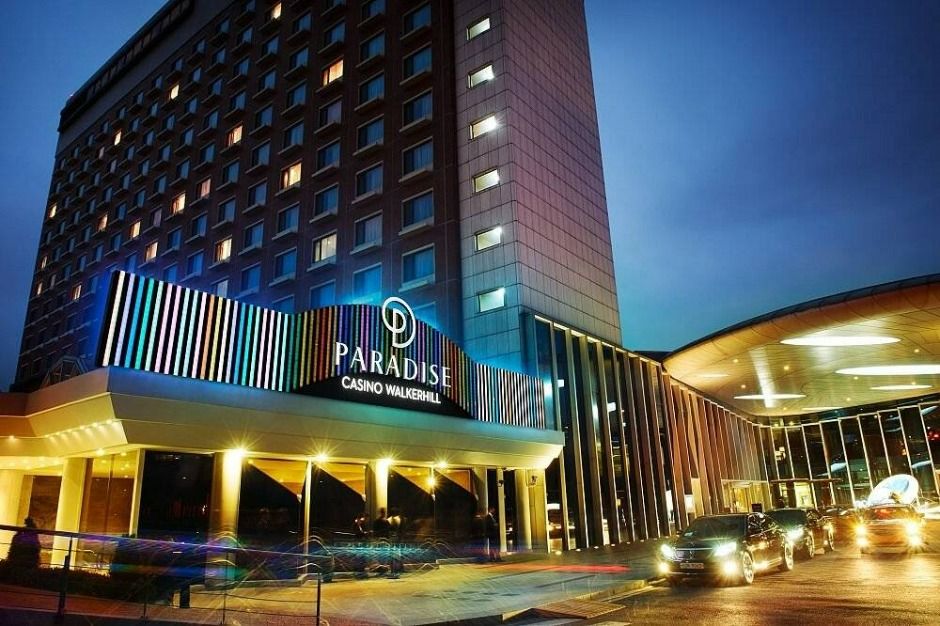
Paradise Casino Walker Hill is a foreigner-exclusive casino operating inside Walker Hill Hotel, from where guests can enjoy a fine view of the Hangang River nearby. The casino is open 24 hours a day, all year round, and offers baccarat, blackjack, roulette, and tai-sai tables among others, and a variety of slot machines as well. The game tables are run by expert dealers, and staff members are fluent in many languages to serve the customers’ needs.
Vista Walkerhill Seoul, Wellness Club (비스타 워커힐 서울, 웰니스클럽)
2.3Km 2025-10-23
177, Walkerhill-ro, Gwangjin-gu, Seoul
+82-1670-0005
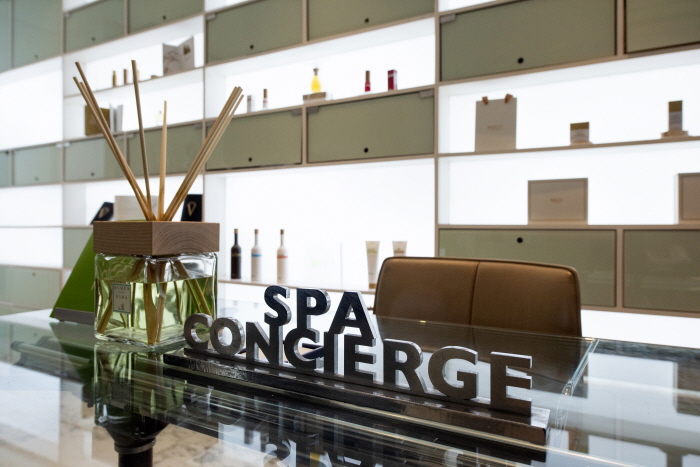
Vista Walkerhill Seoul is nestled in Achasan Mountain like a cloud overlooking the Hangang River. It offers beautiful natural sceneries that cannot be found in downtown. A combination of high technology and nature adds vitality while allowing guests to relax surrounded by nature. A new space where humans, nature, and the future coexist. Vista Walkerhill Seoul leads a sustainable and luxurious culture through differentiated and creative lifestyle experiences.
Grand Walkerhill Riverpark (Outdoor swimming pool) (그랜드 워커힐 리버파크 수영장(야외수영장))
2.3Km 2022-12-21
177, Walkerhill-ro, Gwangjin-gu, Seoul
+82-2-450-4630
Grand Walker Hill Riverpark is a swimming pool using water comprised of alkali ingredients such as sodium and potassium from underground granite. Since it opened in 1994, the Riverpark is one of Seoul's most popular summer getaways to enjoy swimming. Located by the Hangang River and Achasan Mountain, it provides fresh air as well as the beautiful nature scenery. People can use any of the various facilities, including the main pool, lazy river, swimming pool for children, pool-side restaurant offering special summer lunch, and sun tanning beds.
Archaeological Site in Amsa-dong, Seoul (서울 암사동 유적)
2.5Km 2021-07-27
875, Olympic-ro, Gangdong-gu, Seoul
+82-2-3425-6520
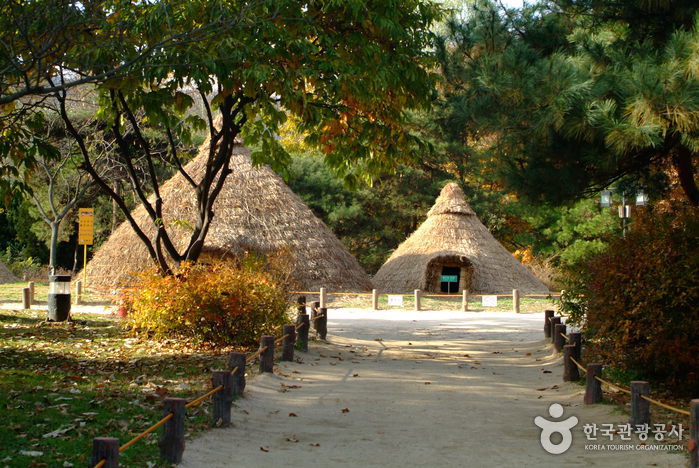
The Archaeological Site in Amsa-dong reproduces the lifestyle of the Neolithic Era. Even the entrance gate is shaped like a huge dolmen and the trash cans are ancient diagonal-line patterned earthenware. Archaeological Site in Amsa-dong was excavated in 1925 when a flood washed away the soil on the banks of the Hangang River and exposed a large number of diagonal-line patterned earthenware. After several excavations, the Archaeological Site in Amsa-dong was established.
The site was a location for a massive colony, thus many ancient buildings, stone axes and stone arrows have been uncovered as well as countless diagonal-line patterned earthenware. The housing site is round with a spot in the center for fire. The site is colossal and possesses nine mud huts, two exhibition halls displaying ancient artifacts and an open mud hut where visitors can experience life in the Neolithic Era. The site offers many attractions such as mud huts and promenades. Archaeological Site in Amsa-dong is also very educational for children and families who want to learn and experience the Neolithic Age.
Amsa-dong Prehistoric Site Museum (암사동선사유적박물관)
2.5Km 2023-12-22
875 Olympic-ro, Gangdong-gu, Seoul
The archaeological sites in Amsa-dong, Seoul, were a collective settlement where people lived during the Neolithic Age about 6,000 years ago and became known to the world after the sand dunes along the Hangang River caved in during the great flood of 1925, exposing numerous pieces of comb-patterned pottery. The area designated as a historic site in 1979, and excavation of the site took place from 1981 to 1988. The cultural heritage protection area was expanded to a total area of 78,133㎡. Currently, nine Neolithic dugout huts and one experiential dugout hut have been restored. The exhibitions currently open to the public are Exhibition Hall 1, which displays a restoration of a Neolithic Age dugout, and Exhibition Hall 2, which displays various panels and models to help understand the prehistoric era as a whole.
Achasanseong Fortress (아차산성)
2.6Km 2023-04-05
Gwangjang-dong, Gwangjin-gu, Seoul-si
+82-2-450-7593
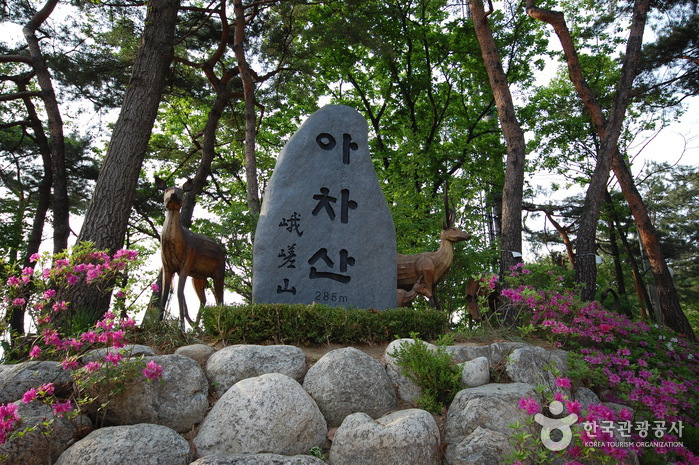
Achasanseongseong Fortress boasts magnificent views of the Hangang River and skyline. The 200m-high mountain fortress wall was built to face southeast, towards the Hangang River. It is also called Janghan-seong or Gwangjang-seong. A fierce battle was once fought here among Gogury, Baekje and Silla because of its strategic location during the period of the Three Kingdoms. King Gae-Ro of Baekje (r. 455-475) died in the war by the Goguryeo forces sent by King Jang-Su (r. 413-491) and General Ondal of Goguryeo was also killed in a battle with the Silla army in 590.
Achasan Mountain is popular as a citizens’ resting place with a historical trail and a natural park including various facilities such as walkway, mountain walkway, a badminton court, a wrestling range, an archery range, various amusement facilities for children, benches, and pavilion.
Achasan Ecological Park (아차산생태공원)
2.7Km 2021-05-14
127, Walkerhill-ro, Gwangjin-gu, Seoul
+82-2-450-1655
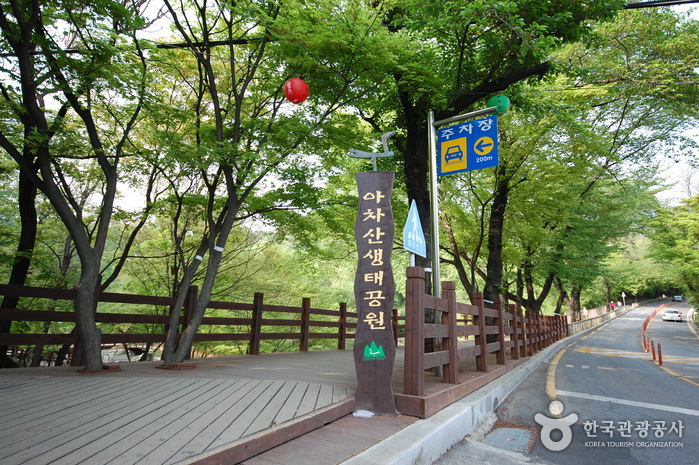
Achasan Ecological Park was established under the Seoul Metropolitan Government's Five Year Plan for Urban Green Expansion. Through various events and activities, the park provides opportunities to experience and learn about nature and its ecology. Major facilities include Eco Park, Rendezvous Square, Red Clay Road, Barefoot Path, Pine Forest, Mineral Spring, Eco Trail and pergolas.
 English
 한국어
한국어 日本語
日本語 中文(简体)
 Deutsch
 Français
 Español
 Русский


