
Grain De Beaute [Tax Refund Shop] (그랭드보떼)
7.2Km 2024-04-19
1F, 34, Namdaemunsijang 6-gil, Jung-gu, Seoul
-
Lemon Mart - Myeong-dong Branch [Tax Refund Shop] (레몬마트 명동)
7.2Km 2024-04-17
1F, 45, Myeongdong 9-gil, Jung-gu, Seoul
-
Good Morning Eyewear [Tax Refund Shop] (굿모닝안경)
7.2Km 2024-04-22
61, Namdaemunsijang-gil, Jung-gu, Seoul
-
Bank of Korea Money Museum (화폐박물관)
7.2Km 2024-03-18
39 Namdaemun-ro, Jung-gu, Seoul
This Renaissance-style three-story stone building is the museum of the Bank of Korea. The older Bank of Korea was established as the central bank of the Korean Empire in 1909 and has been designated as a National Historical Site. During the Japanese colonial period, the bank was renamed the Bank of Joseon, and the building was used as the main and head office of the Bank of Korea until 2001. The building has been used as the nation’s Money Museum since June 2001 in celebration of the 50th anniversary of the Bank of Korea. The museum has 13 exhibition rooms on two floors, with one basement floor and two above-ground floors. It holds special exhibitions of various currency and art collections to provide domestic and foreign visitors with the opportunity to enjoy the history and culture of currency. Visitors can learn about the Bank of Korea and the central banking system, as well as how to identify counterfeit notes and how money is produced and circulated. It is also a good place for children to learn about currencies from around the world. Advance reservations are required, and parking is not available. The museum can easily be reached via subway by getting off at Hoehyeon Station (Seoul Subway Line 4) and exiting through Exit 7.
![Toxnfill Clinic - Myeong-dong Branch [Tax Refund Shop] (톡스앤필의원 명동점)](http://tong.visitkorea.or.kr/cms/resource/51/3314551_image2_1.jpg)
Toxnfill Clinic - Myeong-dong Branch [Tax Refund Shop] (톡스앤필의원 명동점)
7.2Km 2024-06-27
84, Namdaemun-ro, Jung-gu, Seoul
-
![Coco Pharmacy [Tax Refund Shop] (코코약국)](http://tong.visitkorea.or.kr/cms/resource/91/2878591_image2_1.jpg)
Seoul Miz Hospital (서울미즈병원)
7.2Km 2025-10-23
1041 Cheonho-daero, Gangdong-gu, Seoul
Seoul Miz Hospital is a women’s specialized hospital located in Gangdong-gu, Seoul. It provides medical services in obstetrics and gynecology, breast and thyroid surgery, internal medicine, dermatology and plastic surgery, and pediatrics, while also operating a health promotion center. With its newly expanded building, the hospital has established an International Medical Center to support the treatment of foreign patients.
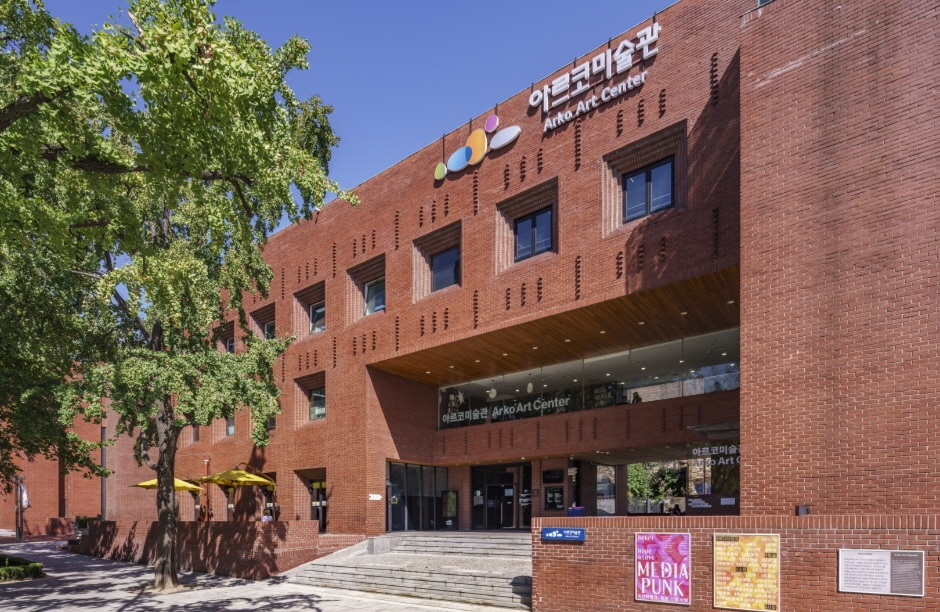
ARKO Art Center (아르코미술관)
7.3Km 2025-06-05
3, Dongsung-gil, Jongno-gu, Seoul
+82-2-760-4850
ARKO Art Center was founded in 1974 as Misulhoegwan in a building of former Deoksu Hospital in Gwanhun-dong, Jongno-gu to offer much-needed exhibition space for artists and arts groups. In 1979, Misulhoegwan moved to its present building, designed by preeminent Korean architect Kim Swoo-geun (1931-1986) and located in Marronnier Park, the former site of Seoul National University. The two neighboring brick buildings accommodating ARKO Art Center and ARKO Arts Theater are the major landmarks of the district of Daehakro.
As more public and private museums and commercial galleries came into the art scene in the 1990s, Misulhoegwan shifted to curating and presenting its own exhibitions. Renamed as Marronnier Art Center in 2002, ARKO Art Center assumed a full-fledged art museum system and played an increasingly prominent role as a public arts organization leading the contemporary art paradigm. When The Korea Culture and Arts Foundation was reborn as Arts Council Korea, Marronnier Art Center became ARKO Art Center named after the abbreviation for Arts Council Korea in 2005.
ARKO Art Center is committed to working as a platform where research, production, exhibitions and the exchange of creative activities grow and develop in connection with one another in addition to having a diversity of programs including thematic exhibitions addressing social agenda and public programs widely promoting various discourses in art.
 English
 한국어
한국어 日本語
日本語 中文(简体)
 Deutsch
 Français
 Español
 Русский


