![Hanok Stay Unnie house [Korea Quality] 한옥스테이 언니집 [한국관광 품질인증]](http://tong.visitkorea.or.kr/cms/resource/00/2948900_image2_1.jpg)
Hanok Stay Unnie house [Korea Quality] 한옥스테이 언니집 [한국관광 품질인증]
6.1Km 2024-08-14
13-3, Wangsan-ro 5-gil, Dongdaemun-gu, Seoul
+82-504-0904-2568
Unnie house ("Sister House") on Wangsan-ro, Dongdaemun-gu, Seoul, is a private hanok stay in the heart of the city. The house is inside an alleyway, where it’s quiet and tranquil. The accommodation consists of a living room, kitchen with exposed beams, lounge with a beam projector for watching movies, bathroom, bedroom, separate tea ceremony room, and yard. The absence of clutter and attention to detail in this space will heal and relax.
![Atelier Plastic Surgery [Tax Refund Shop] (아틀리에성형외과의원)](http://tong.visitkorea.or.kr/cms/resource/95/3314395_image2_1.jpg)
Atelier Plastic Surgery [Tax Refund Shop] (아틀리에성형외과의원)
6.1Km 2024-06-27
89, Donggwang-ro, Seocho-gu, Seoul
-
![Olive Young - Chungmuro Station Branch [Tax Refund Shop] (올리브영 충무로역)](http://tong.visitkorea.or.kr/cms/resource/68/2888868_image2_1.jpg)
Olive Young - Chungmuro Station Branch [Tax Refund Shop] (올리브영 충무로역)
6.1Km 2024-04-18
222, Toegye-ro, Jung-gu, Seoul
-
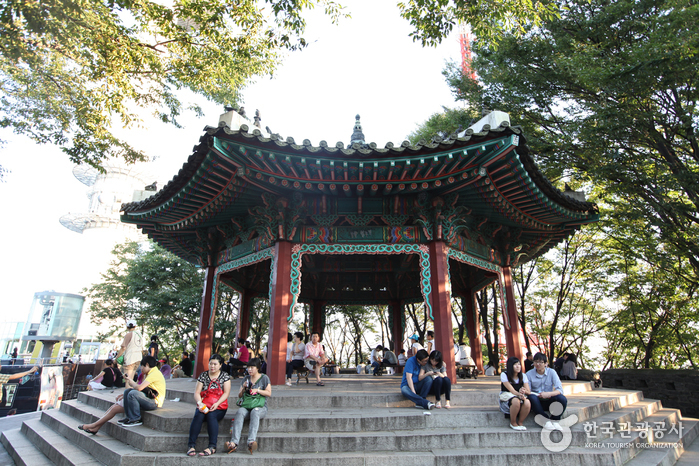
Namsan Octagonal Pavilion (남산 팔각정)
6.1Km 2021-06-19
105, Namsangongwon-gil, Yongsan-gu, Seoul
+82-2-3783-5900
Originally known as Unamjeong Pavilion, the pavilion was built in 1959 to commemorate Rhee Syngman. It was demolished by the 4.19 movement in 1960 and was rebuilt on November 11, 1968. This pavilion now sits atop Namsan Mountain, with views covering the entirety of Seoul below. As it is a prime spot to view the first sunrise of the year, the annual sunrise festival takes place every New Year's Day.
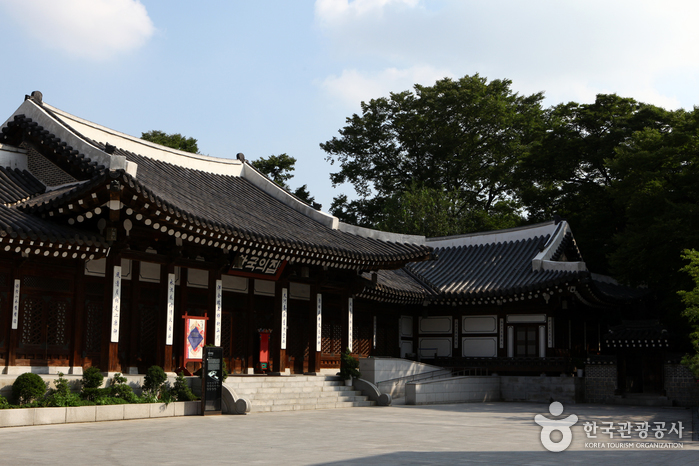
Korea House (한국의집)
6.1Km 2025-10-23
10, Toegye-ro 36-gil, Jung-gu, Seoul
The Korea House was opened in 1981. It is a traditional Korean building that introduces the culture and lifestyle of Koreans, where you can experience traditional architecture and a classical atmosphere. The building was built in the style of the Joseon Dynasty's Jagyeong-jeon building at the Gyeongbok Palace. It is the only building built in the traditional architectural style. You will feel its antiquity as you enter the building.
It is divided into the Haerin-gwan (a space for people to get acquainted with each other), the Traditional Theater, and three annex buildings (Munhyang-ru, Nokeum-jeong and Cheongwu-jeong). At Haerin-gwan, you can enjoy traditional music at Garak-dang and try traditional food at Sohwa-dang. In the square of Garak-dang you can view a traditional wedding (on the weekends) or people playing folk games. Also, at the Traditional Theater, about 156 seats are available, and in the afternoons Human Cultural Assets or members of the National Center for Korean Traditional Performing Arts and the National Corps members present traditional music and dances. Sinayui, Salpuri, Pansori, the Drum Dance and the Bongsan Mask Dance are the most popular programs for foreigners. The programs are all explained in English and Japanese.
In the Cultural Gift Shop you can view various crafts made by traditional craftsmen. It is always open and the crafts are for sale as well. There are pottery, ceramics, golden crafts, knots and embroidery etc; approximately 500 pieces of artwork made by craftsmen from 20 different fields. Next to the House of Korea is the Namsan-gol Hanok Village where visitors can explore traditional houses.
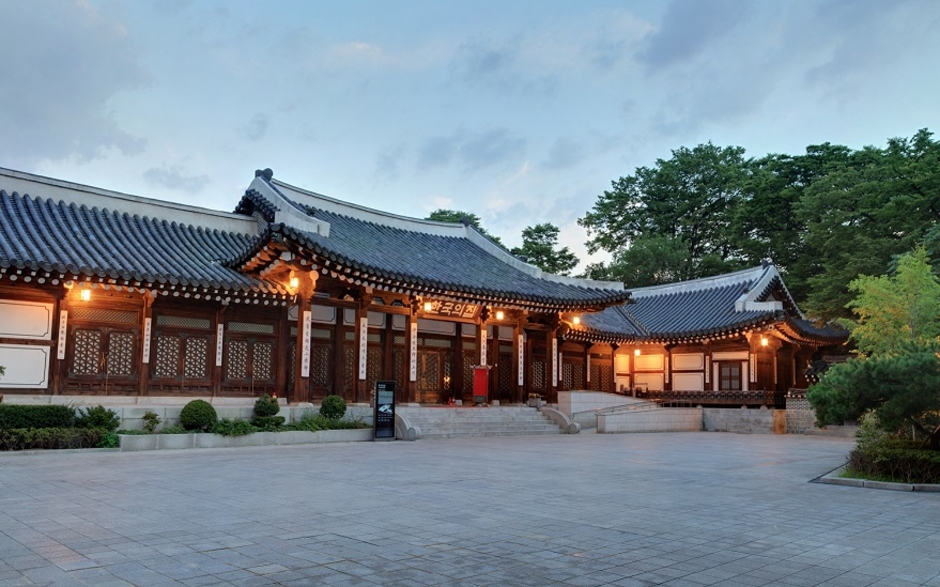
Korea House (한국의집)
6.1Km 2024-03-05
10 Toegye-ro 36-gil, Jung-gu, Seoul
+82-2-2266-9101
Located in the center of Seoul, Korea House is a must-visit tourism spot as a high-end cultural complex offering Hanjeongsik (Korean table d'hote), traditional refreshments, traditional performance arts, and traditional weddings, allowing visitors to feel the beauty of Korean culture and the taste of Korea. Guests can also enjoy the elegant beauty of hanok.
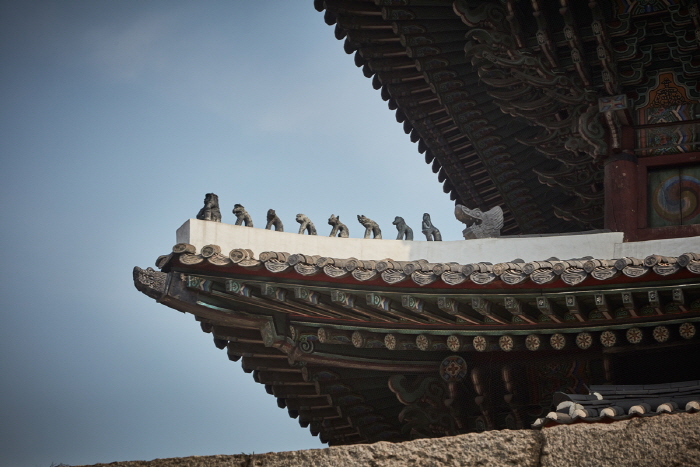
Heunginjimun Gate - Dongdaemun Gate (흥인지문)
6.1Km 2025-10-23
288, Jong-ro, Jongno-gu, Seoul
+82-2-2148-1842
Heunginjimun Gate was built to protect Hanseongbu, which historically housed essential government facilities. Heunginjimun Gate was the gate on the east side of the outer wall of Seoul Fortress among eight gates. It is referred to as Dongdaemun Gate as well. The gate was constructed during King Taejo’s 5th year in 1396, remodeled during the reign of King Danjong in 1453, and was newly built in 1869 during the sixth year of King Gojong’s reign in 1869.
The gate features a hipped roof with five front and two side compartments on a two-storied building. The thin and weak bracket system supports the eaves and is excessively decorated, reflecting the construction features of the late Joseon period. Also, outside of the fortress is the half-circle-shaped Ongseong, a small wall, to protect the gate.
One of the unique factors of Heunginjimun Gate is that it is the only gate among Seoul’s eight to have Ongseong, further exhibiting the style of construction used during the late Joseon period.
![Uniqlo - Lotte Cheongnyangni Branch [Tax Refund Shop] (유니클로 롯데청량리)](http://tong.visitkorea.or.kr/cms/resource/58/2888858_image2_1.jpg)
Uniqlo - Lotte Cheongnyangni Branch [Tax Refund Shop] (유니클로 롯데청량리)
6.1Km 2024-04-18
B1, 214, Wangsan-ro, Dongdaemun-gu, Seoul
-
![Golden Dew - Lotte Cheongnyangni Branch [Tax Refund Shop] (골든듀 롯데청량리)](http://tong.visitkorea.or.kr/cms/resource/51/2889551_image2_1.jpg)
Golden Dew - Lotte Cheongnyangni Branch [Tax Refund Shop] (골든듀 롯데청량리)
6.1Km 2024-04-19
1F, 214, Wangsan-ro, Dongdaemun-gu, Seoul
-
![Lotte Department Store - Store Cheongnyangni Branch [Tax Refund Shop] (롯데백화점 청량리점)](http://tong.visitkorea.or.kr/cms/resource/07/2889907_image2_1.jpg)
Lotte Department Store - Store Cheongnyangni Branch [Tax Refund Shop] (롯데백화점 청량리점)
6.1Km 2024-04-23
1F, 214, Wangsan-ro, Dongdaemun-gu, Seoul
-
 English
 한국어
한국어 日本語
日本語 中文(简体)
 Deutsch
 Français
 Español
 Русский


