
Song Won (송원)
5.5Km 2024-03-15
35-4 Dongho-ro 24-gil, Jung-gu, Seoul
+82-2-2275-3118
Song won is a Korean restaurant located in Jangchung-dong Gourmand Alley. They specialize in high-quality Korean beef barbecue such as bulgogi and galbi, seasoned with a variety of 20 different natural ingredients. Additionally, they offer traditional Korean dishes like hot stone pot rice and noodles. Across the street, visitors can find Jangchung-dong Jokbal Street, and both Jangchungdan Park and Jangchung Gymnasium are within walking distance.
![CheongKwanJang - Jangan Branch [Tax Refund Shop] (정관장 장안)](http://tong.visitkorea.or.kr/cms/resource/35/2889535_image2_1.jpg)
CheongKwanJang - Jangan Branch [Tax Refund Shop] (정관장 장안)
5.5Km 2024-04-18
120, Janghan-ro, Dongdaemun-gu, Seoul
-
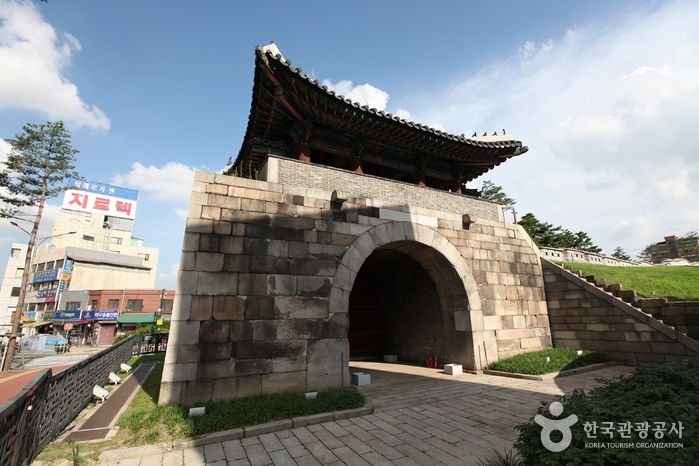
Gwanghuimun Gate (광희문)
5.5Km 2021-02-24
344, Toegye-ro, Jung-gu, Seoul
+82-2-3700-3900
Gwanghuimun Gate is said to have been originally constructed in 1396, the 5th year of King Taejo, at the southeast of the capital city. It was often referred to as Sugumun Gate (water channel gate) and was actually used as a Sigumun, literally meaning “corpse gate,” as funeral processions passed through this gate when exiting to the east.
During the Imjin War (1592-1598), the fortress gate was destroyed to such a degree that it made finding the original location close to impossible. Nevertheless, reconstruction efforts were started in 1711 (37th year of King Sukjong) and the gate was restored together with the gate's watchtower. Gwanghuimun Gate remained intact even when the fortress walls were demolished to build tram tracks during the Japanese occupation, but it was later damaged during the Korean War and left neglected. In 1975, restoration work was carried out to relocate Gwanghuimun Gate to a site 15 meters south of its original location since it stood in the middle of the road.
![Queens Bucket - Dongdaemun Branch [Tax Refund Shop] (쿠엔즈버킷 동대문)](http://tong.visitkorea.or.kr/cms/resource/47/2878747_image2_1.jpg)
Queens Bucket - Dongdaemun Branch [Tax Refund Shop] (쿠엔즈버킷 동대문)
5.5Km 2024-04-18
5-4, Toegye-ro 64-gil, Jung-gu, Seoul
-
![Sujeong Pharmacy [Tax Refund Shop] (수정약국)](http://tong.visitkorea.or.kr/cms/resource/57/2878757_image2_1.jpg)
Sujeong Pharmacy [Tax Refund Shop] (수정약국)
5.5Km 2024-04-22
1F, 195, Jangchungdan-ro, Jung-gu, Seoul
-
Homeplus - Dongdaemun Branch [Tax Refund Shop] (홈플러스 동대문)
5.5Km 2024-04-23
133, Cheonho-daero, Dongdaemun-gu, Seoul
-
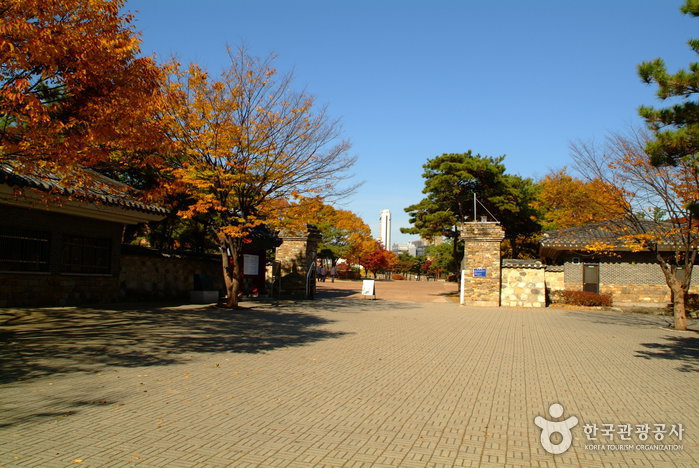
Seoul Seokchon-dong Ancient Tombs (서울 석촌동 고분군)
5.5Km 2021-02-26
21, Garak-ro 7-gil, Songpa-gu, Seoul
+82-2-421-0970
The Ancient Tombs in Seokchon-dong were found and investigated as part of the city development project in Jamsil district. It was impossible to determine the full scale of the ancient tombs in this area due to the severity of destruction. The largest tomb, the third tomb, measures 49.6 meters from east to west, 43.7 meters from south to north, and 4 meters in x_height. The tomb features three layers of stones topped by a smooth mound, which is a tomb style originating from the Goguryeo dynasty (37 BC-AD 668). The tombs are presumed to belong to one of the earliest leaders of the Baekje dynasty (18 BC-AD 660), which was founded by the people of Goguryeo who had come down southwards to establish a new kingdom around the Hangang River basin.
The square-shaped fourth tomb features a structure similar to the third tomb. Many pieces of earthenware from the early Baekje era were found in the fourth tomb. Also excavated around this site was a gold spangle earring. The third and fourth tombs have been registered as Historic Site No. 243. The tomb site offers valuable information concerning the culture and customs of the Baekje dynasty in its golden age around the 4th century, as well as the relations between the three ancient kingdoms (Goguryeo, Baekje, and Silla) around that time.
Hwanghak-dong Flea Market (Dokkaebi Market / Manmul Market) (황학동 벼룩시장 (도깨비시장/만물시장))
5.5Km 2025-04-11
11-7 Majang-ro 5-gil, Jung-gu, Seoul
Hwanghak-dong Flea Market was named after the way how merchants travel from one place to another all over the country, as if like fleas hopping around from one spot to another, to collect rare and valuable items. This market was once a haven of antiques and collectibles, but with the formation of old-fashioned art street in 1983 in Janganpyeong, many classic art shops had moved out, leaving only used item and general goods stores. Now, visitors can find stores selling antiques, used furniture, electronics, clocks, jewelry, musical instruments, camera, and machinery – pretty much anything one can name. Hwanghak-dong Flea Market is also referred to as Dokkaebbi Market, to describe how even the most rundown items become just like new, as if like the work of a dokkaebi (Korean folk goblin).
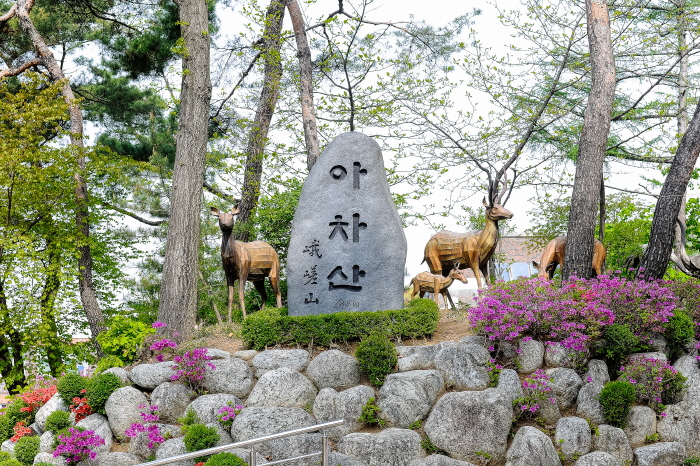
Achasan Mountain (아차산)
5.5Km 2024-03-07
Acheon-dong, Guri-si, Gyeonggi-do
+82-2-450-1655
Achasan Mountain is a 295m-high mountain that stretches across Seoul and the city of Guri. Its proximity to the city makes it an accessible destination for hiking in Seoul. The hiking trails are maintained quite well, so even beginners can enjoy hiking in the mountain. From the summit of Achasan Mountain, one can enjoy the beautiful view of Seoul and the Hangang River. In fall, the mountain is famous for its fall colors as well.
Gyeongnidan Street (경리단길)
5.6Km 2023-01-18
Itaewon-dong, Yongsan-gu, Seoul
Gyeongnidan Street refers to the 937-meter-long road from the main gate of MND Financial Management Corps to Grand Hyatt Seoul as well as all of the nearby streets and alleys. It is called Gyeongnidan Street because the Korean army's central finance corps, or Gyeongnidan in Korean, used to be located here, and has gained fame for presenting a different vibe than that of Itaewon despite being part of Itaewon-dong. Gyeongnidan Street is an area of culture and youth where people are able to enjoy diverse and special cuisine and dishes at unique restaurants and cafes. Although it resembles a typical neighborhood of Seoul, it features foreigners who have come from many different places around the globe living in natural harmony with Korean locals, which exudes a unique, exotic atmosphere. It is fun to walk along the various streets and alleys to discover novel and sophisticated shops.
 English
 한국어
한국어 日本語
日本語 中文(简体)
 Deutsch
 Français
 Español
 Русский


