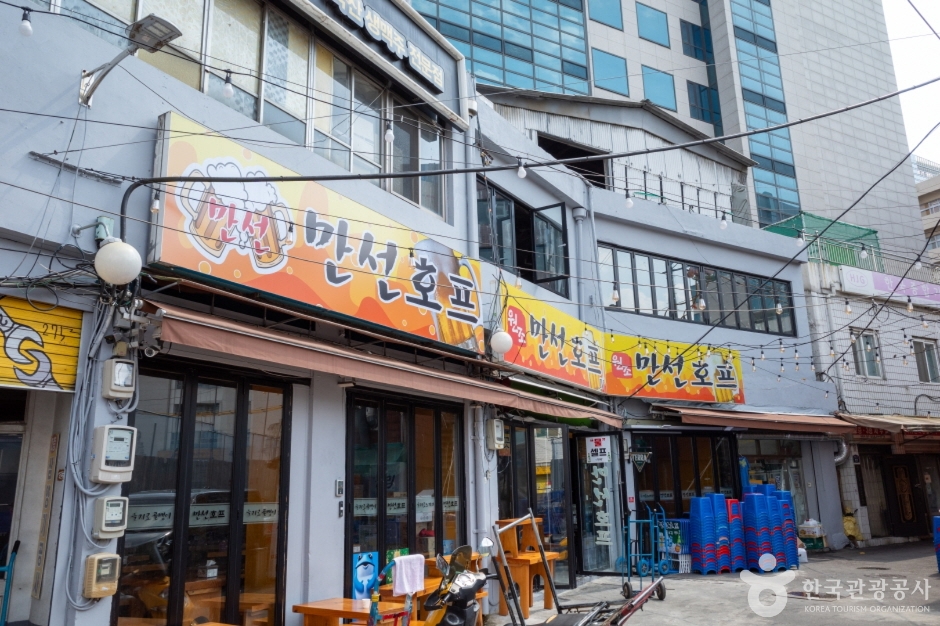
Manseon Hof (만선호프)
3.1Km 2024-03-15
19, Eulji-ro 13-gil, Jung-gu, Seoul
+82-2-2274-1040
Located in Euljiro Nogari Alley, Manseon Hof is a beer bar. The place is bustling late at night with people drinking beer and eating snacks like nogari (dried young pollack) and fried chicken at sidewalk tables. It is a great place to enjoy a cold draft beer and grilled dried young pollack dipped in spicy sauce and mayonnaise. Golbaengi muchim (sea snail salad) and gyeran mari (rolled omelet) are also other popular accompaniments.
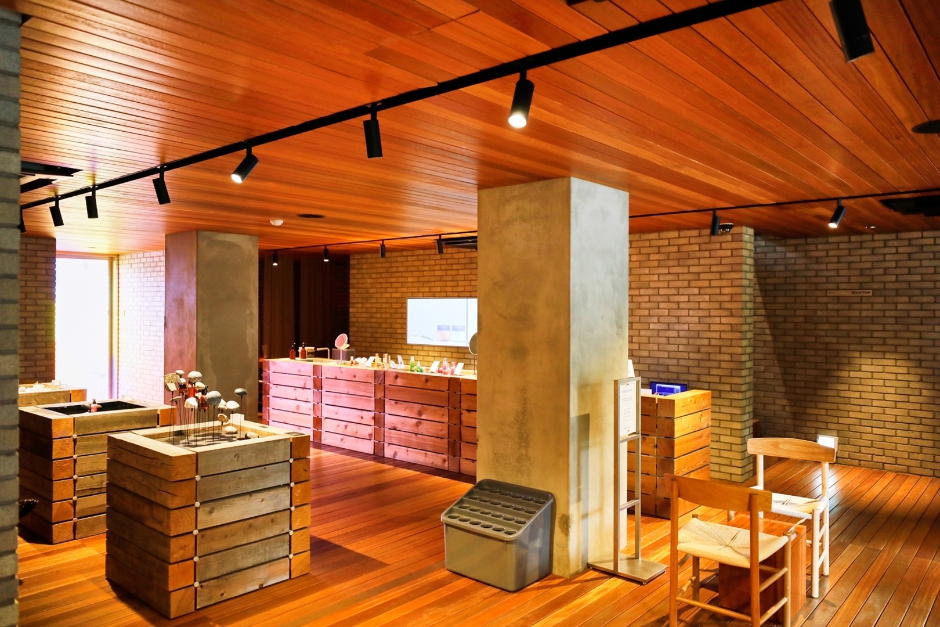
Teafference Seoul (티퍼런스서울)
3.1Km 2024-02-01
61 Donhwamun-ro, Jongno-gu, Seoul
Teafference Seoul is where visitors can taste purple tea made from purple tea leaves that grow naturally on the 1,800-meter plateau in Kenya. As a café and a cultural complex, it comprises a gallery tea café on the first floor where one can enjoy purple tea and art exhibitions, a beauty shop on the second floor, and a rooftop on the third floor. Exhibitions of paintings and photographs are always held using the walls and staircase landings of the spacious interior, making it a great place to relax while enjoying a cup of tea. In addition, this place has an appealing vibe, making it especially popular on social media. Not only is purple tea pretty in color, but it also has less caffeine than green tea or black tea, thus serves as a suitable option for the health-conscious. A variety of menu items are available, including Teafference Signature Purple Tea, Teafference Purple Milk Tea, and Teafference Purple Tea Einspanner. Another recommended menu item is Purple Tea-Makase, a course menu which serves several types of purple tea and desserts.
![Semi Jewelry [Tax Refund Shop] (새미쥬얼리)](http://tong.visitkorea.or.kr/cms/resource/84/2887784_image2_1.jpg)
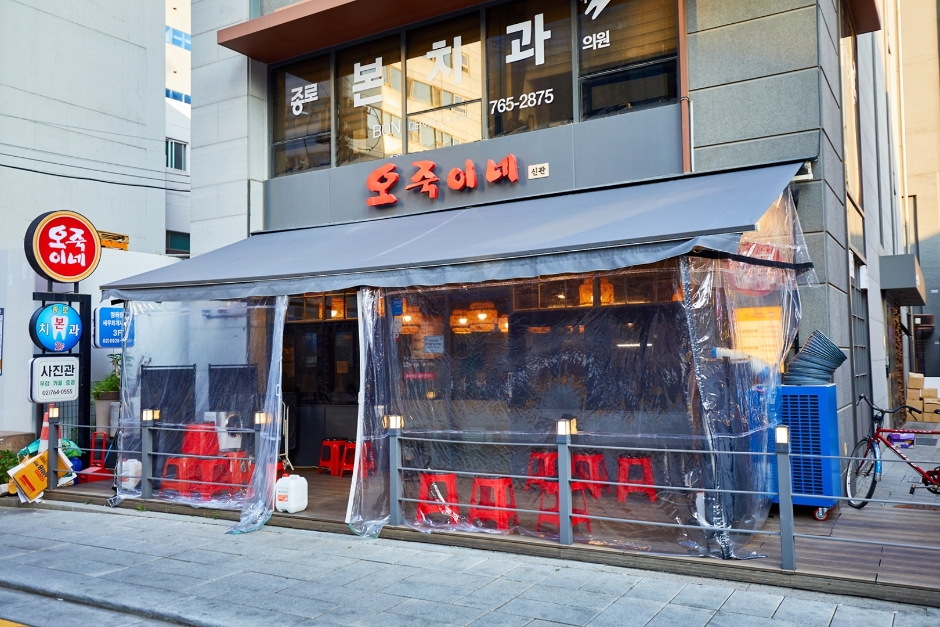
Ojugine (오죽이네)
3.1Km 2024-12-10
Ojugine is a restaurant that specializes in dak maeuntang, a spicy chicken stew that is different from dak bokkeumtang (spicy braised chicken), as the former has more soup than the latter. The stew is served whilst boiling, so one just needs to let it sit for a bit on the table before digging in. The spicy sauce and chicken are a match made in heaven, and the same goes for this dish. Interestingly, Ojugine uses smaller chickens to prepare their dishes, so the flesh braises in the stock faster. The resulting combination is sure to offer a memorable meal. Any remaining soup can be reused as a sauce for fried rice after the main meal, so visitors are advised to leave some space in their stomach.
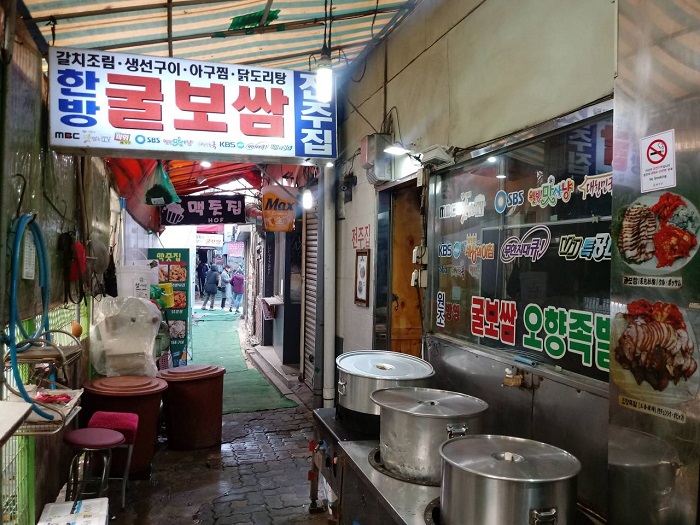
Jeonjujip (전주집)
3.1Km 2024-10-15
16-15 Supyo-ro, 20-gil, Jongno-gu, Seoul
+82-2-2278-3311
A store featured several times in Korean gourmet programs. This Korean dishes restaurant is located in Jongno-gu, Seoul. The most famous menu is kimchi cabbage wraps with pork and oysters.
![Lemiel Plastic Surgery [Tax Refund Shop] (르미엘성형외과의원)](http://tong.visitkorea.or.kr/cms/resource/51/3313151_image2_1.jpg)
Lemiel Plastic Surgery [Tax Refund Shop] (르미엘성형외과의원)
3.1Km 2024-06-27
120, Jong-ro, Jongno-gu, Seoul
-

Le Miel Plastic Surgery (르미엘성형외과의원)
3.1Km 2025-10-23
3rd Floor, 120 Jongno, Jongno-gu, Seoul
Valuable Beauty, Lemiel Plastic Surgery
A premium clinic where delicate technique and artistic sensibility come together. We provide not just external changes, but customized treatments that enhance each individual’s natural charm. Specialized in fast-recovery eyebag surgery using Encore Laser, customized eye surgery for facial balance, tailored lifting based on body type, and petite procedures that refine facial curves and volume.
![Changdeokgung Palace Complex [UNESCO World Heritage Site] (창덕궁과 후원 [유네스코 세계유산])](http://tong.visitkorea.or.kr/cms/resource/03/3092503_image2_1.jpg)
Changdeokgung Palace Complex [UNESCO World Heritage Site] (창덕궁과 후원 [유네스코 세계유산])
3.1Km 2025-07-21
99 Yulgok-ro, Jongno-gu, Seoul
Changdeokgung Palace was the second royal villa built following the construction of Gyeongbokgung Palace in 1405. It was the principal palace for many kings of the Joseon dynasty, and is the most well-preserved of the five remaining royal Joseon palaces. The palace grounds are comprised of a public palace area, a royal family residence building, and the rear garden. Known as a place of rest for the kings, the rear garden boasts a gigantic tree that is over 300 years old, a small pond and a pavilion.
The palace gained importance starting from the time of Seongjong, the 9th king of Joseon, when a number of kings began using it as a place of residence. Unfortunately, the palace was burned down by angry citizens in 1592 when the royal family fled their abode during the Imjin War. Thanks to Gwanghaegun, the palace was restored in 1611. Even today, it houses a number of cultural treasures, such as Injeongjeon Hall, Daejojeon Hall, Seonjeongjeon Hall, and Nakseonjae Hall.
Changdeokgung Palace’s garden behind the inner hall, called the "Secret Garden," was constructed during the reign of King Taejong and served as a rest area for the royal family members. The garden had formerly been called Bugwon and Geumwon, but was renamed Biwon Garden, or Secret Garden, after King Gojong came into power. The garden was kept as natural as possible and was touched by human hands only when absolutely necessary. Buyongjeong Pavilion, Buyongji Pond, Juhamnu Pavilion, Eosumun Gate, Yeonghwadang Hall, Bullomun Gate, Aeryeonjeong Pavilion, and Yeongyeongdang Hall are some of the many attractions that occupy the garden. The most beautiful time to see the garden is during the fall when the autumn foliage is at its peak and the leaves have just started to fall.
Though it has been treasured by Koreans for centuries, Changdeokgung Palace and its complex was recognized as a World Cultural Heritage site by the UNESCO World Cultural Heritage Committee in December of 1997 during the committee meeting in Naples, Italy.
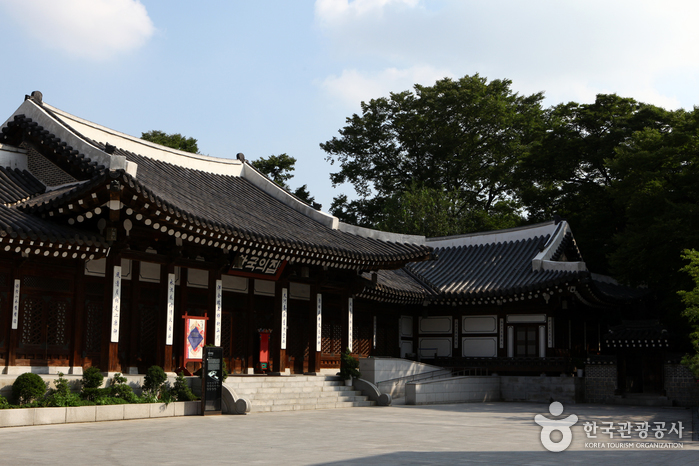
Korea House (한국의집)
3.1Km 2025-10-23
10, Toegye-ro 36-gil, Jung-gu, Seoul
The Korea House was opened in 1981. It is a traditional Korean building that introduces the culture and lifestyle of Koreans, where you can experience traditional architecture and a classical atmosphere. The building was built in the style of the Joseon Dynasty's Jagyeong-jeon building at the Gyeongbok Palace. It is the only building built in the traditional architectural style. You will feel its antiquity as you enter the building.
It is divided into the Haerin-gwan (a space for people to get acquainted with each other), the Traditional Theater, and three annex buildings (Munhyang-ru, Nokeum-jeong and Cheongwu-jeong). At Haerin-gwan, you can enjoy traditional music at Garak-dang and try traditional food at Sohwa-dang. In the square of Garak-dang you can view a traditional wedding (on the weekends) or people playing folk games. Also, at the Traditional Theater, about 156 seats are available, and in the afternoons Human Cultural Assets or members of the National Center for Korean Traditional Performing Arts and the National Corps members present traditional music and dances. Sinayui, Salpuri, Pansori, the Drum Dance and the Bongsan Mask Dance are the most popular programs for foreigners. The programs are all explained in English and Japanese.
In the Cultural Gift Shop you can view various crafts made by traditional craftsmen. It is always open and the crafts are for sale as well. There are pottery, ceramics, golden crafts, knots and embroidery etc; approximately 500 pieces of artwork made by craftsmen from 20 different fields. Next to the House of Korea is the Namsan-gol Hanok Village where visitors can explore traditional houses.
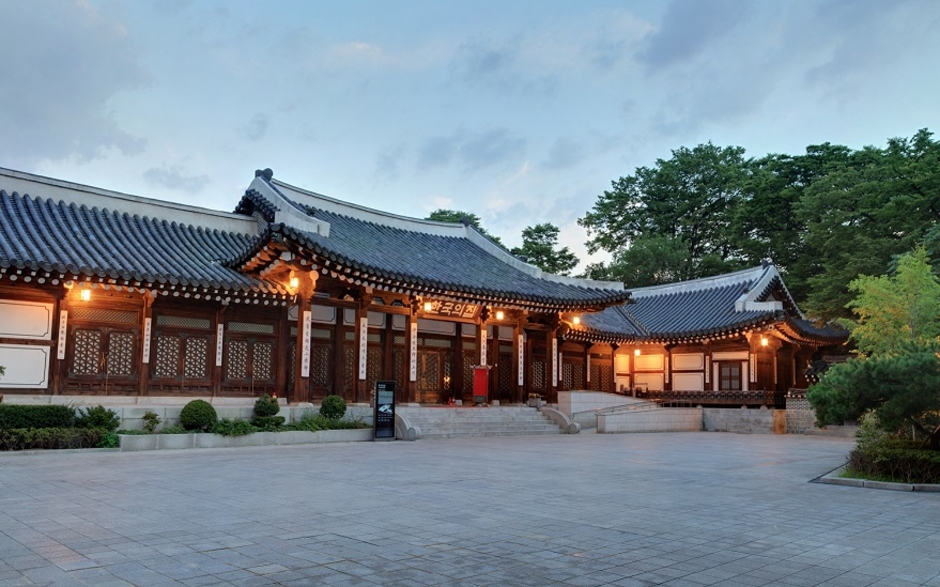
Korea House (한국의집)
3.1Km 2024-03-05
10 Toegye-ro 36-gil, Jung-gu, Seoul
+82-2-2266-9101
Located in the center of Seoul, Korea House is a must-visit tourism spot as a high-end cultural complex offering Hanjeongsik (Korean table d'hote), traditional refreshments, traditional performance arts, and traditional weddings, allowing visitors to feel the beauty of Korean culture and the taste of Korea. Guests can also enjoy the elegant beauty of hanok.
 English
 한국어
한국어 日本語
日本語 中文(简体)
 Deutsch
 Français
 Español
 Русский


