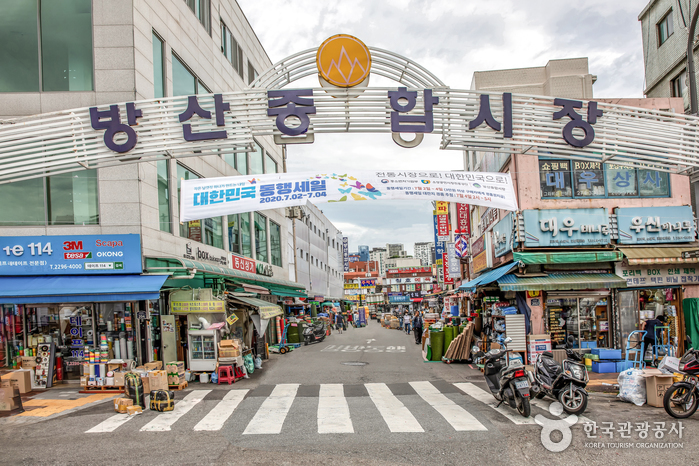
Bangsan Wholesale Market (방산 종합시장)
1.9Km 2025-10-23
20, Dongho-ro 37-gil, Jung-gu, Seoul
+82-2-2268-6691
Bangsan Market is a wholesale market with approximately 250 stores that sells packaging and promotional materials. The market was popular with patissiers in the past and is currently more famous for being a bakery street.
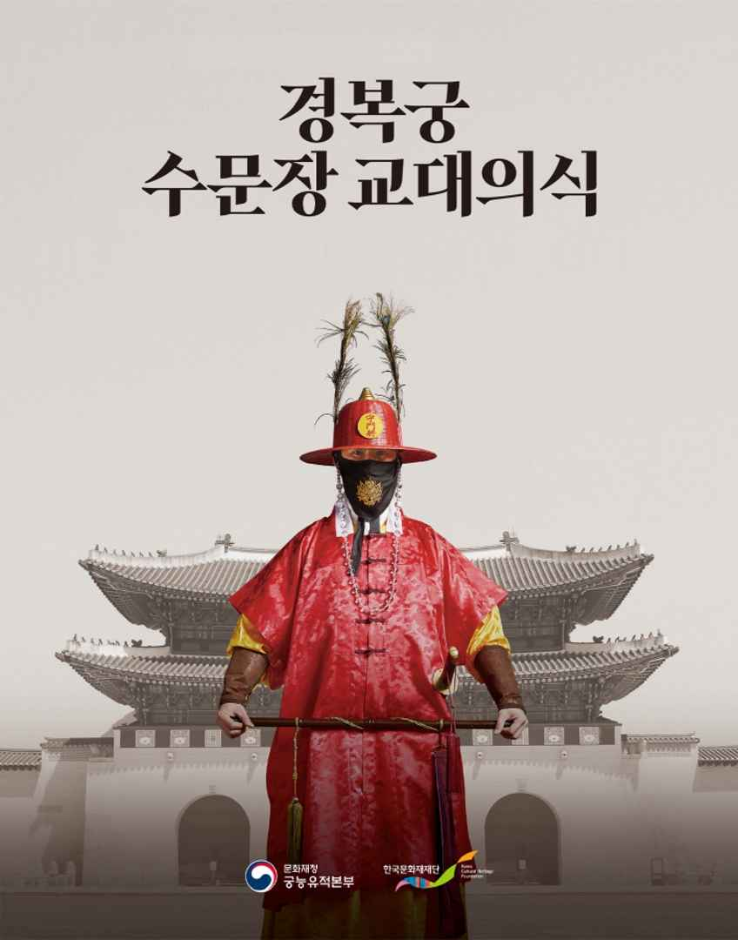
Palace Royal Guard Changing Ceremony (수문장 교대의식)
1.9Km 2025-07-11
161 Sajik-ro, Jongno-gu, Seoul
+82-2-3210-1645
In the Joseon dynasty, the royal guards of the palace were gatekeepers who were responsible for guarding the the main gates of Gyeongbokgung Palace as well as the main gates of the city such as Heunginjimun Gate and Sungnyemun Gate. The royal guards worked in shift duties and were in charge of opening and closing Gwanghwamun Gate. Before the royal guard system was enforced in 1469, the palace gates were protected by soldiers of the central army. The Palace Royal Guard Changing Ceremony held at Gyeongbokgung Palace and the Gwanghwamun area reenacts the guard-changing procedure that took place during the Joseon dynasty, along with the reproduction of costumes and weapons, based on historical records.
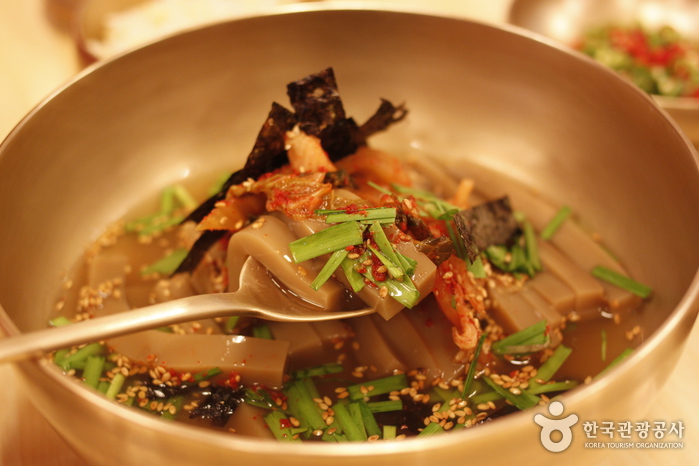
Gungnara Naengmyeon Mukbap (궁나라냉면묵밥)
1.9Km 2025-08-01
6, Jibong-ro 12-gil, Jongno-gu, Seoul
+82-2-744-4701
Gungnara Naengmyeon Mukbap originally opened in Ansan, serving up delicious meals of naengmyeon and mukbap. The restaurant became popular, and eventually moved to its current location in Seoul. The jiggly acorn jelly goes well wit the sweet and sour broth in mukbap, a favorite summer-time dish. Visitors can also order the dish with a warm broth for a delicious and healthy dish year round.
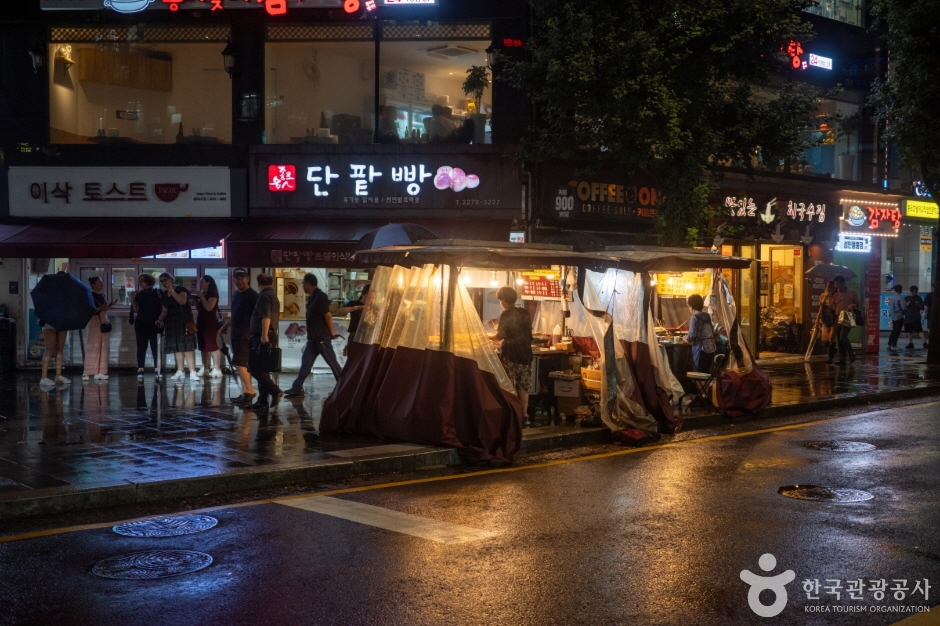
Jongno 3 (sam)-ga Pocha Street (종로3가 포장마차 거리)
1.9Km 2025-11-06
12-1, Gwan-su-dong, Jongno-gu, Seoul
It is one of Seoul's representative Pocha Streets boasting history and tradition. When you come out of Jongno 3-ga Station, exit 6 (toward the Nakwon Music Mall), you will find a lot of food stalls with a crowded atmosphere. There are vinyl covered areas and open areas, so you can choose according to your taste. It is a heaven for snacks such as Chicken feet, Octopus, Udon Kimchi Pancakes, and Rolled Omelet.
![Onnuri Pharmacy - Jongno Branch [Tax Refund Shop] (온누리약국 종로)](http://tong.visitkorea.or.kr/cms/resource/89/2878189_image2_1.jpg)
Onnuri Pharmacy - Jongno Branch [Tax Refund Shop] (온누리약국 종로)
1.9Km 2024-04-19
1F, 293, Jong-ro, Jongno-gu, Seoul
-
![Kumkang Land Rover - Jongno Branch [Tax Refund Shop] (CL종로지점(금강 랜드로바))](http://tong.visitkorea.or.kr/cms/resource/95/3313995_image2_1.jpg)
Kumkang Land Rover - Jongno Branch [Tax Refund Shop] (CL종로지점(금강 랜드로바))
1.9Km 2024-06-27
81, Jongro, Jongno-gu, Seoul
-

Woo Lae Oak (우래옥)
1.9Km 2024-03-07
62-29 Changgyeonggung-ro, Jung-gu, Seoul
+82-2-2265-0151
Woo Lae Oak is a Pyeongyang naengmyeon (Pyeongyang cold buckwheat noodles) restaurant established in 1949. Its signature dish is the Pyeongyang naengmyeon, known for their clean and light broth. Alongside the onmyeon (warm noodles), they also serve bulgogi, which complements the warm broth perfectly. The restaurant is renowned to the extent that customers often line up to dine, and it was selected for the Michelin Guide 2023.
Heunginjimun Gate - Dongdaemun Gate (흥인지문)
1.9Km 2025-10-23
288, Jong-ro, Jongno-gu, Seoul
+82-2-2148-1842
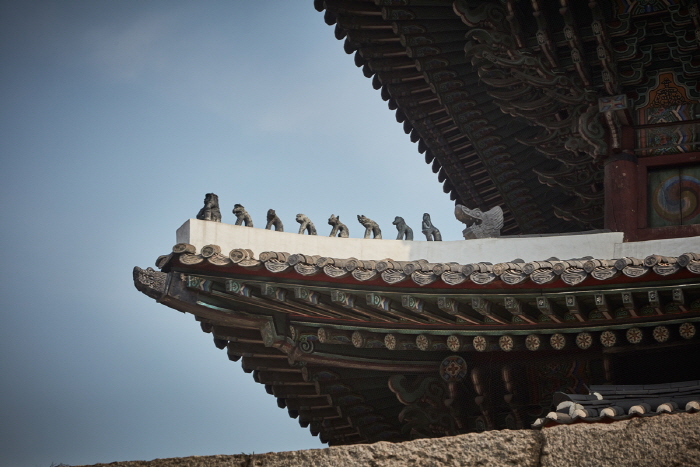
Heunginjimun Gate was built to protect Hanseongbu, which historically housed essential government facilities. Heunginjimun Gate was the gate on the east side of the outer wall of Seoul Fortress among eight gates. It is referred to as Dongdaemun Gate as well. The gate was constructed during King Taejo’s 5th year in 1396, remodeled during the reign of King Danjong in 1453, and was newly built in 1869 during the sixth year of King Gojong’s reign in 1869.
The gate features a hipped roof with five front and two side compartments on a two-storied building. The thin and weak bracket system supports the eaves and is excessively decorated, reflecting the construction features of the late Joseon period. Also, outside of the fortress is the half-circle-shaped Ongseong, a small wall, to protect the gate.
One of the unique factors of Heunginjimun Gate is that it is the only gate among Seoul’s eight to have Ongseong, further exhibiting the style of construction used during the late Joseon period.
Dongdaemun Bonga Gamasot Seolleongtang (동대문본가가마솥설렁탕)
1.9Km 2024-03-15
299-1 Jong-ro, Jongno-gu, Seoul
+82-2-741-1510
Dongdaemun Bonga Gamasot Seolleongtang is a seolleongtang (ox bone soup) restaurant located near Dongdaemun Fashion Market. The rich-tasting seolleongtang is boiled for 24 hours in a traditional cast-iron pot, using beef from ten different parts of the cow, and the process is visible from outside the restaurant. It is recommended to enjoy the seolleongtang wrapped in rice with a side of tangy radish kimchi. Yennal bulgogi (old-fashioned bulgogi) and yukhoe bibimbap (beef tartare bibimbap) made with Korean beef are also popular menu items.
Gyeongbokgung Palace (경복궁)
2.0Km 2025-10-23
161 Sajik-ro, Jongno-gu, Seoul
+82-2-3700-3900
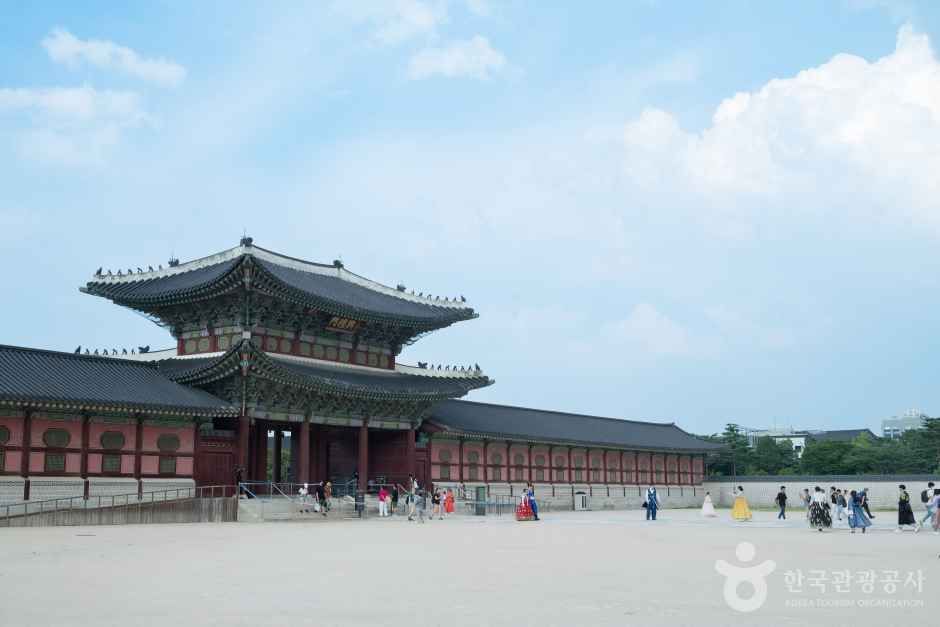
Gyeongbokgung Palace was built in 1395 as the official palace of the Joseon dynasty by Yi Seong-gye, the future King Taejo and founder of the new regime. Gyeongbokgung Palace is commonly referred to as the Northern Palace because of its location to the north, comparied to Changdeokgung Palace in the east and Gyeonghuigung Palace in the west. Gyeongbokgung Palace is arguably the most beautiful and is the largest of all five palaces. Many Joseon kings were crowned here. The premises were once destroyed by fire during the Imjin War (1592-1598). However, all of the palace buildings were later restored under the leadership of Heungseondaewongun during the reign of King Gojong. The assassination of Empress Myeongseong, however, resulted in Gyeongbokgung Palace losing its function as a royal palace, eventually witnessing the downfall of the Joseon dynasty. Gyeongbokgung Palace retains the original Gyeonghoeru Pavilion, a prime example of Joseon architecture, and the Hyangwonjeong Pavilion and pond. The sculptures in the Geunjeongjeon Hall exemplify Joseon-era sculpture techniques. The west side of the area outside Heungnyemun Gate is occupied by the National Palace Museum of Korea, while the eastern side of Hyangwonjeong Pavilion within the Gyeongbokgung Palace is occupied by the National Folk Museum of Korea.
 English
 한국어
한국어 日本語
日本語 中文(简体)
 Deutsch
 Français
 Español
 Русский


