![Man in Black - Itaewon Branch [Tax Refund Shop] (맨인블랙 이태원)](http://tong.visitkorea.or.kr/cms/resource/65/2888965_image2_1.jpg)
Man in Black - Itaewon Branch [Tax Refund Shop] (맨인블랙 이태원)
5.3Km 2024-04-18
1F, 4, Itaewon-ro 54ga-gil, Yongsan-gu, Seoul
-
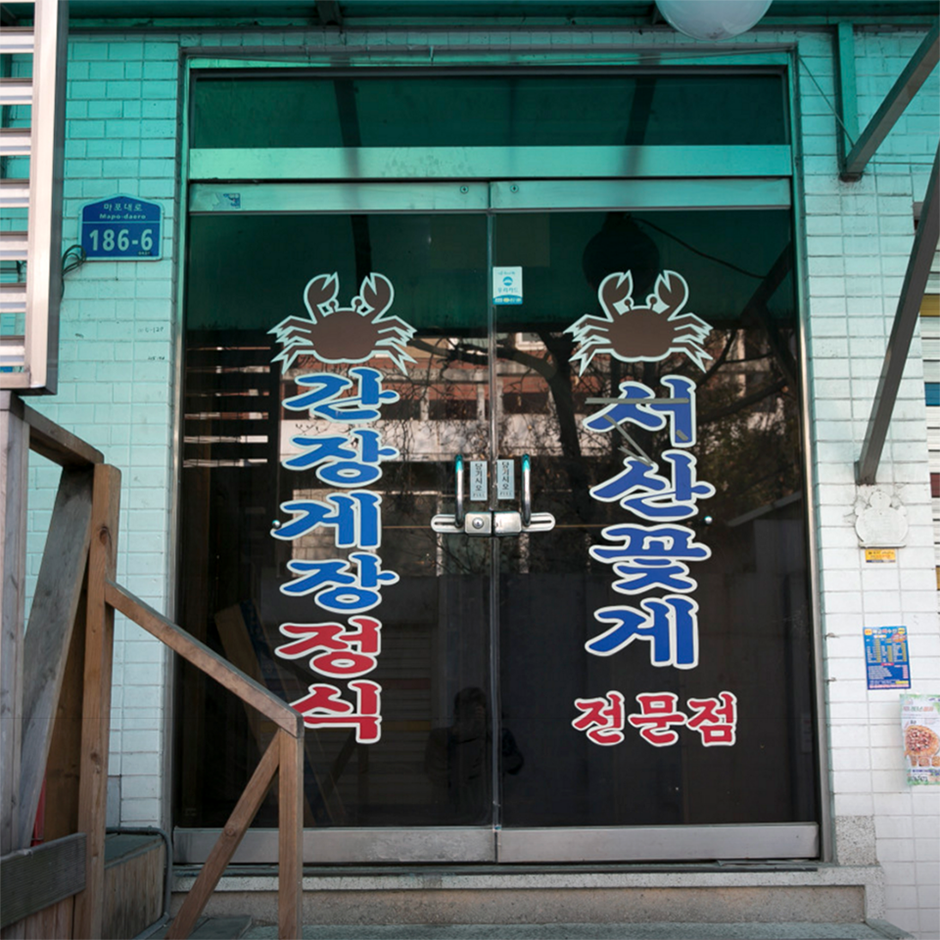
Jinmi Sikdang (진미식당)
5.4Km 2024-02-27
186-6 Mapo-daero, Mapo-gu, Seoul
Jinmi Sikdang is a specialty restaurant known for its exclusive focus on gejang (marinated crab), using only the finest blue crabs from the Seohae Coast. The restaurant prides itself on preparing only the amount of crab needed for the day, ensuring freshness, so it's advisable to make reservations before visiting, especially during peak hours. Known for its consistent quality and unwavering taste, Jinmi Sikdang continues to receive steady love from its customers.
![Kuho - Hannam Branch [Tax Refund Shop] (구호 한남점)](http://tong.visitkorea.or.kr/cms/resource/24/2890524_image2_1.jpg)
Kuho - Hannam Branch [Tax Refund Shop] (구호 한남점)
5.4Km 2024-04-22
253, Itaewon-ro, Yongsan-gu, Seoul
-
![Theory - Hannam Branch [Tax Refund Shop] (띠어리 한남점)](http://tong.visitkorea.or.kr/cms/resource/62/2890562_image2_1.jpg)
Theory - Hannam Branch [Tax Refund Shop] (띠어리 한남점)
5.4Km 2024-04-18
251, Itaewon-ro, Yongsan-gu, Seoul
-

Seodaemun Museum of Natural History (서대문자연사박물관)
5.4Km 2021-07-02
51, Yeonhui-ro 32-gil, Seodaemun-gu, Seoul
+82-2-330-8899
Nestled at the foothills of Ansan Mountain, a natural resting area in the city, Seodaemun Museum of Natural History is the first natural history museum in the nation to be established by a government agency. Opened on July 10, 2003, the museum offers various opportunities to experience and learn about the environment. It also provides the chance to interact with animals and plants, teaching the value of life.
![yyk [Tax Refund Shop] (와이와이케이)](http://tong.visitkorea.or.kr/cms/resource/67/3313167_image2_1.jpg)
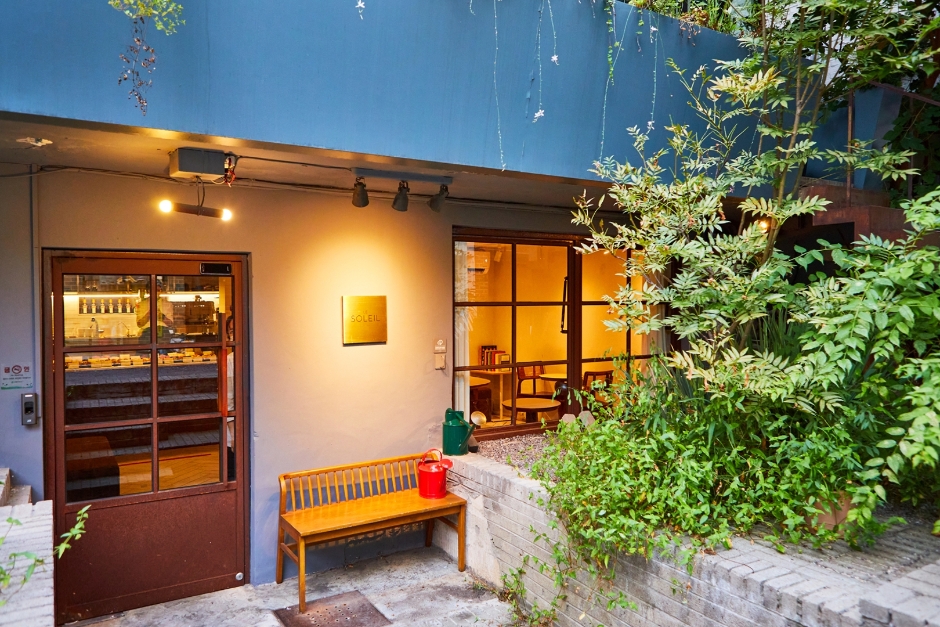
LE SOLEIL (르솔레이)
5.4Km 2024-03-18
28 Itaewon-ro 54-gil, Yongsan-gu, Seoul
LE SOLEIL is a dessert café in Yeonhui-dong that is small but constantly crowded with customers. About 20 kinds of madeleines of various ingredients fill the showcase. Representative menu items include Rose & Litchi Madeleine, which has a subtle rose scent and attractive litchi flesh, and Nurung Madeleine, which combines cream cheese and scorched rice toppings. Brûlée Madeleines with a luxurious vanilla scent and Truffle Madeleines with a truffle scent are also popular because they are not commonly seen elsewhere. Popular items will likely be sold out early, so it is best to check the information through their official Instagram before visiting.
![8th Avenue WithPharm Pharmacy [Tax Refund Shop] (8번가위드팜약국)](http://tong.visitkorea.or.kr/cms/resource/75/2890675_image2_1.jpg)
8th Avenue WithPharm Pharmacy [Tax Refund Shop] (8번가위드팜약국)
5.4Km 2024-04-19
515, Seongsan-ro, Seodaemun-gu, Seoul
-
Seoul Hyochang Park (서울 효창공원)
5.4Km 2024-07-09
177-18 Hyochangwon-ro, Yongsan-gu, Seoul
+82-2-2199-7608
Hyochang Park covers 122,245 square meters spanning across Hyochang-dong and Cheongpa 2-dong. It is a historic landmark that once contained several royal tombs, and was known at that time as Hyochangwon. The cemeteries that were originally located in Hyochangwon belonged to Crown Prince Munhyo, King Jeongjo’s first son who died at the age of five; Royal Noble Consort Uibin of the Seong Clan, King Jeongjo’s royal concubine and Crown Prince Munhyo’s mother; Royal Noble Consort Sugui of the Park Clan, King Sunjo’s royal concubine; and her daughter Princess Yeongon. The royal tombs were moved to Seooreung Tombs in the waning months of the Japanese colonial period. The Japanese empire began the development of Hyochangwon into a park in 1924, and the Japanese governor-general officially assigned the site as a park in 1940.
Presently, several of Korea’s greatest leaders are buried in Hyochang Park. The remains mostly belong to independence activists including Yoon Bong-gil, Lee Bong-chang, and Baek Jeong-gi, whose graves are collectively known as Samuisa Tomb. A statue of Lee Bong-chang has been built in the graveyard. Among the other patriotic martyrs who are interred in the park are Kim Gu and some of the key figures of the provisional government such as Lee Dong-nyeong, Cha I-seok, and Cho Seong-hwan. An ancestral shrine named Uiyeolsa has been built along the main gate and holds the portraits of the deceased independence activists.
Ewha Womans University (이화여자대학교)
5.4Km 2023-07-04
52, Ewhayeodae-gil, Seodaemun-gu, Seoul
+82-2-3277-2114
Ewha Womans University is Korea's first women's university founded in 1886 by American Methodist missionary Mary Scranton. Ewha Womans University is also the most famous women's university in Korea and its name originates from Ehwa Hakdang, a name given by Empress Myeongseong in 1887. Ewha Womans University created a four-year university course in 1910, and in 1943, the name of Ewha was taken away during the Japanese colonial period and downgraded to a one-year school. In October 1945, the year of Korea's independence from Japan, it regained the name of Ewha and was promoted to a university with eight departments. Currently, it consists of 15 graduate schools, 11 colleges, and 67 departments, and there are 8 affiliated research institutes.
The street in front of Ewha Womans University is famous for shopping. This place is full of clothing stores and neat food that boast a popping sensation to suit the tastes of female college students. The shopping street in front of Ewha Womans University is a straight road that lies ahead of Exits 2 and 3 of Seoul Subway Line 2. Alleyways stretch out like branches around this street and are filled with various accessory shops, clothing stores, shoe stores, restaurants, cafes, and beauty salons.
 English
 한국어
한국어 日本語
日本語 中文(简体)
 Deutsch
 Français
 Español
 Русский


