
Dal Café (달 카페)
1.6Km 2024-03-18
94-1 Samcheong-ro, Jongno-gu, Seoul
+82-2-735-7355
Dal Café is a café located in Bukchon Hanok Village, housed within a traditional Korean hanok. "Dal" means "moon" in Korean. The café is designed with lighting fixtures that give the impression of the moon hanging on the wall, making it a perfect spot for photography. The signature menu item here is the traditional Korean shaved ice with topping served in a traditional pot.
Cheongsujeong (청수정)
1.6Km 2024-03-18
91 Samcheong-ro, Jongno-gu, Seoul
Cheongsujeong is a traditional Korean restaurant specializing in mussel dishes near Gyeongbokgung Palace. Mussel rice is a traditional dish from Ulleungdo Island. The signature menu is the honghapbap jeongsik (mussel rice set menu), which includes mussel-infused rice served with soybean paste jjigae, various side dishes such as salads, acorn jelly, kimchi, grilled fish, and more. Additionally, they offer dishes like bulgogi deopbap (stir-fried bulgogi with rice), jeyukbokkeum (spicy stir-fried pork), and ojingeo bokkeum (stir-fried squid).
The Clim Clinic (더끌림산부인과의원)
1.6Km 2025-10-23
(12th Floor, 2431 Building),109 Toegye-ro, Jung-gu, Seoul
For your healthy and beautiful life,
The Clim: Women Care Medical Group is always here for you.
At The Clim, female medical staff from Samsung Medical Center offer one-on-one consultations and personalized treatments.
Our all-female medical team provides emphatic care, understanding our patients better than anyone else.
We always listen to and address your deepest worries with warm-hearted treatment that is attuned to the needs of women, delivered by medical staff who possess both skills and expertise.
Our team consists solely of female obstetrician/gynecologists who have a deep empathy and understanding for their patients, ensuring that each patient feels more comfortable and satisfied with their procedures.
Drawing on our extensive experience, we promise to carefully consider each patient's unique physical structure, characteristics, and concerns, allowing us to effectively address even the most profound worries.
![Kaist Optical Shop [Tax Refund Shop] (카이스트안경)](http://tong.visitkorea.or.kr/cms/resource/47/2878647_image2_1.jpg)
Kaist Optical Shop [Tax Refund Shop] (카이스트안경)
1.6Km 2024-04-22
49, Myeongdong 2-gil, Jung-gu, Seoul
-
Seoul Plaza (서울광장)
1.6Km 2024-06-19
110 Sejong-daero, Jung-gu, Seoul
+82-2-2133-5640
Seoul Plaza in front of Seoul City Hall is a historic site where the March 1, 1919 (Samil) Independence Movement and the pro-democracy movement in June 1987 were held. It is also a well-known place where tens of thousands of Korean soccer fans gathered together to watch the 2002 World Cup Games. Being located within the center of the city and surrounded by many historic attractions, including Deoksugung Palace, Seoul Plaza has become a representative attraction of Seoul.
Bukchon Museum (북촌생활사박물관)
1.6Km 2022-08-30
90, Bukchon-ro 5na-gil, Jongno-gu, Seoul
+82-2-736-3957
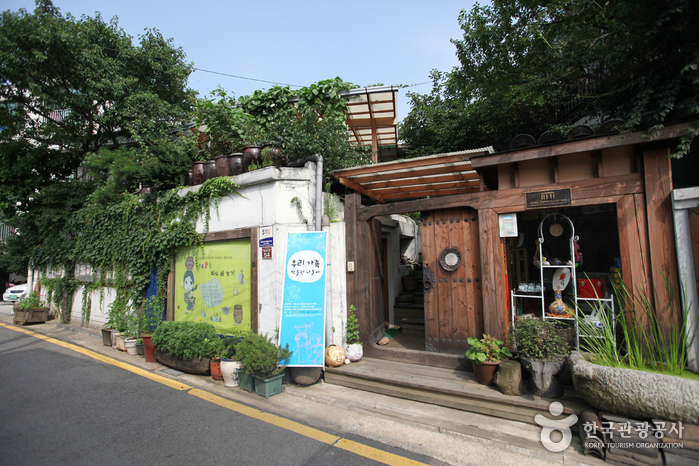
The Bukchon Museum displays items that have been collected from Bukchon, a historical village that was once home to the nation’s nobility. The museum was founded to observe urban development that took place in the recent decades through collected and preserved veryday household items that were used by Bukchon residents. Visitors are even allowed to touch items on display to better be able to imagine life in Korea before industrialization.
![Olens - Myeong-dong Embassy Branch [Tax Refund Shop] (오렌즈 명동대사관점)](http://tong.visitkorea.or.kr/cms/resource/05/2878605_image2_1.jpg)
Olens - Myeong-dong Embassy Branch [Tax Refund Shop] (오렌즈 명동대사관점)
1.6Km 2024-04-22
50, Myeongdong 2-gil, Jung-gu, Seoul
-
Gyeongbokgung Palace (경복궁)
1.6Km 2025-10-23
161 Sajik-ro, Jongno-gu, Seoul
+82-2-3700-3900
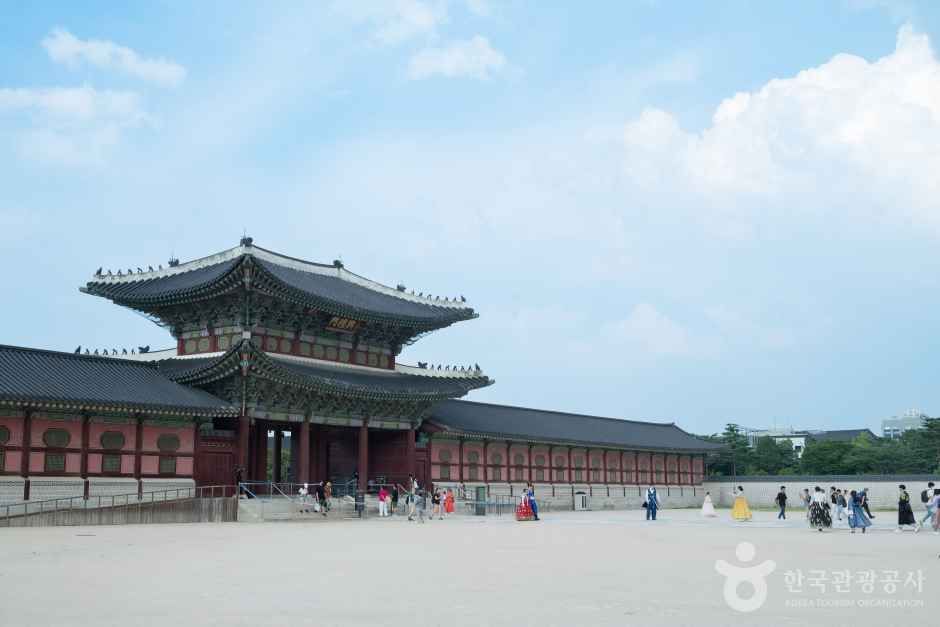
Gyeongbokgung Palace was built in 1395 as the official palace of the Joseon dynasty by Yi Seong-gye, the future King Taejo and founder of the new regime. Gyeongbokgung Palace is commonly referred to as the Northern Palace because of its location to the north, comparied to Changdeokgung Palace in the east and Gyeonghuigung Palace in the west. Gyeongbokgung Palace is arguably the most beautiful and is the largest of all five palaces. Many Joseon kings were crowned here. The premises were once destroyed by fire during the Imjin War (1592-1598). However, all of the palace buildings were later restored under the leadership of Heungseondaewongun during the reign of King Gojong. The assassination of Empress Myeongseong, however, resulted in Gyeongbokgung Palace losing its function as a royal palace, eventually witnessing the downfall of the Joseon dynasty. Gyeongbokgung Palace retains the original Gyeonghoeru Pavilion, a prime example of Joseon architecture, and the Hyangwonjeong Pavilion and pond. The sculptures in the Geunjeongjeon Hall exemplify Joseon-era sculpture techniques. The west side of the area outside Heungnyemun Gate is occupied by the National Palace Museum of Korea, while the eastern side of Hyangwonjeong Pavilion within the Gyeongbokgung Palace is occupied by the National Folk Museum of Korea.
K-Royal Culture Festival (궁중문화축전)
1.6Km 2025-07-29
161 Sajik-ro, Jongno-gu, Seoul
+82-1522-2295
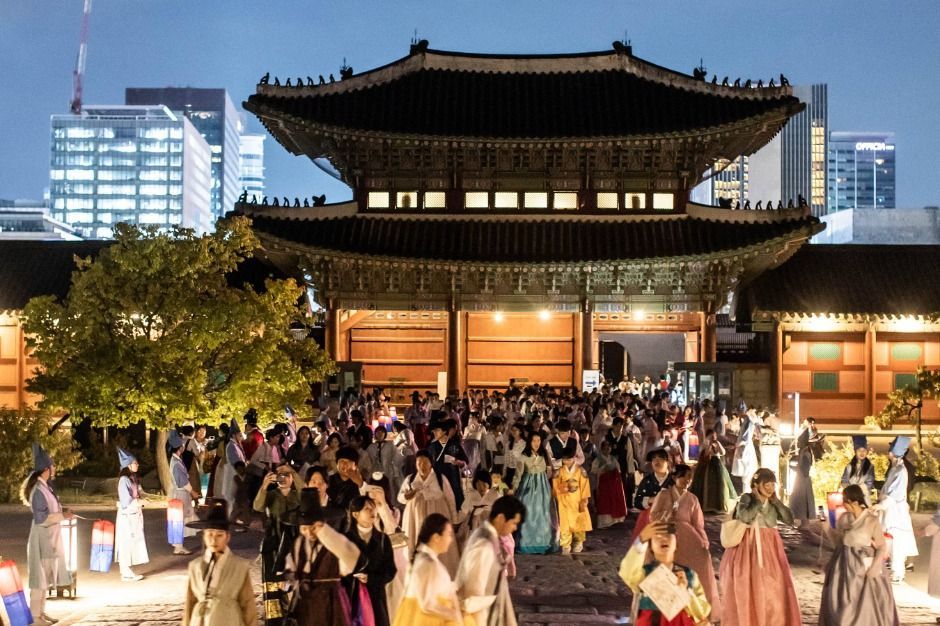
The K-Royal Culture Festival is held at the five Royal Palaces and Jongmyo Shrine. The festival first began in 2014 and provides visitors with first-hand knowledge of these important cultural heritages through unique performances, exhibitions, experiences and programs. The festival expanded in 2021 to be hosted twice a year, in spring and in fall.
Yetmat Seoul Bulgogi (옛맛서울불고기)
1.6Km 2024-03-20
57, Myeongdong, 2-gil, Jung-gu, Seoul
+82-2-779-3000
Located in Myeongdong, Yetmat Seoul Bulgogi is a Korean restaurant that specializes in Seoul-style bulgogi. It is a thinly sliced, seasoned beef sirloin cooked in a broth with onions, green onions, and mushrooms. The characteristic of this menu is that the bulgogi is mildly flavored and dipped in soybean paste to suit your taste.
 English
 한국어
한국어 日本語
日本語 中文(简体)
 Deutsch
 Français
 Español
 Русский


