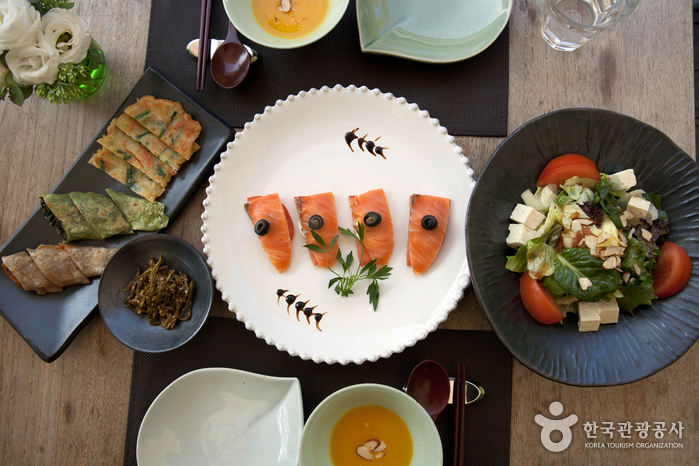
Sosohan Punggyeong (소소한 풍경)
3.3Km 2024-02-20
75 Jahamun-ro 40-gil, Jongno-gu, Seoul
Sosohan Punggyeong is the first restaurant that received the restaurant guide, Blue Ribbon Survey, in Korea. It is located in a renovated house with a courtyard. They offer a course menu featuring appetizers to desserts. One of the signature dishes is the gaji jjim (spicy eggplant soup), a dish made with eggplant and meat. It is recommended to make reservations in advance, as many guests prefer to book ahead.

Dongnimmun Gate (독립문)
3.3Km 2022-12-15
251, Tongil-ro, Seodaemun-gu, Seoul
Dongnimmun stands at the location originally known as Yeongeun, where envoys were once treated. When a Chinese envoy visited, the King would go out through this door to greet. In 1898, to announce the independence from Japan, Dongnimun was constructed with the fund collected by the citizens. The traces of the past still remain on Dongnimmun with two pillars in front of Dongnimmun being the remains of Yeongeunmun.
The Arc de Triomphe in France can be recalled in comparison to Dongnimmun. Dongnimmun was built using granite with a passageway x_height of 14.28 meters. On the top it is written ‘Dongnimmun’ in Korean with the national flag drawn on each side. On the inner-left side there are stone stairs leading to the attic. The national flower Mugunghwa are planted around Dongnimmun. Now it is surrounded by roads and it is eye-catching to view when passing by.
Seodaemun Prison History Museum (서대문형무소역사관)
3.3Km 2024-12-02
251 Tongil-ro, Seodaemun-gu, Seoul
Seodaemun Prison was built under the Japanese administration to imprison independence movement activists. It first opened on October 21, 1908 under the name Gyeongseong Prison. Eventually, so many activists were imprisoned that the building had to be expanded. At that time, the name changed to Seodaemun Prison on September 3, 1912. Eighty years later, the prison was turned into Seodaemun Independence Park on August 15, 1992 to commemorate the Korean patriots who were tortured in prison, giving their lives for freedom. Of the many buildings, only seven were preserved for their historical significance, among which three prison buildings and the execution site were designated as a Historic Site. In 1998, the park underwent another transformation into today's Seodaemun Prison History Hall to educate the public on the importance of Korea's independence and the sacrifices of those who fought to achieve it.
Seodaemun Independence Park (서대문독립공원)
3.4Km 2022-12-15
251, Tongil-ro, Seodaemun-gu, Seoul
+82-2-3140-8305
Seodaemun Independence Park was built on the former Seoul Detention Camp. It was used to imprison thousands of Korean independence activists until the liberation from the Japanese occupation on August 15, 1945, as well as the political prisoners during the political turmoil in the 1960s. When the prison was moved to Uiwang-si, Gyeonggi-do in November 1987, the area was restored and turned into a memorial park in August 15, 1992 to honor the sacrifices of the martyrs. The park preserves seven prison buildings, an execution ground, underground women’s prison, and the March 1st Movement Monument that has been moved from Tapgol Park in Jongno.
One of the most significant monuments of the Seodaemun Independence Park is Dongnimmun Gate (Independence Gate), which has been designated a Historic Site. Nearby is Dongnipgwan (Independence Hall), originally called Mohwagwan, which was used to greet Chinese envoys during the Joseon dynasty. Today, the hall enshrines 2,327 tablets inscribed with the names of Koreans who died for the cause of national independence. Standing right next to Dongnimmun Gate are the remnants of Yeongeunmun Gate, another Historic Site. Other sights inside the park include the Patriotic Martyr Monument, Declaration of Independence Monument, and Statue of Dr. Seo Jae-pil, who was an independence activist and publisher of Korea’s first independent newspaper. The main highlight of the park is the Seodaemun Prison History Hall, a former prison building that was renovated into a history museum.
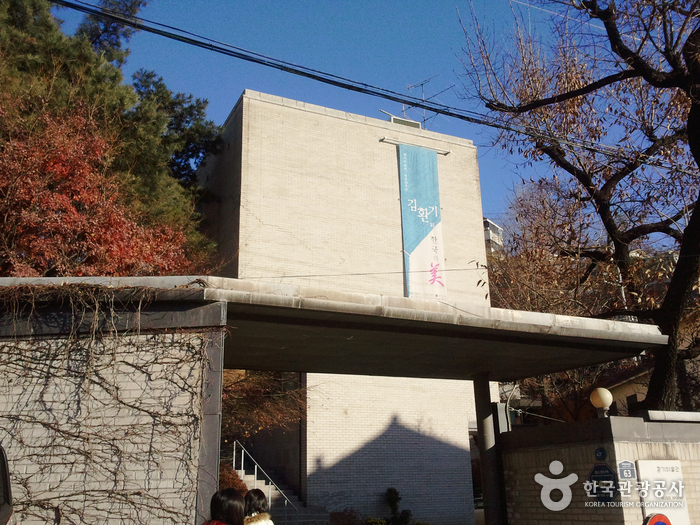
Whanki Art Museum (환기미술관)
3.4Km 2024-03-04
63, Jahamun-ro 40-gil, Jongno-gu, Seoul
+82-2-391-7701
Whanki Art Museum exhibits the works of Kim Whanki (1913-1974), the pioneer of Korean abstract art. Kim was inspired by traditional features such as Korean mountains and streams, the sky, moons and clouds, the white porcelain and traditional patterns, and worked to express them in abstract forms through points, lines, and surfaces. The main collection features nearly 300 works by Kim. One can also find an art shop and a café.
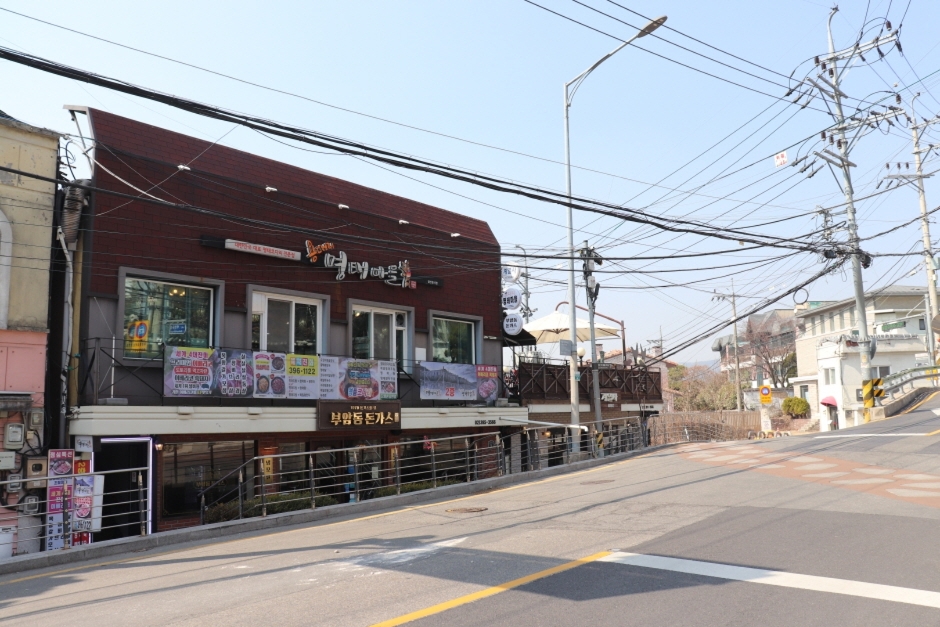
Buam-dong (부암동)
3.4Km 2024-03-15
Buam-dong, Jongno-gu, Seoul
+82-2-2148-1807
Buam-dong is a village located north of Gyeongbokgung Palace. It is designated as a development-restricted zone due to its proximity to the Cheong Wa Dae, preserving the old neighborhood's appearance. There are numerous bakeries, cafés, restaurants, and small galleries housed in renovated traditional houses, making it a delightful place for a leisurely stroll. The nearby hiking trails connected to Bugaksan Mountain offer a tranquil journey through the forest, ideal for those seeking a peaceful retreat.
Youngone Corporation [Tax Refund Shop] (주식회사 영원무역)
3.4Km 2024-04-19
159, Mallijae-ro, Jung-gu, Seoul
-
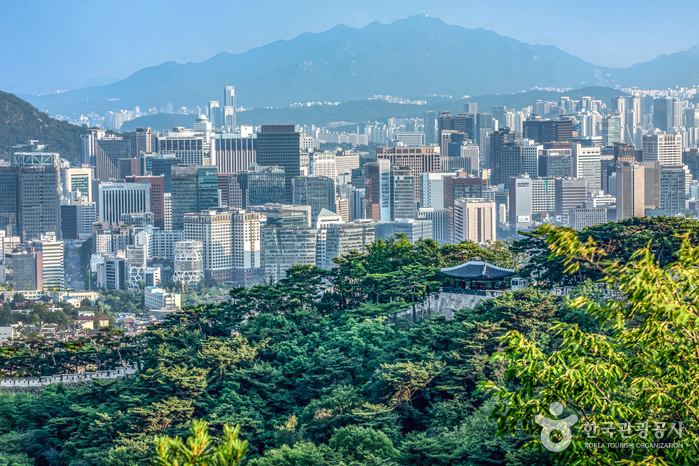
Bugak Skyway Palgakjeong Pavilion (북악스카이 팔각정)
3.4Km 2024-12-31
267 Bugaksan-ro, Jongno-gu, Seoul
Bugak Skyway Palgakjeong Pavilion exudes a tranquil, serene beauty regardless of the season. The pavilion, which sits on Bugaksan's 1,652,900 square meter summit at an altitude of 345 meters, was built in a traditional Korean-style and became a popular attraction within the city. There are also spaces for visitors to enjoy food and drinks.
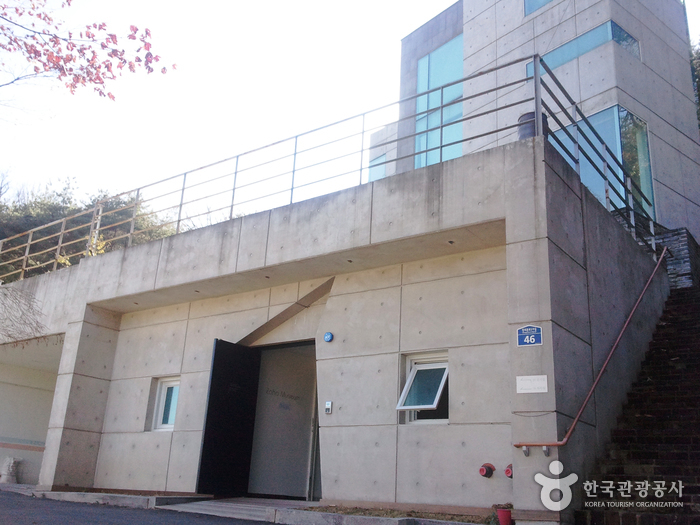
Zaha Museum (자하미술관)
3.4Km 2021-03-09
46, Changuimun-ro 5ga-gil, Jongno-gu, Seoul
+82-2-395-3222
Located in Buam-dong, Jongno-gu, Zaha Museum is the highest art gallery in Seoul. Reaching
the museum involves a bit of an uphill walk, but the breathtaking scenery that includes Bugaksan Mountain and Inwangsan Mountain makes it worth the effort.
Opened on March 1, 2008, the two-story museum exhibits experimental works of young artists. There are two exhibition halls and a small garden on the second floor with a great view of the mountains.
Korea University Anam Hospital (고려대학교 안암병원)
3.4Km 2025-10-23
73 Goryeodae-ro, Seongbuk-gu, Seoul
As a premier medical institution at the forefront of Korea's healthcare system, Korea University Anam Hospital integrates cutting-edge technologies into clinical practice. Our focus on precision medicine drives excellence in cancer and cardiovascular disease treatment, offering safe and accurate medical services through state-of-the-art robotic surgery and multidisciplinary care.
Our commitment to patient-centered care is evident in our ongoing investments to enhance our systems and capabilities. In 2008, we established the International Medical Center to serve our growing number of international patients better.
The International Medical Center offers services in English, Russian, Mongolian, and Arabic, ensuring that language barriers do not impede quality care. Additionally, our nutrition team develops global meal plans tailored to the diverse dietary needs of our international patients. For added convenience, we provide airport pick-up services, making the journey to our hospital as smooth as possible.
 English
 한국어
한국어 日本語
日本語 中文(简体)
 Deutsch
 Français
 Español
 Русский


