![Queens Bucket - Dongdaemun Branch [Tax Refund Shop] (쿠엔즈버킷 동대문)](http://tong.visitkorea.or.kr/cms/resource/47/2878747_image2_1.jpg)
Queens Bucket - Dongdaemun Branch [Tax Refund Shop] (쿠엔즈버킷 동대문)
2.6Km 2024-04-18
5-4, Toegye-ro 64-gil, Jung-gu, Seoul
-
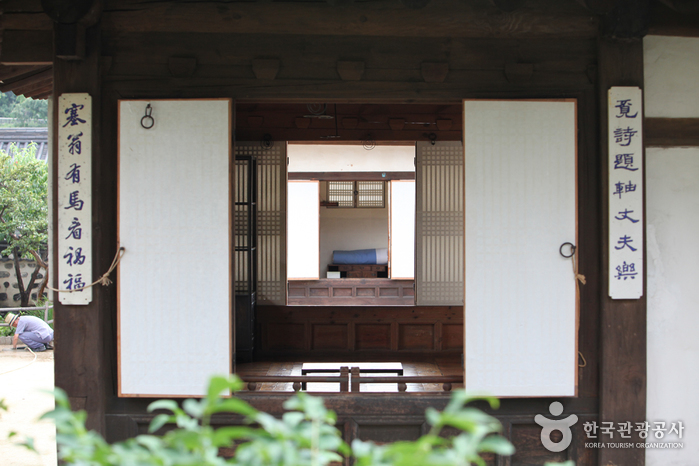
Haepungbuwongun Yun Taekyeong's Jaesil (해풍부원군윤택영댁재실)
2.6Km 2021-11-10
28, Toegye-ro 34-gil, Jung-gu, Seoul
+82-2-3396-5882
Haepungbuwongun Yun Taekyeong's Jaesil is a shrine house built by the father-in-law of King Sunjong of Joseon dynasty in 1906 when his daughter was proclaimed the crowned princess of Joseon and entered Changdeokgung Palace to later become Queen Sunjeong. Red pine trees salvaged from the demolition of Gyeongungung Palace were used to construct the house. It was originally located in Jegi-dong, Dongdaemun-gu, but was later restored and moved to its present location. The shrine of the house that was destroyed in 1960 was also restored.
Because the house is more of a shrine rather than residential living quarters, it has many unique features. For example, unlike other houses, it has the anchae (women’s quarters) located across from sarangbang (men’s quarters) with daecheong (living room) positioned between them.
![Sujeong Pharmacy [Tax Refund Shop] (수정약국)](http://tong.visitkorea.or.kr/cms/resource/57/2878757_image2_1.jpg)
Sujeong Pharmacy [Tax Refund Shop] (수정약국)
2.6Km 2024-04-22
1F, 195, Jangchungdan-ro, Jung-gu, Seoul
-
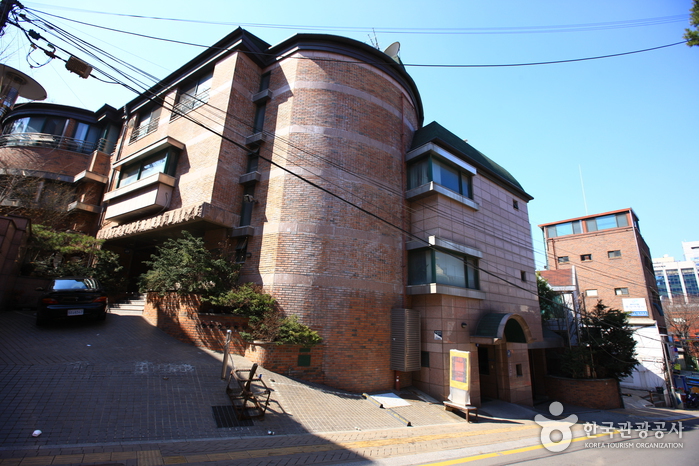
Chojun Textile & Quilt Art Museum (초전섬유ㆍ퀼트박물관)
2.6Km 2024-03-06
29, Toegye-ro 16-gil, Jung-gu, Seoul
+82-2-753-4074~5
Opened in 1998, Chojun Textile & Quilt Art Museum is the only textile art museum in Korea. Visiotrs can learn about the excellence and tradition of Korean textiles by observing a wide range of domestic and international textile artworks. In addition to exhibiting its collection, the museum also holds special exhibitions as well as textile and quilt competitions, giving visitors the opportunity to get up close and personal with textile artworks.

Kim's Optical [Tax Refund Shop] (김안경)
2.6Km 2024-06-27
1F, D-10, 9, Namdaemunsijang 4-gil, Jung-gu, Seoul
-
India Art [Tax Refund Shop] (인도예술)
2.6Km 2024-06-26
1F, D-61, 9, Namdaemunsijang 4-gil, Jung-gu, Seoul
-
Taesan Total Kitchen [Tax Refund Shop] (태산종합주방)
2.6Km 2024-06-27
3F, D-35, 9, Namdaemunsijang 4-gil, Jung-gu, Seoul
-
![Kim's Optical [Tax Refund Shop] (김안경)](http://tong.visitkorea.or.kr/cms/resource/44/3313944_image2_1.jpg)
Tonymoly - Namdaemun Branch [Tax Refund Shop] (토니모리 남대문점)
2.6Km 2024-04-22
12, Namdaemunsijang-gil, Jung-gu, Seoul
-
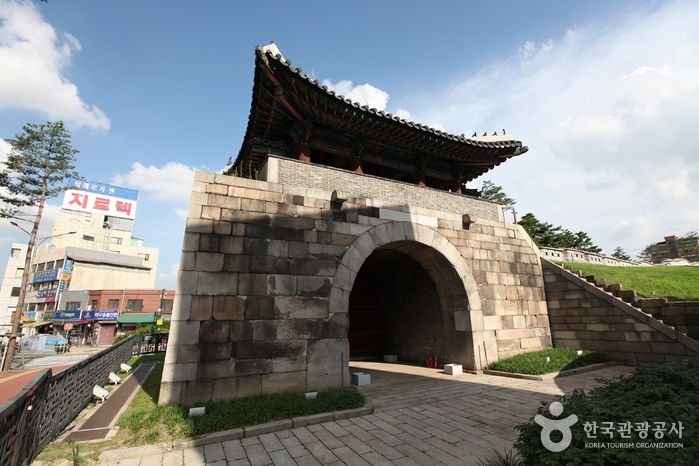
Gwanghuimun Gate (광희문)
2.6Km 2021-02-24
344, Toegye-ro, Jung-gu, Seoul
+82-2-3700-3900
Gwanghuimun Gate is said to have been originally constructed in 1396, the 5th year of King Taejo, at the southeast of the capital city. It was often referred to as Sugumun Gate (water channel gate) and was actually used as a Sigumun, literally meaning “corpse gate,” as funeral processions passed through this gate when exiting to the east.
During the Imjin War (1592-1598), the fortress gate was destroyed to such a degree that it made finding the original location close to impossible. Nevertheless, reconstruction efforts were started in 1711 (37th year of King Sukjong) and the gate was restored together with the gate's watchtower. Gwanghuimun Gate remained intact even when the fortress walls were demolished to build tram tracks during the Japanese occupation, but it was later damaged during the Korean War and left neglected. In 1975, restoration work was carried out to relocate Gwanghuimun Gate to a site 15 meters south of its original location since it stood in the middle of the road.
 English
 한국어
한국어 日本語
日本語 中文(简体)
 Deutsch
 Français
 Español
 Русский


