![Dr. Martens [Tax Refund Shop] (닥터마틴)](http://tong.visitkorea.or.kr/cms/resource/74/3312774_image2_1.jpg)
![M-piecemall [Tax Refund Shop] (엠피스몰)](http://tong.visitkorea.or.kr/cms/resource/63/3314763_image2_1.jpg)
![Refurb Stock [Tax Refund Shop] (리퍼브스톡)](http://tong.visitkorea.or.kr/cms/resource/96/3313396_image2_1.jpg)
![189 shop [Tax Refund Shop] (189#(189샵))](http://tong.visitkorea.or.kr/cms/resource/01/3313501_image2_1.jpg)
![Lepitta [Tax Refund Shop] (르피타)](http://tong.visitkorea.or.kr/cms/resource/71/3313871_image2_1.jpg)

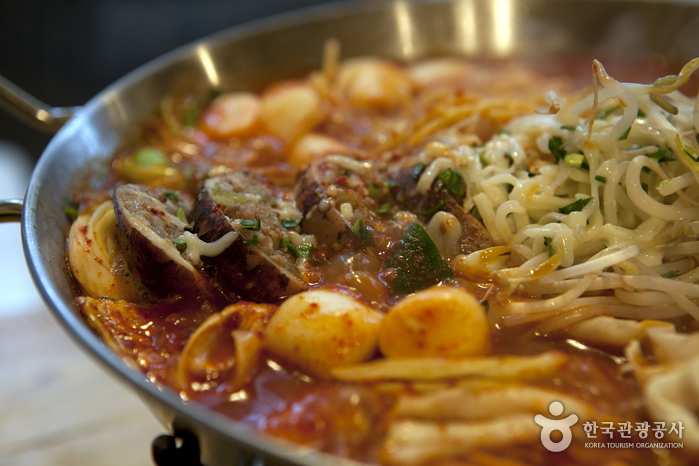
Namdo Bunsik Seochon Branch (남도분식 서촌점)
2.3Km 2024-02-20
1F, 2 Ogin 2-gil, Jongno-gu, Seoul
Namdo Bunsik is a snack restaurant that caters to the tastes of the younger generation by adapting regional traditional cuisine. The flagship menu features namdo tteokbokki, an jeukseok tteokbokki (instant tteokbokki) crafted with various ingredients such as pollack, scallions, and radish, with the broth prepared in-house. The spiciness of the tteokbokki can be adjusted from level 1 to level 3. Another popular item is sangchu twigim (deep-fried lettuce), where deep-fried dishes and pickled onions are wrapped in lettuce for consumption.
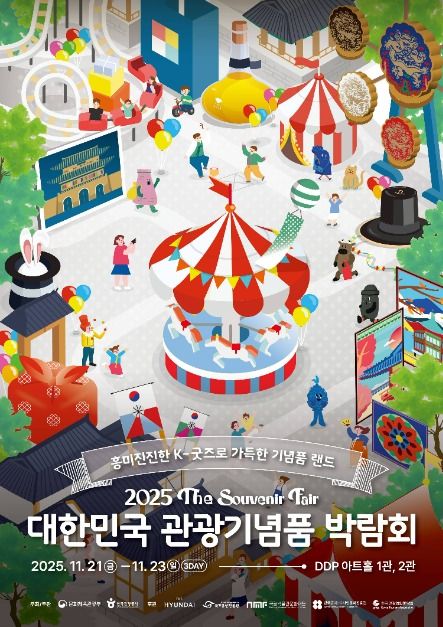
The Souvenir Fair (2025 대한민국 관광기념품 박람회)
2.3Km 2025-10-27
281 Eulji-ro, Jung-gu, Seoul
+82-10-8315-5434
The Souvenir Fair brings together various companies and local governments to showcase a variety of souvenirs, both traditional and trendy. Visitors can freely explore the exhibition space, enjoy souvenir shopping, and take part in various programs. Highlights of the fair include an exhibition of competition-winning works, a zone featuring outstanding local souvenirs, and a special exhibition of overseas souvenirs.
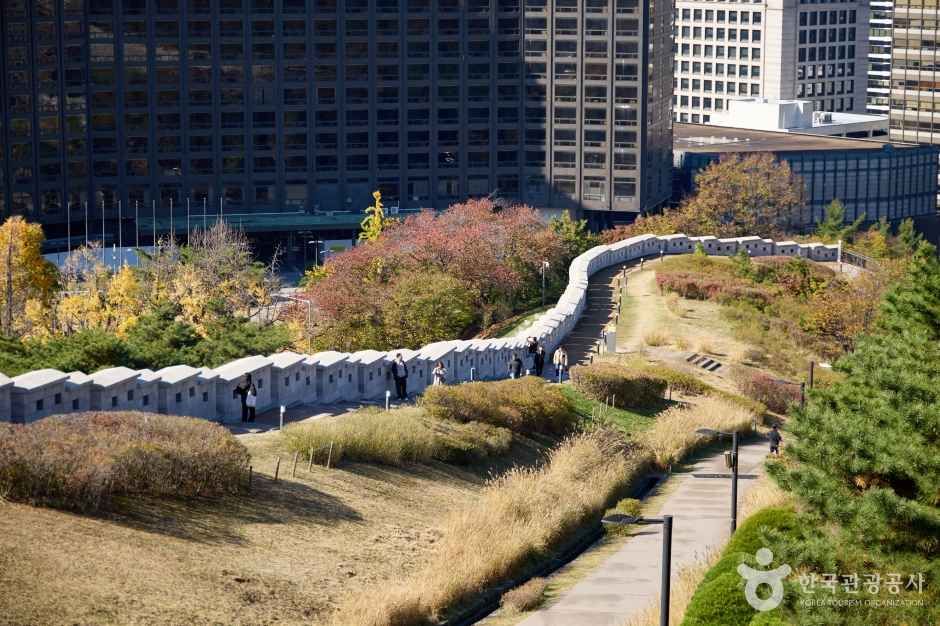
Hanyangdoseong Seoul City Wall Stamp Tour (서울 한양도성 순성길)
2.3Km 2025-06-30
Nusang-dong, Jongno-gu, Seoul
Hanyangdoseong Seoul City Wall is a 18.7 km-long trail that encircles the old capital city of Hanyang, covering Bugaksan, Inwangsan, Naksan, and Namsan Mountains. The urban trekking course provides the opportunity to see Seoul's history, culture, and nature all at once, including four large gates, four small gates, and 169 cultural heritages. To enjoy the trail even further, take part in the stamp tour. Travelers who complete the full trail, collecting stamps and taking pictures at the designated locations will recieve a completion certificate.
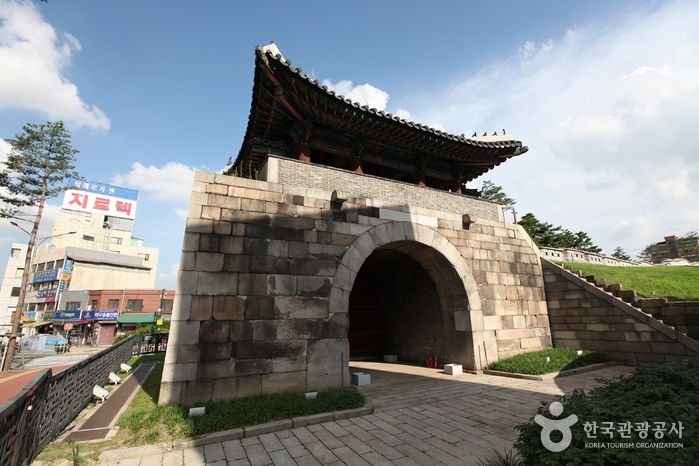
Gwanghuimun Gate (광희문)
2.3Km 2021-02-24
344, Toegye-ro, Jung-gu, Seoul
+82-2-3700-3900
Gwanghuimun Gate is said to have been originally constructed in 1396, the 5th year of King Taejo, at the southeast of the capital city. It was often referred to as Sugumun Gate (water channel gate) and was actually used as a Sigumun, literally meaning “corpse gate,” as funeral processions passed through this gate when exiting to the east.
During the Imjin War (1592-1598), the fortress gate was destroyed to such a degree that it made finding the original location close to impossible. Nevertheless, reconstruction efforts were started in 1711 (37th year of King Sukjong) and the gate was restored together with the gate's watchtower. Gwanghuimun Gate remained intact even when the fortress walls were demolished to build tram tracks during the Japanese occupation, but it was later damaged during the Korean War and left neglected. In 1975, restoration work was carried out to relocate Gwanghuimun Gate to a site 15 meters south of its original location since it stood in the middle of the road.
 English
 한국어
한국어 日本語
日本語 中文(简体)
 Deutsch
 Français
 Español
 Русский


