Ononsa Guesthouse (온온사)
15.1Km 2023-07-17
58 Gwanaksan-gil, Gwacheon-si, Gyeonggi-do
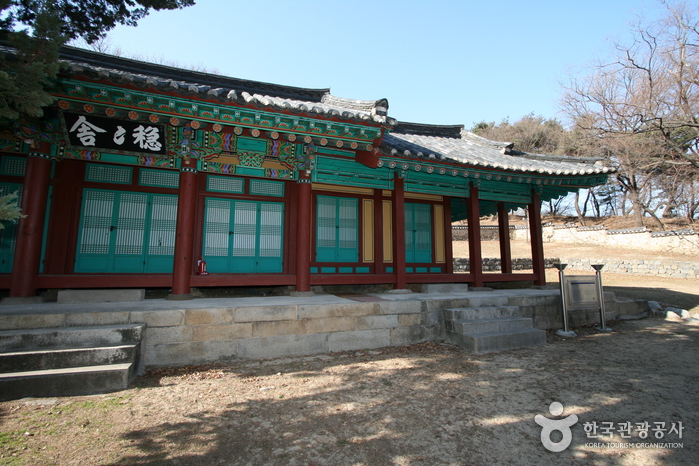
Though Ononsa, which was a guesthouse in Gwacheon, was constructed in the 27th year of King Injo's reign in the Joseon dynasty (1649), the name, "Ononsa," was given to this area during the reign of King Jeongjo. On February 11, 1790 during his royal procession to the tomb of his father, Crown Prince Sado, stayed at an inn in Gwacheon and, as he felt that it "has nice views and provides a comfortable stay," he bestowed upon the place plaques that he wrote himself - "Ononsa" to Seoheon and "Burimheon," which was the old nickname of Gwacheon, to Dongheon. This is how this place began to be called Ononsa.
It was designated as a Tangible Cultural Heritage of Gyeonggi-do on June 2, 1980, and it was restored on December 2, 1986 after being torn down.
Ogeum Park (오금공원)
15.3Km 2025-01-17
363 Ogeum-ro, Songpa-gu, Seoul
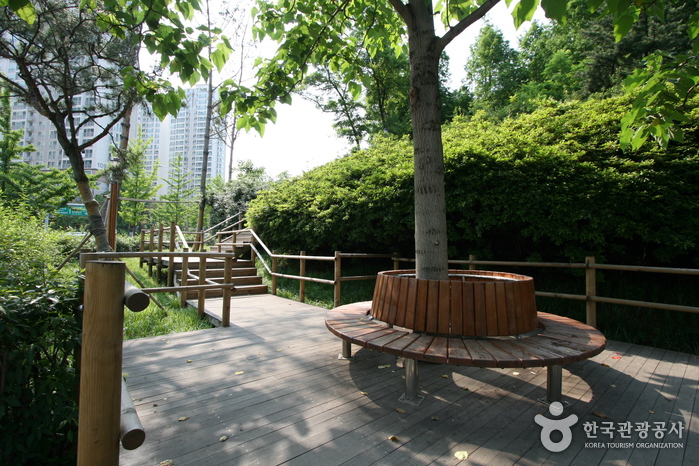
Ogeum Park is a park created by cultivating a mountain with an altitude of 200 meters, providing a panoramic view of Seoul's Songpa district. The park features walking trail, various exercise equipment, and facilities such as badminton and tennis courts. The lawn bowling court is available for use by reservation. There is a toddler forest experience ground and an adventure playground for children, offering activities like rope climbing, rock climbing, net climbing, slides, and spider web climbing.
Skylift (스카이리프트)
15.3Km 2025-11-11
102 Daegongwongwangjang-ro, Gwacheon-si, Gyeonggi-do
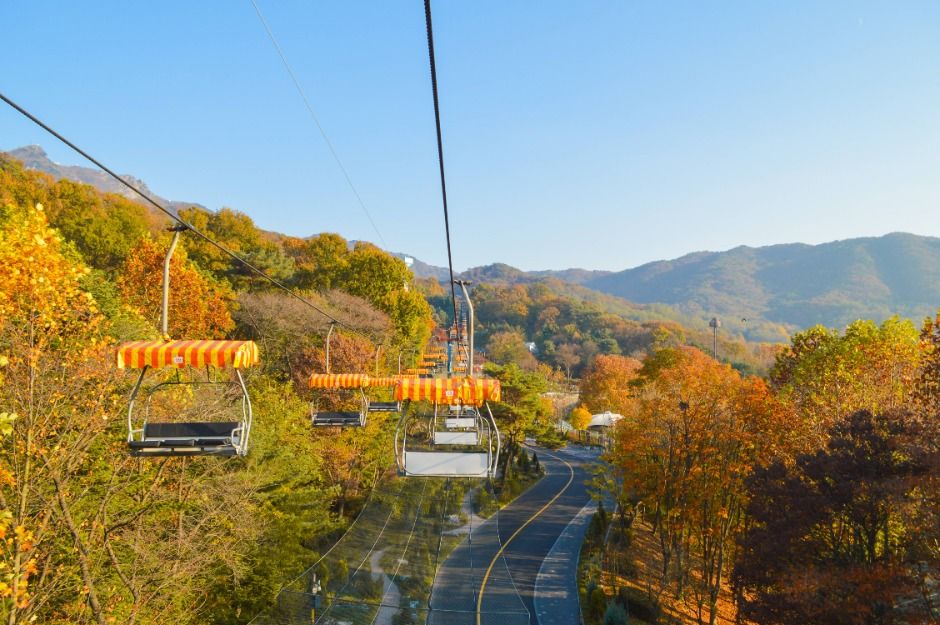
The Seoul Grand Park Skylift is an experiential transportation and tourist facility that operates within Seoul Grand Park. It consists of two lines, Line 1 and Line 2, and operates from the entrance of Seoul Grand Park to the north gate of the zoo, and from the north gate of the zoo to the top of the carnivore animals zone, respectively. It serves to connect major tourist destinations such as the zoo, themed gardens, and children's zoo, allowing visitors to move around efficiently. Visitors can also enjoy the natural scenery of Seoul Grand Park's lakes, forests, and flower paths while traveling on the lift. Available all year round, visitors can enjoy seasonal scenery such as cherry blossoms in spring, greenery in summer, autumn leaves in fall, and snowy landscapes in winter.

Seoulland Sledding Hills (서울랜드 눈썰매장)
15.5Km 2022-11-22
Makgye-dong, Gwacheon-si, Gyeonggi-do
+82-2-509-6000
Seoulland Sledding Hills offers two slopes, one for children (50 meters long) and another for adults (120 meters long). Amenities include food stands that sell various foods, including eomuk (fish cake) soup, resting lounge and medical office. Various performances are also prepared to entertain visitors at the main stage nearby the sledding hill.

Myongji Hospital (명지병원)
15.5Km 2025-10-23
55 Hwasu-ro 14beon-gil, Deogyang-gu, Goyang-si, Gyeonggi-do
Myongji Hospital is a general hospital located in Goyang-si with various departments and specialized treatment centers.
We operate Breast Thyroid Center, Prostate Cancer and Kidney Cancer Center, Ovarian Cancer and Gynecological Cancer Center, and Robotic Surgery Center for specialized treatment, and have introduced the latest medical device, da Vinci Xi to conduct surgeries for various types of cancer as well as robotic surgeries for a wide range of benign diseases. In addition, we provide more specialized and prompt medical services to patients through advanced facilities such as the Radiology Center, Rehabilitation Center, Intervention Center, and Comprehensive Health Checkup Center. Specifically, we are prominent in the field of organ transplantation and operate the Organ Transplant Center performing liver, kidney, lung, and heart transplants. We offer interpretation services for foreign patients by professional coordinators who speak English, Russian, Mongolian, and Chinese to eliminate language barriers by opening the International Medical Center in 2009 and provide guesthouses, airport pick-up and send-off services for foreign patients as well to maximize their convenience.
Gwangmyeong Indoor Gymnasium (광명시민체육관)
15.6Km 2024-02-20
703 Ori-ro, Gwangmyeong-si, Gyeonggi-do
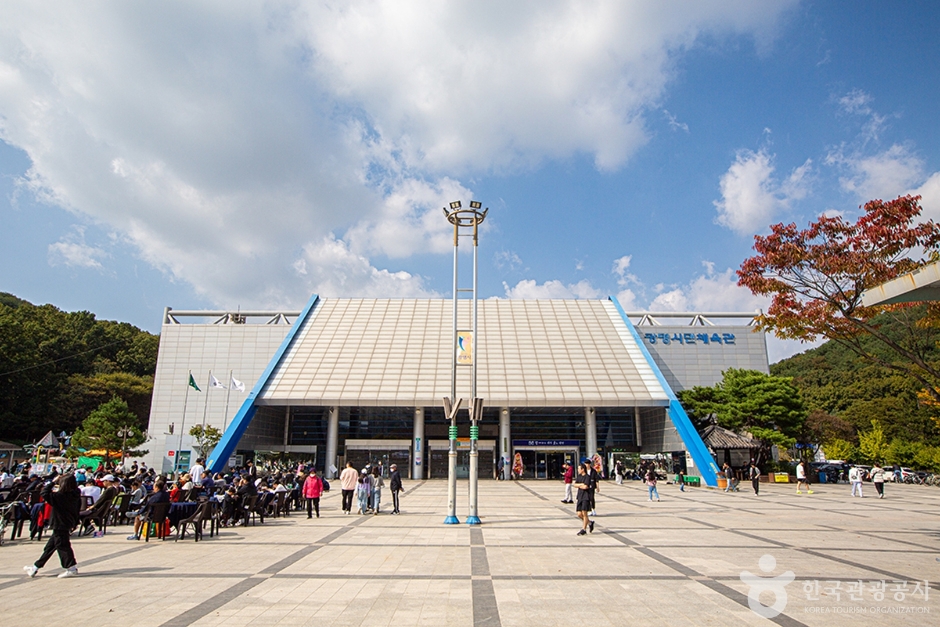
Gwangmyeong Indoor Gymnasium is a stadium equipped with seating for 3,000 spectators. It houses facilities for physical training, including golf, fitness, and table tennis. The spacious and vibrant lawn plaza immediately draws attention. This complex includes an open art hall for performances, sports facilities like an inline bicycle track and basketball courts, and amenities such as a children's playground and an outdoor water play area. Additionally, it features a 16-meter-high artificial rock-climbing wall.
Goyang Oulim Nuri Arts Center (고양 어울림누리)
15.6Km 2021-07-08
33, Eoullim-ro, Deogyang-gu, Goyang-si, Gyeonggi-do
+82-1577-7766
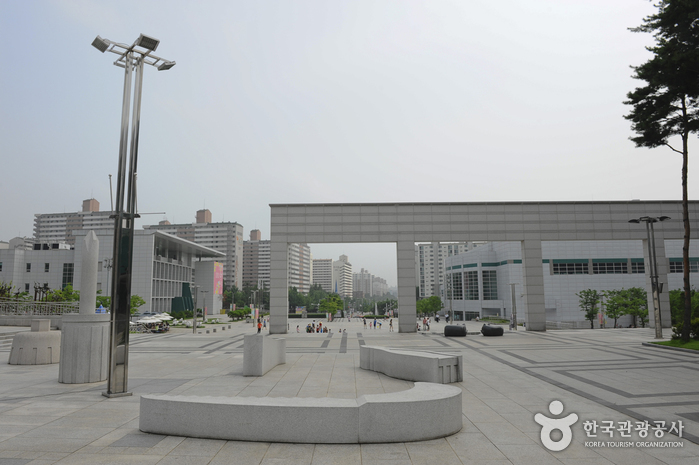
Goyang Oulim Nuri Arts Center is a multi-complex that ties culture and arts facilities with sports facilities. Oulim Theater provides 1,218 seats for various events from classical music to K-pop, plays, musicals and more, while Star and Sand Theater provides 362 seats for more family-oriented shows. The Oulim Art Gallery offers experience programs and exhibitions. The Flower Hill outdoor stage is suitable for plays and concerts.
Munjeong-dong Rodeo Street (문정동 로데오거리)
15.7Km 2025-03-29
10, Dongnam-ro 4-gil, Songpa-gu, Seoul
+82-2-400-1633
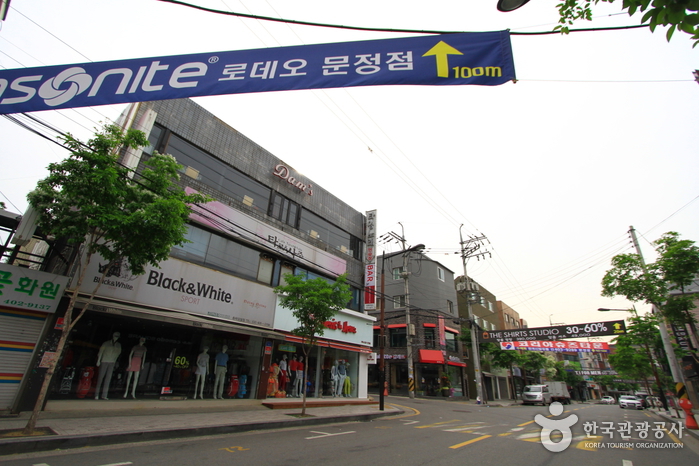
Munjeong-dong Rodeo Street is a large shopping district containing over 200 brand-name discount stores. The street is T-shaped, with a 1-kilometer-long main street connected to a 400-meter-long alley, and the Munjeong 1-dong Resident Center located at the center. For shoppers’ convenience, there is a public parking lot (if visitors purchase goods at Rodeo Street, they can park here for free) and a parking lot for foreign tourists only (free of charge). Munjeong-dong Rodeo Street is one of Korea’s major shopping streets with customers ranging from teenagers to adults, since discount stores stocking sports wear, casual wear, shoes, men’s and ladies’ suits, and golf wear are all located on this street. Moreover, this is a great place to find deals on famous brands, at prices lower than at a department store. On some items you can get discounts of up to 70-80%.
Since most of the goods are stock from previous seasons, it might be better to purchase the more classic styles rather than the trendy fashions. In some cases, the goods might have been slightly crumpled or stained during the transfer from warehouse storage, but taking them to the dry-cleaners should fix most problems. However you should be careful when looking at the sewing quality, and check for missing buttons.
One more thing to bear in mind is the shopping season. Even discount stores have periods when stock runs low. The best time to shop is immediately after the stores in Rodeo Street restock their merchandise. This is done at about the same time as department stores. There is also an enormous variety of goods to choose from during the Rodeo Festivals in May and September. The purchased goods are exchangeable but non-refundable, so check the quality of the products carefully before purchasing.
In addition, Munjeong-dong Rodeo Street has a wide selection of restaurants and entertainment facilities. There are a number of pizza places, coffee shops, and food courts, as well as internet cafes and game rooms in the alleys behind the stores. Visitors can also relax in the surrounding parks. There’s a park with a 600-year-old zelkova tree right behind the Munjeong 1-dong Resident Center.
Munjeong Rodeo Street is not just a shopping district; it’s a cultural area. The ‘Munjeong-dong Cultural Festival’ takes place every year in May, and the ‘Munjeong-dong Rodeo Festival’ takes place in May every other year. During these festivals, visitors can watch traditional Korean performances, traditional wedding ceremonies, international fashion parades, hip-hop dancing, and more.
A charity sale is held on weekends and national holidays on the open-air stage of the Munjeong 1-dong Resident Center, and merchandise is sold for even bigger discounts.
Iljasan Mountain Natural Park (일자산자연공원)
15.7Km 2021-04-23
660, Dongnam-ro, Gangdong-gu, Seoul
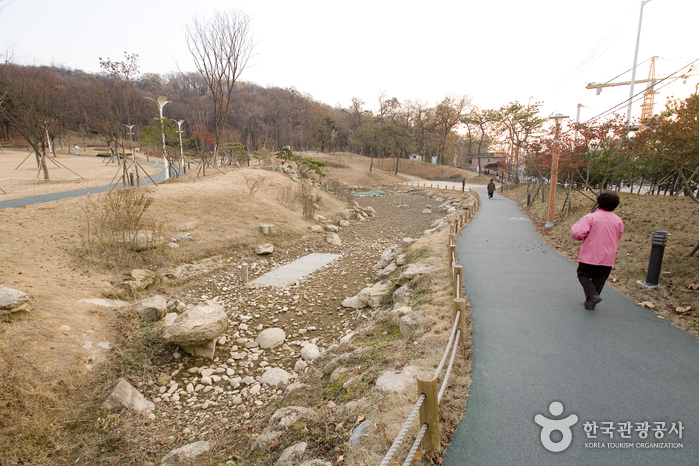
Iljasan Mountain is the tallest peak in Gangdong-gu, Seoul, providing the western boundary between Gangdong-gu and Hanam-si, Gyeonggi-do. Iljasan Mountain is one of the best spots in Seoul to watch the sunrise. Located on the mountain is the house of Master Lee Jip (pen-name Dunchon), providing a good getaway spot for local residents. Lee Jip was a loyal government official during the reign of King Gongmin during the late Goryeo dynasty. He was forced to move to an underground tunnel in the southwest side of Iljasan Mountain to avoid entrapment by Shin Don, a person of influence at the time. While living in hiding, he took the pen-name Dunchon (meaning drawing back to the countryside) to symbolize the hardships he was going through. The nearby area was named after him, being called Dunchon-dong.
Sammaksa Temple (삼막사)
15.7Km 2024-02-07
478 Sammak-ro, Manan-gu, Anyang-si, Gyeonggi-do,
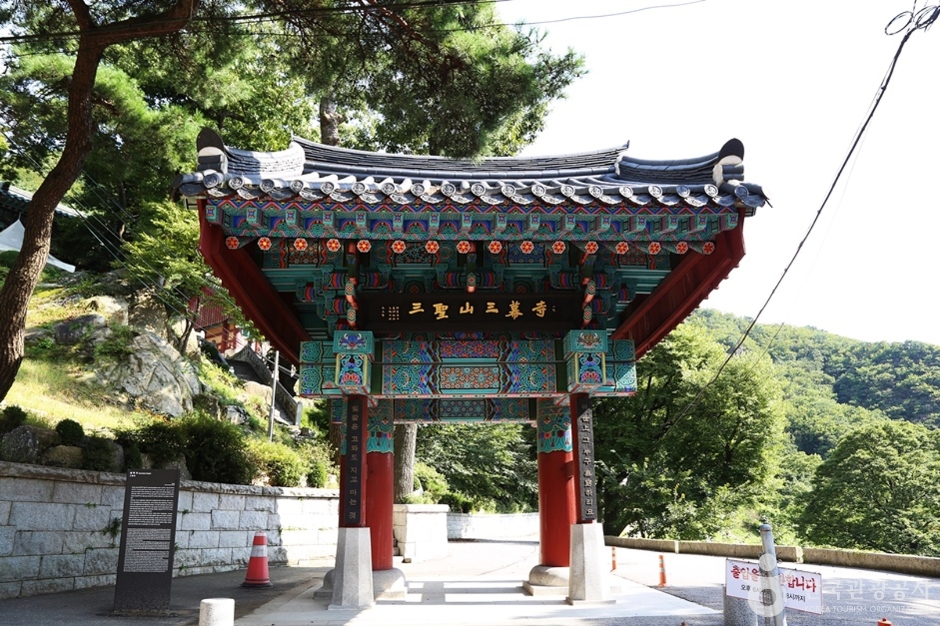
Sammaksa Temple is a Buddhist temple located in Samseongsan Mountain. Legend has it that the temple was established in 667 by Wonhyo, a Buddhist philosopher from the Silla era. Within the temple grounds are Cheonbuljeon Hall, Yukgwaneumjeon Hall, Myeongbujeon Hall, Manghaeru Pavilion, Chilbogak House, among others. The temple holds heritages like the Rock-carved Buddha Triad and the Fertility Stones. These artifacts, symbolizing the fusion of Buddhism and folk religion, highlights the ancient nature of the place.
 English
 한국어
한국어 日本語
日本語 中文(简体)
 Deutsch
 Français
 Español
 Русский


