
Golden Tour Korea DMC (골든투어코리아 디엠씨)
2.7Km 2025-10-23
(#1227), 173 Mapo-daero, Mapo-gu, Seoul
Since its establishment in 2013, Golden Tour Korea DMC has been offering high-quality, customized travel services worldwide, focusing on premium travel experiences and diverse Korean tour products. In addition, the company actively organizes incentive tours, corporate meetings, government forums, business trips, family vacations, educational programs, and foreign patient attraction activities in Europe. Golden Tour Korea DMC designs tour products tailored to meet customers’ needs, with expert tour operators providing consulting to enhance customer satisfaction. The company maintains strong collaborations with numerous international partners. With extensive experience and expertise in the travel industry, Golden Tour Korea DMC will do its best to create beautiful memories and make the next chapter of your life unforgettable.
Dongdaemun Design Plaza (동대문디자인플라자 (DDP))
2.7Km 2024-10-24
281 Eulji-ro, Jung-gu, Seoul
+82-2-2153-0000
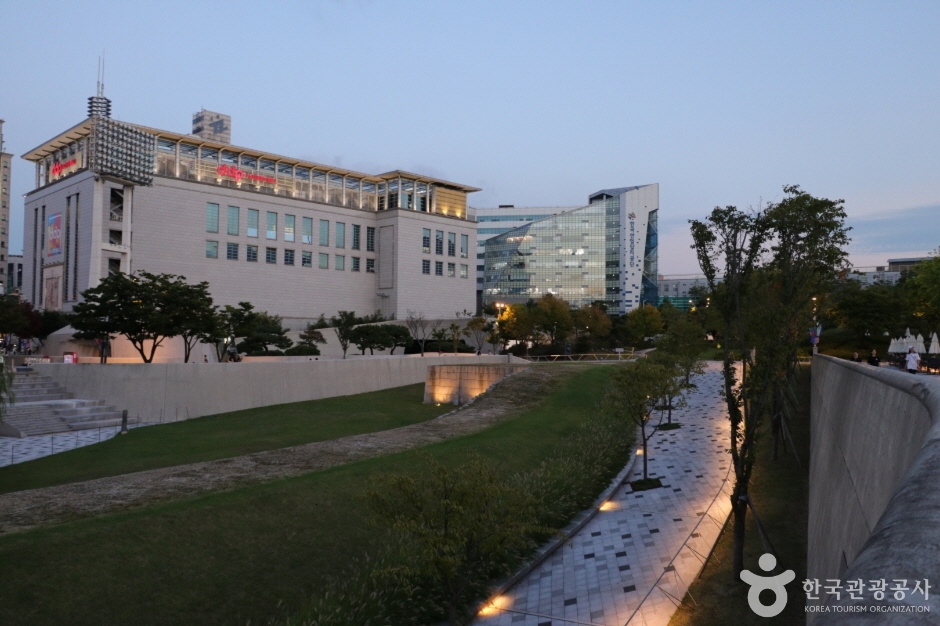
Dongdaemun Design Plaza (DDP) has a meaning of Dream, Design, and Play. It holds various exhibitions, fashion shows, forums, conferences, and other domestic and international events. The building complex is divided into sections, which are named Allimteo, Beaumteo, Sallimteo, DDP Design Museum, Design Market & Eoullim Plaza, and Dongdaemun History & Culture Park. Designed by world-renowned architect Zaha Hadid, the building's exterior attracts the attention of many photographers with its delicate curves and bold shapes.
Dongdaemun History & Culture Park (동대문역사문화공원)
2.7Km 2024-11-27
281 Eulji-ro, Jung-gu, Seoul
Dongdaemun History & Culture Park is a park established on the former site of the Dongdaemun Stadium. It serves as a thematic park showcasing the history and culture of Seoul, while also providing a space to experience modern design and culture. During the park's development in 2008, numerous artifacts from the Joseon dynasty, including The Two Floodgates, the Chiseong Castle, Military Training Agency, and over 1,000 relics from the Joseon era, were excavated. Alongside the park, there is the Dongdaemun Design Plaza (DDP) and the Relic area.
Gyeongnidan Street (경리단길)
2.7Km 2023-01-18
Itaewon-dong, Yongsan-gu, Seoul
Gyeongnidan Street refers to the 937-meter-long road from the main gate of MND Financial Management Corps to Grand Hyatt Seoul as well as all of the nearby streets and alleys. It is called Gyeongnidan Street because the Korean army's central finance corps, or Gyeongnidan in Korean, used to be located here, and has gained fame for presenting a different vibe than that of Itaewon despite being part of Itaewon-dong. Gyeongnidan Street is an area of culture and youth where people are able to enjoy diverse and special cuisine and dishes at unique restaurants and cafes. Although it resembles a typical neighborhood of Seoul, it features foreigners who have come from many different places around the globe living in natural harmony with Korean locals, which exudes a unique, exotic atmosphere. It is fun to walk along the various streets and alleys to discover novel and sophisticated shops.
Namsan Outdoor Botanical Garden (남산 야외식물원)
2.7Km 2022-12-16
323, Sowol-ro, Yongsan-gu, Seoul
+82-2-798-3771
Namsan Outdoor Botanical Garden opened its doors on February 18, 1997 in Hannam-dong, where the residential complex for foreigners once stood before it was demolished in 1994. Covering an area of around 59 ㎡, it is divided into 13 themed gardens with a total 117,132 plants from 269 species. Among this diversity, 60,912 plants from 129 species are tree types and 56,220 plants from 140 species are grass types.
Suseongdonggyegok Valley (수성동계곡)
2.7Km 2023-08-17
185-3, Ogin-dong, Jongno-gu, Seoul 서울특별시 종로구 옥인동
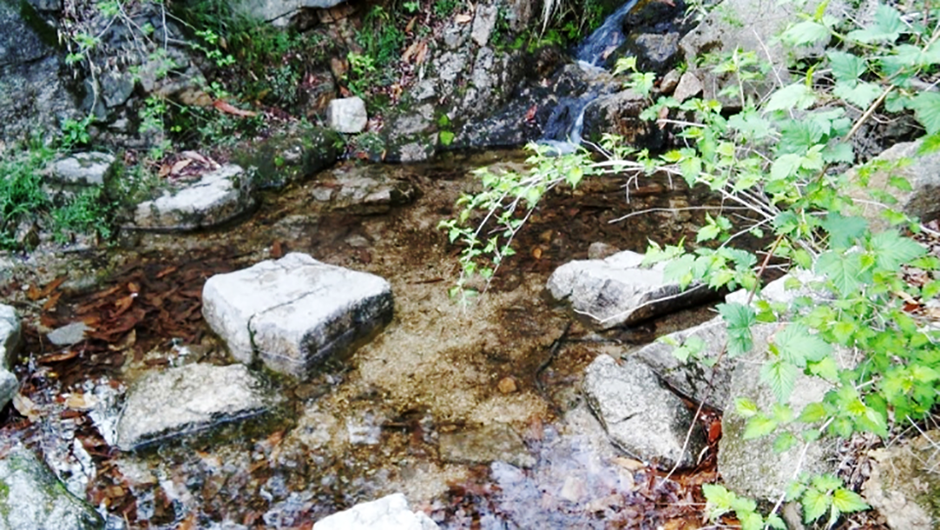
Suseong-dong Valley's stream runs down from Inwangsan Mountain and joins Cheonggyecheon Stream, and it is said that the name of the village was called Suseong-dong during the Joseon dynasty due to the loud and clear sound of the flowing water. It appears in the painting "Jangdong Palgyeongcheop," which is Jangdong Eight Scenic Views, that depicts the eight scenic views of Bugaksan Mountain and Inwangsan Mountain as well as in other historical books of the Joseon dynasty as a place of scenic beauty. The valley was so famous for its beauty, that Prince Anpyeong of the Joseon dynasty built his house "Bihaedang" to fully enjoy the view, and the valley and its stone bridge were designated as a cultural property of Seoul in 2010.
![Lush Korea - Gyeongnidangil Spa Branch [Tax Refund Shop] (㈜러쉬코리아 경리단길 스파)](http://tong.visitkorea.or.kr/cms/resource/49/2890649_image2_1.jpg)
Lush Korea - Gyeongnidangil Spa Branch [Tax Refund Shop] (㈜러쉬코리아 경리단길 스파)
2.7Km 2024-04-23
2F, 10, Hoenamu-ro 42-gil, Yongsan-gu, Seoul
-
![Lush Korea - Gyeongnidangil Branch [Tax Refund Shop] (㈜러쉬코리아 경리단길점)](http://tong.visitkorea.or.kr/cms/resource/01/2890701_image2_1.jpg)
Lush Korea - Gyeongnidangil Branch [Tax Refund Shop] (㈜러쉬코리아 경리단길점)
2.7Km 2024-04-19
1F, 10, Hoenamu-ro 42-gil, Yongsan-gu, Seoul
-
Kim Koo Museum & Library (백범김구기념관)
2.7Km 2022-08-30
26, Imjeong-ro, Yongsan-gu, Seoul
+82-2-799-3400
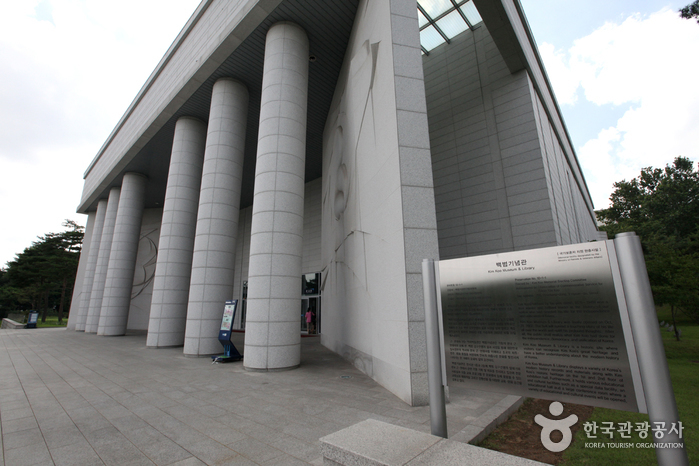
Kim Koo Museum & Library was built in Yongsan-gu, Seoul to commemorate Baekbeom Kim Koo (1876-1949), a highly respected Korean independence activist. It opened on October 22, 2002 to commemorate Kim Koo's efforts and achievements in Korean history. The main hall is comprised of two floors, exhibiting relics related to his entire life. A statue of a seated Kim Koo is situated in the central space of the first hall.
Seodaemun Independence Park (서대문독립공원)
2.7Km 2022-12-15
251, Tongil-ro, Seodaemun-gu, Seoul
+82-2-3140-8305
Seodaemun Independence Park was built on the former Seoul Detention Camp. It was used to imprison thousands of Korean independence activists until the liberation from the Japanese occupation on August 15, 1945, as well as the political prisoners during the political turmoil in the 1960s. When the prison was moved to Uiwang-si, Gyeonggi-do in November 1987, the area was restored and turned into a memorial park in August 15, 1992 to honor the sacrifices of the martyrs. The park preserves seven prison buildings, an execution ground, underground women’s prison, and the March 1st Movement Monument that has been moved from Tapgol Park in Jongno.
One of the most significant monuments of the Seodaemun Independence Park is Dongnimmun Gate (Independence Gate), which has been designated a Historic Site. Nearby is Dongnipgwan (Independence Hall), originally called Mohwagwan, which was used to greet Chinese envoys during the Joseon dynasty. Today, the hall enshrines 2,327 tablets inscribed with the names of Koreans who died for the cause of national independence. Standing right next to Dongnimmun Gate are the remnants of Yeongeunmun Gate, another Historic Site. Other sights inside the park include the Patriotic Martyr Monument, Declaration of Independence Monument, and Statue of Dr. Seo Jae-pil, who was an independence activist and publisher of Korea’s first independent newspaper. The main highlight of the park is the Seodaemun Prison History Hall, a former prison building that was renovated into a history museum.
 English
 한국어
한국어 日本語
日本語 中文(简体)
 Deutsch
 Français
 Español
 Русский


