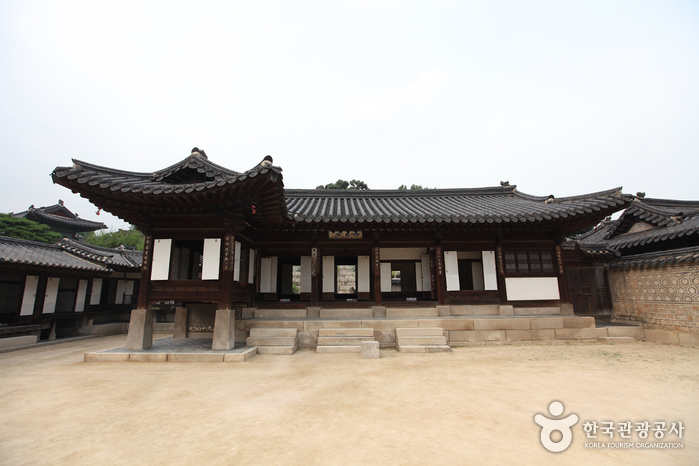
Nakseonjae Hall (낙선재)
1.3Km 2021-09-30
99, Yulgok-ro, Jongno-gu, Seoul
+82-2-2148-1822
Located inside Changdeokgung Palace, Nakseonjae Hall is a one-story structure built in ikgong style (bird wing-shaped eaves placed on top of the pillars) with a hip tiled and gable roof. It has 6 kan in the front and 2 kan (traditional unit of measurement of the space between pillars) to the sides. It originally belonged to the nearby Changgyeonggung Palace, but came to be considered a part of Changdeokgung Palace in more recent years.
The hall was constructed in 1846 (12th year of King Heonjong’s reign) and it is collectively called Nakseonjae together with the adjacent Seokbokheon Hall and Sugangjae Hall.
Behind the building is a flower garden made of stacked large stones. The chimney, the flowers, and the oddly shaped stones harmoniously blend into one another to create an outstanding landscape gardening.

Youngpoong Bookstore - Jongno Branch [Tax Refund Shop] (영풍문고 종로점)
1.4Km 2024-04-18
41, Cheonggyecheon-ro, Jongno-gu, Seoul
-
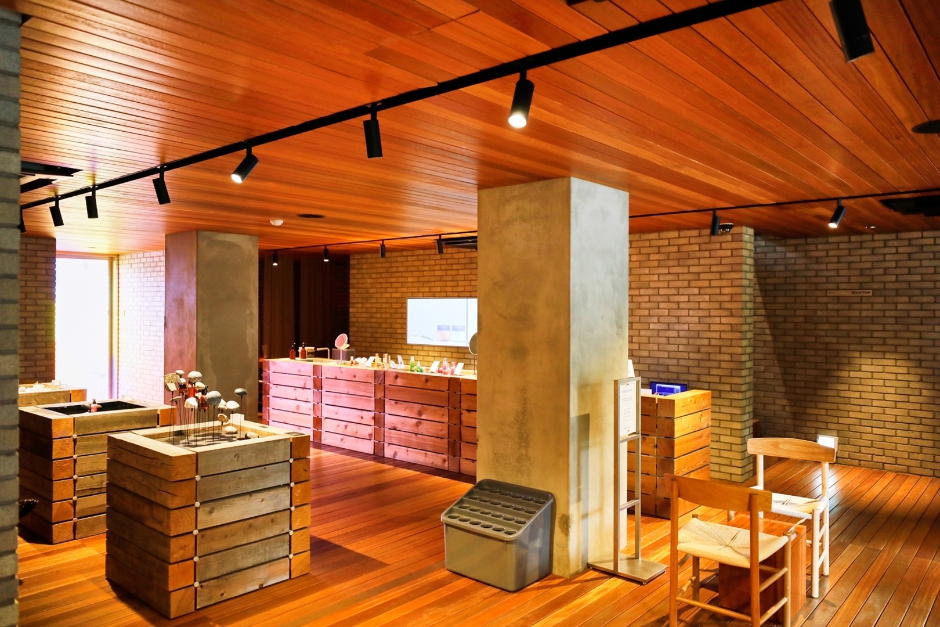
Teafference Seoul (티퍼런스서울)
1.4Km 2024-02-01
61 Donhwamun-ro, Jongno-gu, Seoul
Teafference Seoul is where visitors can taste purple tea made from purple tea leaves that grow naturally on the 1,800-meter plateau in Kenya. As a café and a cultural complex, it comprises a gallery tea café on the first floor where one can enjoy purple tea and art exhibitions, a beauty shop on the second floor, and a rooftop on the third floor. Exhibitions of paintings and photographs are always held using the walls and staircase landings of the spacious interior, making it a great place to relax while enjoying a cup of tea. In addition, this place has an appealing vibe, making it especially popular on social media. Not only is purple tea pretty in color, but it also has less caffeine than green tea or black tea, thus serves as a suitable option for the health-conscious. A variety of menu items are available, including Teafference Signature Purple Tea, Teafference Purple Milk Tea, and Teafference Purple Tea Einspanner. Another recommended menu item is Purple Tea-Makase, a course menu which serves several types of purple tea and desserts.
![TUBAn [Tax Refund Shop] (주식회사 투바앤)](http://tong.visitkorea.or.kr/cms/resource/47/2890647_image2_1.jpg)
TUBAn [Tax Refund Shop] (주식회사 투바앤)
1.4Km 2024-04-23
1955, Goyang-daero, Deogyang-gu, Goyang-si, Gyeonggi-do
-
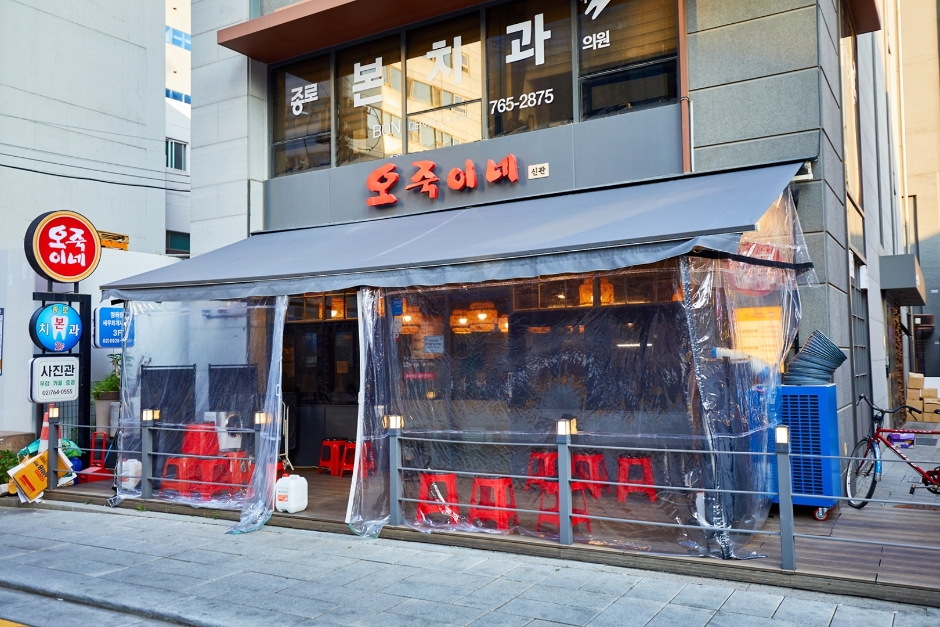
Ojugine (오죽이네)
1.4Km 2024-12-10
Ojugine is a restaurant that specializes in dak maeuntang, a spicy chicken stew that is different from dak bokkeumtang (spicy braised chicken), as the former has more soup than the latter. The stew is served whilst boiling, so one just needs to let it sit for a bit on the table before digging in. The spicy sauce and chicken are a match made in heaven, and the same goes for this dish. Interestingly, Ojugine uses smaller chickens to prepare their dishes, so the flesh braises in the stock faster. The resulting combination is sure to offer a memorable meal. Any remaining soup can be reused as a sauce for fried rice after the main meal, so visitors are advised to leave some space in their stomach.
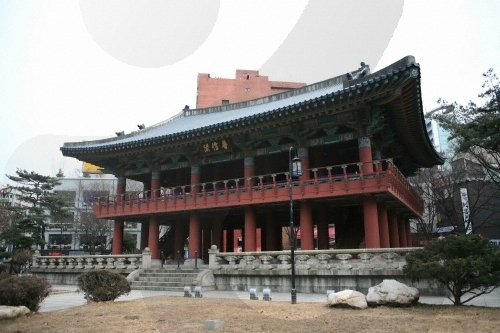
Bosingak Belfry (보신각 터)
1.4Km 2024-03-04
54, Jong-ro, Jongno-gu, Seoul
+82-2-2133-2641
Bosingak Belfry is also known as Jonggak. It was the site in which a large bell, used to keep the time in Seoul, was found during the Joseon period (1392-1897). Bosingak Belfry was burned down during the Korean War (1950-1953) and was reconstructed in 1979. The original bell was moved to the Gyeongbokgung Palace, and a new bell was forged in 1985. At midnight, January 1, the bell at the Bosingak Belfry is rung to welcome the new year. Many people gather around the belfry to make a wish for their new year.
YallaKOREA (얄라코리아)
1.4Km 2025-10-23
#700, The Salvation Army Building, 69 Saemunan-ro, Jongno-gu, Seoul
YallaKOREA is a medical tourism agency specialized in serving Arab patients, providing medical services since 2016 for those wishing to visit plastic surgery and dermatology clinics in Korea. For patients undergoing surgery, it offers customized services including medical interpretation, private transportation, hotel reservations, airport pick-up and drop-off services, and daily tours. With years of experience and a deep understanding of Arab culture, it ensures safe and convenient medical tourism.
Inwangsan Mountain Chosochaekbang (인왕산 더숲 초소책방)
1.4Km 2024-03-06
172 Inwangsan-ro, Jongno-gu, Seoul
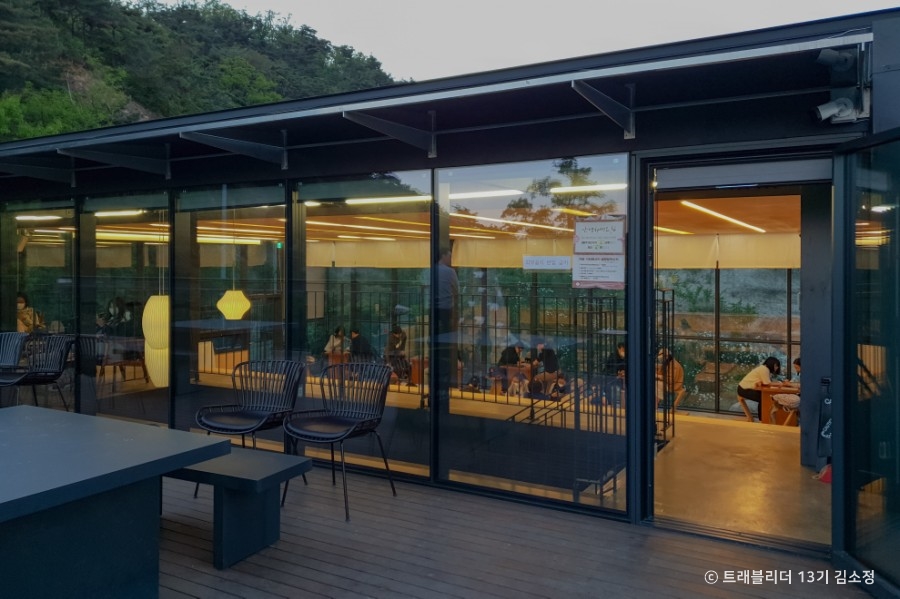
Inwangsan Mountain Chosochaekbang is a bakery and book café located along the trail of Inwangsan Mountain, remodeled from an old police station. Surrounded by glass walls within the forest, it blends seamlessly with nature, offering a panoramic view of Namsan Tower through the transparent windows. On the second floor terrace, guests can enjoy the scenic view of Seoul. Freshly baked bread and desserts are available daily, and the venue occasionally hosts book talks and music concerts.
Jalppajin Memil Ikseon Branch (잘빠진메밀 익선)
1.4Km 2024-03-18
73 Yulgok-ro 8-gil, Jongno-gu, Seoul
+82-70-4531-1214
Jalppajin Memil is a specialty restaurant that directly kneads 100% buckwheat dough to make buckwheat noodles. They offer both bibim makguksu (spicy buckwheat noodles) and mul makguksu (buckwheat noodles). Additionally, they serve memil jeonbyeong (buckwheat crepe), memil mandu (buckwheat mandu), and tender suyuk (boiled pork slices). They have a selection of 10 different kinds of makgeolli (unrefined rice wine) including chestnut, citrus, corn, and mulberry, allowing customers to choose according to their preference. Their famous makgeolli sampler set, which allows customers to taste five different types of makgeolli in small quantities, is popular.
Changgyeonggung Palace (창경궁)
1.4Km 2024-10-31
185 Changgyeonggung-ro, Jongno-gu, Seoul
+82-2-762-4868
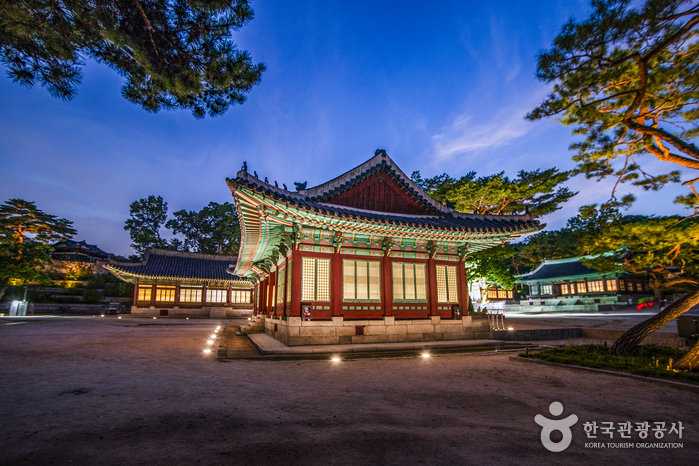
Located in the heart of Seoul, Changgyeonggung Palace was originally built as Suganggung Palace by the 4th ruler of the Joseon dynasty, King Sejong (r.1418-1450), for his retiring father, King Taejong. It often served as residential quarters for queens and concubines. During the reign of King Seongjong (r.1469-1494), the palace was renovated and renamed to Changgyeonggung Palace. It later became a park with a zoo and a botanical garden during Japanese colonial rule. The palace grounds remained this way until 1983 when restoration of its old grace was completed.
 English
 한국어
한국어 日本語
日本語 中文(简体)
 Deutsch
 Français
 Español
 Русский


