
National Souvenirs Center [Tax Refund Shop] (한국관광명품점)
1.1Km 2024-04-23
14, Insadong 5-gil, Jongno-gu, Seoul
-
![Ipamnamu - Insa Branch [Tax Refund Shop] (이팝나무 인사)](http://tong.visitkorea.or.kr/cms/resource/08/2878208_image2_1.jpg)
Ipamnamu - Insa Branch [Tax Refund Shop] (이팝나무 인사)
1.1Km 2024-04-18
4, Insadong 5-gil, Jongno-gu, Seoul
-
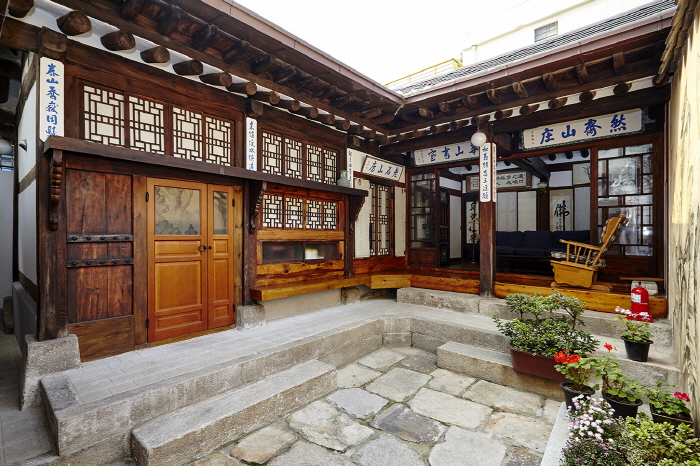
Sieunjae (시은재)
1.1Km 2024-12-23
439 , Samil-daero, Jongno-gu, Seoul
+82-10-5355-3029
Sieunjae is a hanok stay that has stood in the midst of busy Gyeongun-dong, Jongno-gu, Seoul, for generations. The guestrooms comprise an anbang (bedroom plus living room), three smaller rooms, and a byeolchae or detached house. All rooms have a toilet, and there’s a well-equipped shared kitchen and a washing machine. Guests can either rent individual rooms or the whole hanok. Jongno is convenient for travel to all the historic sites of Seoul, and there’s a public carpark nearby.
![Changdeokgung Palace Complex [UNESCO World Heritage Site] (창덕궁과 후원 [유네스코 세계유산])](http://tong.visitkorea.or.kr/cms/resource/03/3092503_image2_1.jpg)
Changdeokgung Palace Complex [UNESCO World Heritage Site] (창덕궁과 후원 [유네스코 세계유산])
1.2Km 2025-07-21
99 Yulgok-ro, Jongno-gu, Seoul
Changdeokgung Palace was the second royal villa built following the construction of Gyeongbokgung Palace in 1405. It was the principal palace for many kings of the Joseon dynasty, and is the most well-preserved of the five remaining royal Joseon palaces. The palace grounds are comprised of a public palace area, a royal family residence building, and the rear garden. Known as a place of rest for the kings, the rear garden boasts a gigantic tree that is over 300 years old, a small pond and a pavilion.
The palace gained importance starting from the time of Seongjong, the 9th king of Joseon, when a number of kings began using it as a place of residence. Unfortunately, the palace was burned down by angry citizens in 1592 when the royal family fled their abode during the Imjin War. Thanks to Gwanghaegun, the palace was restored in 1611. Even today, it houses a number of cultural treasures, such as Injeongjeon Hall, Daejojeon Hall, Seonjeongjeon Hall, and Nakseonjae Hall.
Changdeokgung Palace’s garden behind the inner hall, called the "Secret Garden," was constructed during the reign of King Taejong and served as a rest area for the royal family members. The garden had formerly been called Bugwon and Geumwon, but was renamed Biwon Garden, or Secret Garden, after King Gojong came into power. The garden was kept as natural as possible and was touched by human hands only when absolutely necessary. Buyongjeong Pavilion, Buyongji Pond, Juhamnu Pavilion, Eosumun Gate, Yeonghwadang Hall, Bullomun Gate, Aeryeonjeong Pavilion, and Yeongyeongdang Hall are some of the many attractions that occupy the garden. The most beautiful time to see the garden is during the fall when the autumn foliage is at its peak and the leaves have just started to fall.
Though it has been treasured by Koreans for centuries, Changdeokgung Palace and its complex was recognized as a World Cultural Heritage site by the UNESCO World Cultural Heritage Committee in December of 1997 during the committee meeting in Naples, Italy.
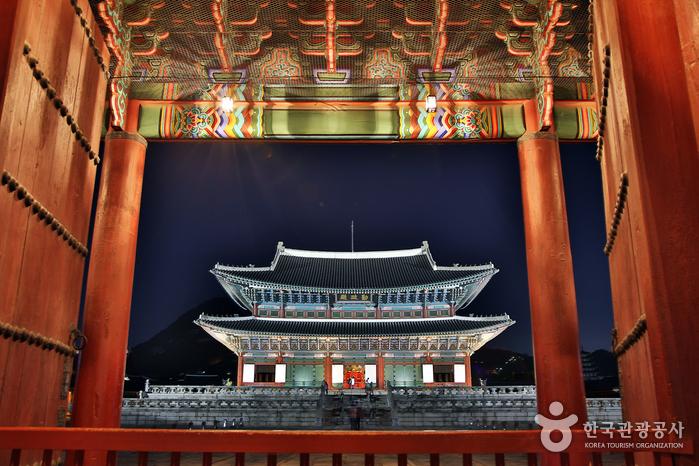
Jongno Cheonggye Special Tourist Zone (종로 청계 관광특구)
1.2Km 2021-12-30
99, Yulgok-ro, Jongno-gu, Seoul
+82-2-2148-1861
Jongno Cheonggye Special Tourist Zone stretches from Seorin-dong to Changsin-dong between Cheonggyecheon Stream and Jong-ro. It includes Youth Street, Gwangjang Market, Sewoon Electronics Department Store, lighting stores, pharmacy & medical device stores, badge stores, Stamp Street, Stationery · Toy Market, Aquarium Street, Shoes Market, and other markets totalling to approximately 14,000 shops. Nearby attractions include modern high-story buildings as well as Gyeongbokgung, Changdeokgung, Changgyeonggung, Deoksugung, and Unhyeongung Palaces, Jongmyo Shrine, and Insa-dong, merging traditions, modernism, culture, and markets alike.
Thought to be at the heart of Seoul, Cheonggyecheon Stream is located in the dense cultural area of Seoul where various press networks, organizations, bookstores and other major corporations are situated. Walking along Cheonggyecheon Stream is a famous activity for tourists. Also, the area is the venue for the Seoul Lantern Festival every winter. Keeping its traditional scene including narrow alleys, old-fashioned hanok buildings and various stores still fully intact, the tourist zone has enough fun places for sightseeing as well as tasty restaurants in every corner for a more enjoyable visit.
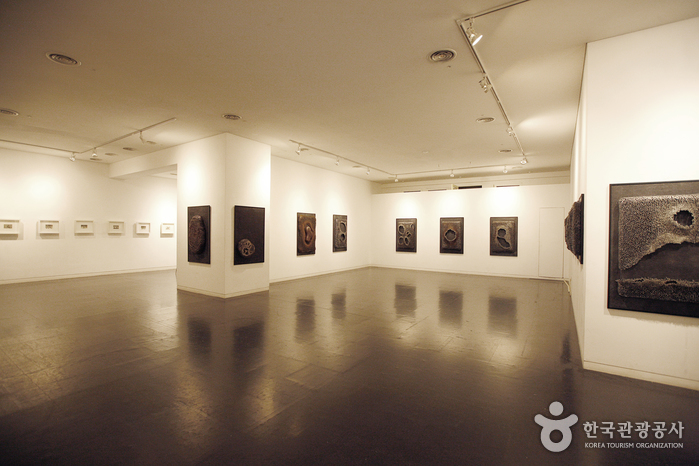
Seoul Art Center Gongpyeong Gallery (서울아트센터 공평갤러리)
1.2Km 2021-06-19
24, Insadong-gil, Jongno-gu, Seoul
+82-70-4214-0070
Opened in 1992, Seoul Art Center Gongpyeong Gallery is a 17,791㎡, two-story building with four exhibition halls. It is one of the main galleries of Insa-dong, displaying diverse artwork ranging from Western and Korean paintings to sculptures. Due to the great interest in Korean paintings, 2~3 of the annual long-term exhibitions focus solely on them.
![Uniqlo - Gwanghwamun D Tower Branch [Tax Refund Shop] (유니클로 광화문D타워)](http://tong.visitkorea.or.kr/cms/resource/15/2878215_image2_1.jpg)
Uniqlo - Gwanghwamun D Tower Branch [Tax Refund Shop] (유니클로 광화문D타워)
1.2Km 2024-04-17
17, Jong-ro 3-gil, Jongno-gu, Seoul
-
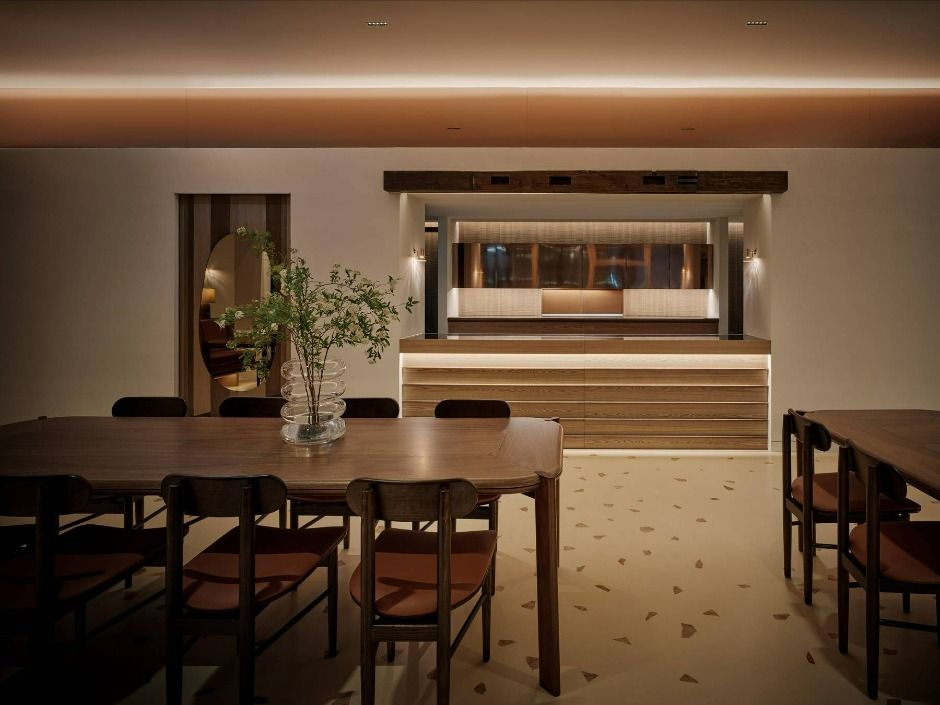
Mallijihwa Main Branch (만리지화 본점)
1.2Km 2025-11-26
17 Jong-ro 3-gil, Jongno-gu, Seoul
Mallijihwa, which embodies the meaning "eel that travels 10,000 ri and met fire," is an eel dining brand that modernizes the depth of Korean gastronomy. The restaurant's name was inspired by the eel's remarkable strength to swim across vast oceans to its spawning grounds—so significant that it is referred to as "malli fish" in the "Donguibogam" ("A Precious Mirror of Eastern Medicine"). Hence the name, Mallijihwa specializes in serving grilled eel, which is carefully grill with briquettes. The restaurant reinterprets eel with Korean aesthetics, offering a comfortable and elegant dining experience in a space that blends traditional architectural elements with a modern twist. The dishes served here offers an outstanding dining experience where the texture of the eel melts in one's mouth, and its flavor lingers long after. Signature dishes include grilled eel rice bowls, grilled eel, eel gujeolpan (platter of nine delicacies), and eel meal courses. The restaurant also offers seasonal lunch box made with fresh, seasonal ingredients.
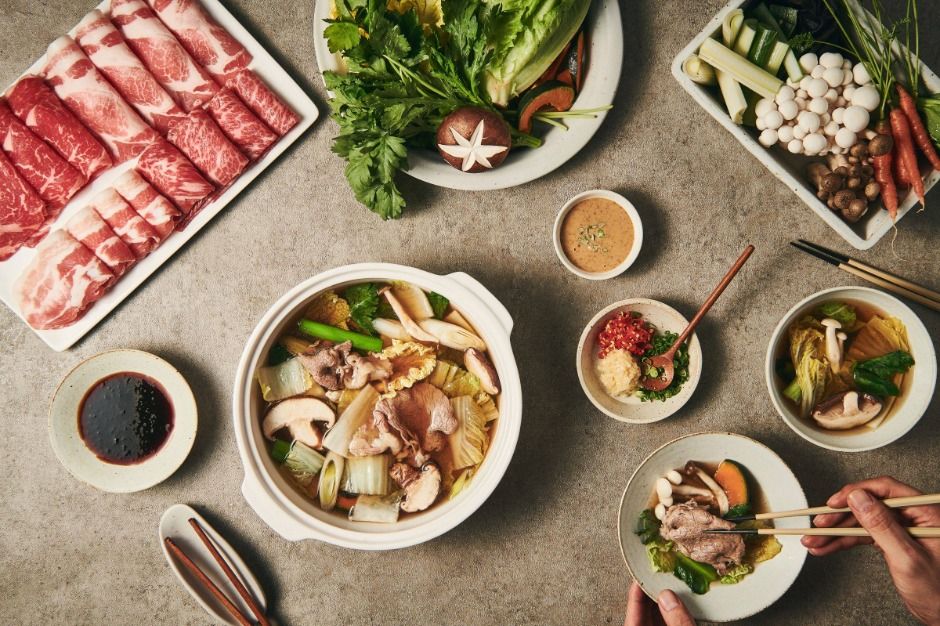
Modern Shabu House Gwanghwamun D Tower Branch (모던샤브하우스 광화문D타워점)
1.2Km 2025-12-02
17 Jong-ro 3-gil, Jongno-gu, Seoul
Located in Jongno-gu, Modern Shabu House Gwanghwamun D Tower Branch offers a selection of specialty broths to enjoy unlimited beef, pork, and vegetables. The restaurant serves four cuts of pork and beef in every course. The interior is designed with natural materials like earth, stone, and wood, inspired by the fluid process of cooking ingredients like meat and vegetables in a pot. The design reflects the natural movement and flow of ingredients as they cook together. The restaurant also has a range of private rooms, making it a popular choice for families with children and for gatherings, providing a comfortable dining experience.
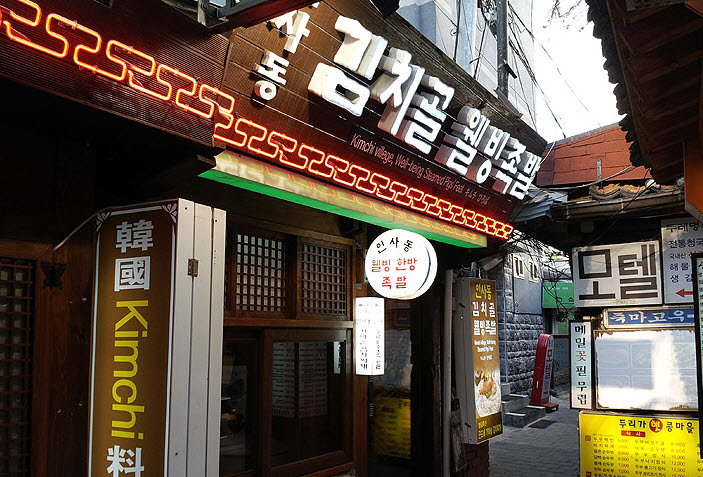
Kimchigol Well-being Bapsang(김치골웰빙밥상)
1.2Km 2024-10-14
22-5 Insadong-gil, Jongro-gu, Seoul
+82-2-720-6436
A restaurant where you can try kimchi, a Korean traditional dish, and meat. The representative menu is kimchi cabbage wraps with pork. This is a Korean cuisine located in Insa-dong, Seoul.
 English
 한국어
한국어 日本語
日本語 中文(简体)
 Deutsch
 Français
 Español
 Русский


