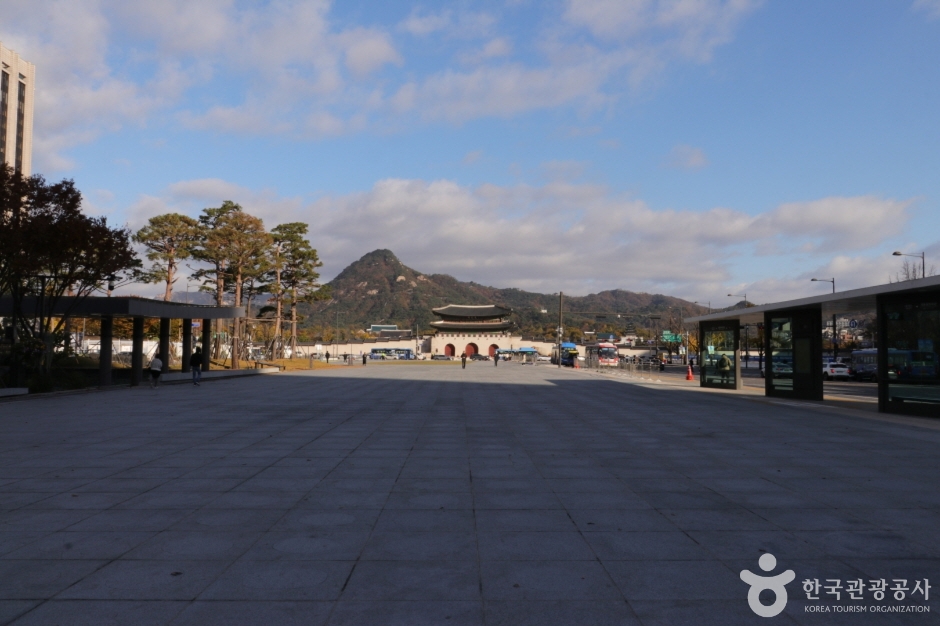
Gwanghwamun Plaza (광화문 광장)
2.4Km 2025-03-13
172 Sejong-daero, Jongno-gu, Seoul
+82-2-120
Gwanghwamun Plaza was opened to the public in August 2022 after renovation. Sejong-ro, the main street of Seoul with 600 years of history, has been reborn as a space for historical and cultural experiences by restoring Yukjo Street. Woldae (Elevated Ceremonial Stage) was reconstructed at the entrance of the "Plaza that Recovers the History of Gwanghwamun," and the statue of Haetae, an imaginary animal that judges good and evil, has been restored. In addition, traces of Yukjo Street, the main street of Hanyang in the past, were restored in the ‘Plaza that recreates the scenery of Yukjo Street’ near Sejong-ro Park, with a scale model installed. This is an excellent place for a stroll with beautiful scenery, including Gyeongbokgung Palace and Bugaksan Mountain.
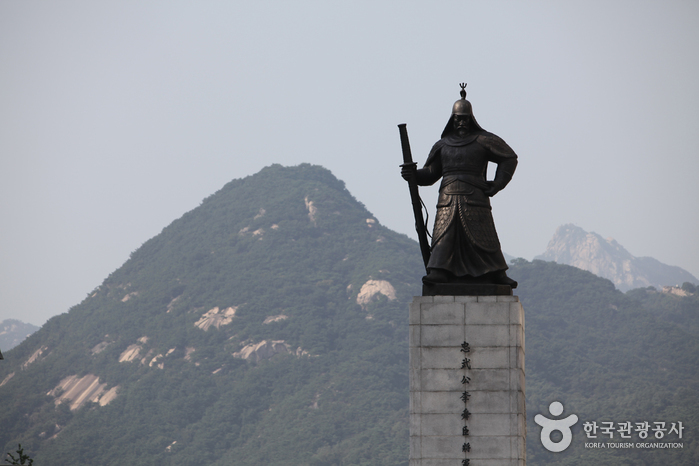
Statue of Admiral Yi Sun-Shin (충무공 이순신 동상)
2.4Km 2024-03-04
175, Sejong-daero, Jongno-gu, Seoul
The Statue of Admiral Yi Sun-Shin can be found at Gwanghwamun Square in Seoul. Admiral Yi Sun-shin (1545-1598) was a naval commander who served during the Japanese invasion of Korea (also known as Imjin War: 1592-1598). The undefeated admiral achieved 23 victories against the Japanese navy using innovative tactics, and he is thus considered as one of the greatest generals in the history of Korea. Admiral Yi’s likeness can be found on the 100 won coin.
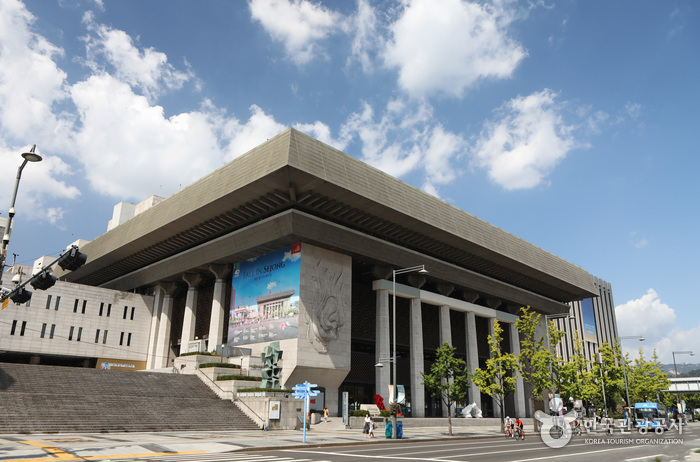
Sejong Center (세종문화회관)
2.5Km 2023-06-14
175, Sejong-daero, Jongno-gu, Seoul
+82-2-399-1000
Sejong Center, officially known as Sejong Center for the Performing Arts, opened on July 1, 1999 to provide citizens with a cultural art space. Having completed a grand remodeling project in 2007, Sejong Center offers customer-friendly programs aimed at improving the quality of art performances in a comfortable resting area. Comprising the Grand Theater of Sejong Center, Sejong M Theater, Sejong Chamber Hall, Exhibition Hall, and other subsidiary facilities, Sejong Center is a multicultural art center.
Various genres of performances including traditional, classic, and crossover have taken place in the center, giving many opportunities for cultural nostalgia.
* Opened April 14, 1978
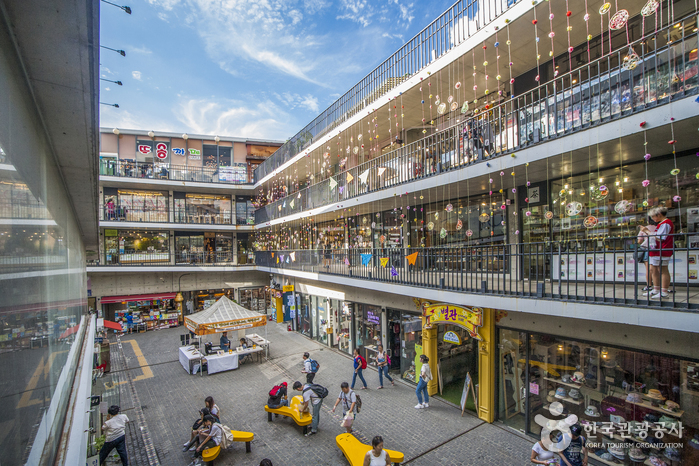
Insa-dong (인사동)
2.5Km 2024-05-17
62, Insadong-gil, Jongno-gu, Seoul
+82-2-734-0222
Insa-dong, located in the heart of the city, is an important place where old but precious traditional goods are on display. There is one main road in Insa-dong with alleys on each side. Within these alleys are galleries, traditional restaurants, teahouses, and cafes.
The galleries are the heartbeat of Insa-dong. There are about 100 galleries in the area offering every example of traditional Korean fine art from paintings to sculptures. The most famous galleries are Hakgojae Gallery, which functions as the center of folk art, Gana Art Gallery, which promotes many promising artists, and Gana Art Center.
The teahouses and restaurants are the perfect complement to the galleries. They are hidden deep within the twisting alleyways, making it feel like a treasure hunt. The shops in Insa-dong are very popular among all age groups, because each one is unique.
Every Saturday from 14:00 to 22:00 and Sunday from 10:00 to 22:00, the main street is blocked to vehicular traffic and it becomes a cultural space. Stores set up booths outside and Korean candy merchants and fortune teller stalls can easily be found; there are traditional performances and exhibits as well. Insa-dong is especially popular among international tourists. This is where they can experience and see traditional Korean culture first-hand, and also purchase pieces of fine art.
King Sejong Statue (세종대왕 동상)
2.5Km 2024-03-04
175, Sejong-daero, Jongno-gu, Seoul
+82-2-2133-7713
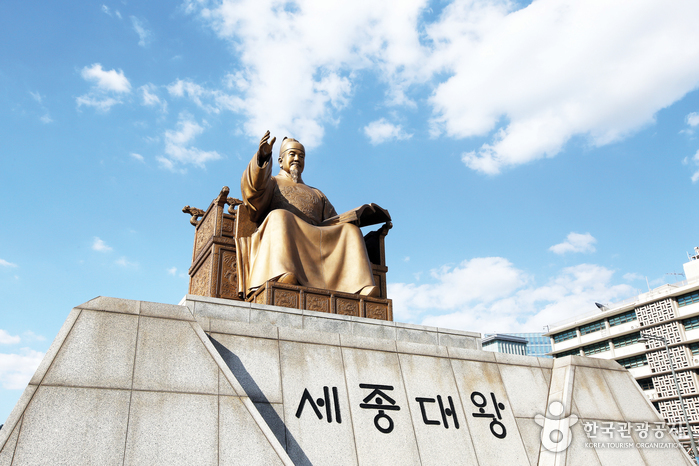
King Sejong Statue can be found at Seoul’s Gwanghawmun Square. The statue commemorates King Sejong the Great (1397-1450, reign 1418-1450), the fourth king of Joseon (1392-1897). He is thought to be the greatest king in Korean history, for he is credited with great developments in science and technology, expansion of Joseon’s territory, and the creation of the Korean script, [Hangeul]. King Sejong’s likeness can be found on the 10,000 won bill as well.

Gyeonghuigung Palace (경희궁)
2.5Km 2024-07-09
45 Saemunan-ro, Jongno-gu, Seoul
+82-2-724-0274
Gyeonghuigung Palace, a designated Historic Site, was originally called the large palace by Saemun Gate, or the Western Palace, for its location within the city. It was not until the eighth year of Gwanghaegun (1616) that the palace was used as a royal residence for the king, changing the name to Gyeongdeokgung Palace. The name later changed again to the current Gyeonghuigung Palace in 1760. The palace grounds included many halls but they were mostly all burned down in a fire in 1829. After the Japanese occupation began, all remaining buildings on the site were torn down and the palace grounds were turned into Gyeongseong Middle School (now Seoul High School). The school moved to Gangnam area in 1987, afterwhich the previous location was turned into a park. The palace grounds currently hold Seoul Museum of Art and walking paths, as well as a restoration of Heunghwamun Gate, the main gate of the palace, and Sungjeongjeon Hall, the main hall, completed in November 1994.
High - Anguk Branch [Tax Refund Shop] (하이엔드코리아 안국)
2.5Km 2024-04-17
1F, 62-5, Insadong-gil, Jongno-gu, Seoul
-
Seongbukro (성북로)
2.5Km 2024-02-15
1-2F, 10 Seongbuk-ro 28-gil, Seongbuk-gu, Seoul
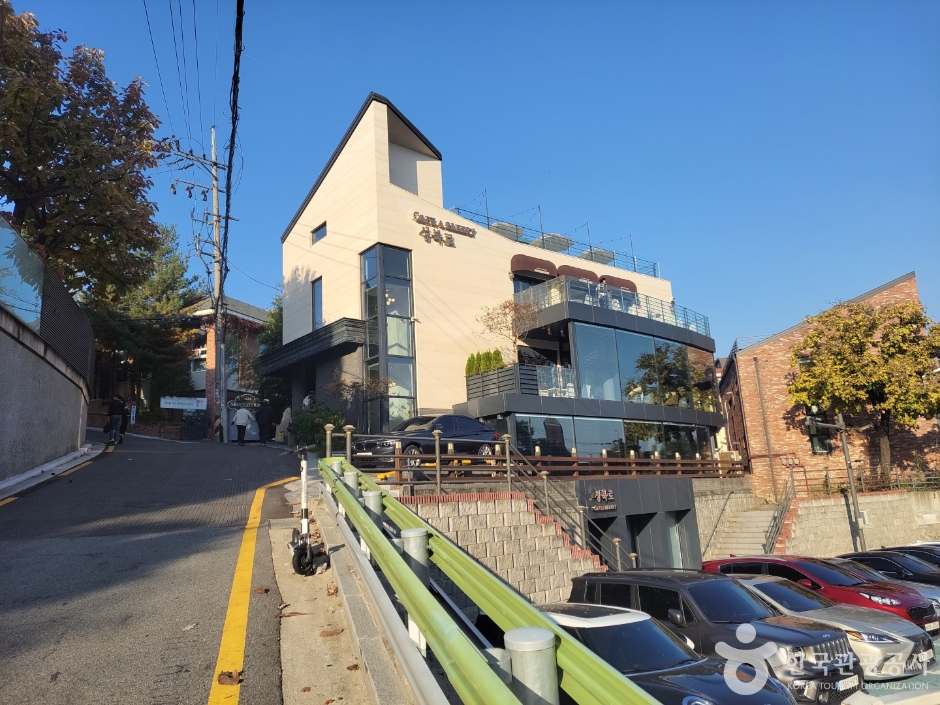
Seongbukro is a café located 15 minutes away from the UNESCO World Heritage site Changdeokgung Palace. With an elegant atmosphere, the café is structured with three floors and a rooftop. The signature menu is the mandarin latte, featuring a refreshing taste with plenty of tangerines in milk. Additionally, the café is known for making desserts on-site, following the principle of selling them on the same day they are produced. Signature desserts include croissants with milk cream and mont blanc.
Onion Anguk Branch (어니언 안국)
2.5Km 2024-02-20
5 Gyedong-gil, Jongno-gu, Seoul
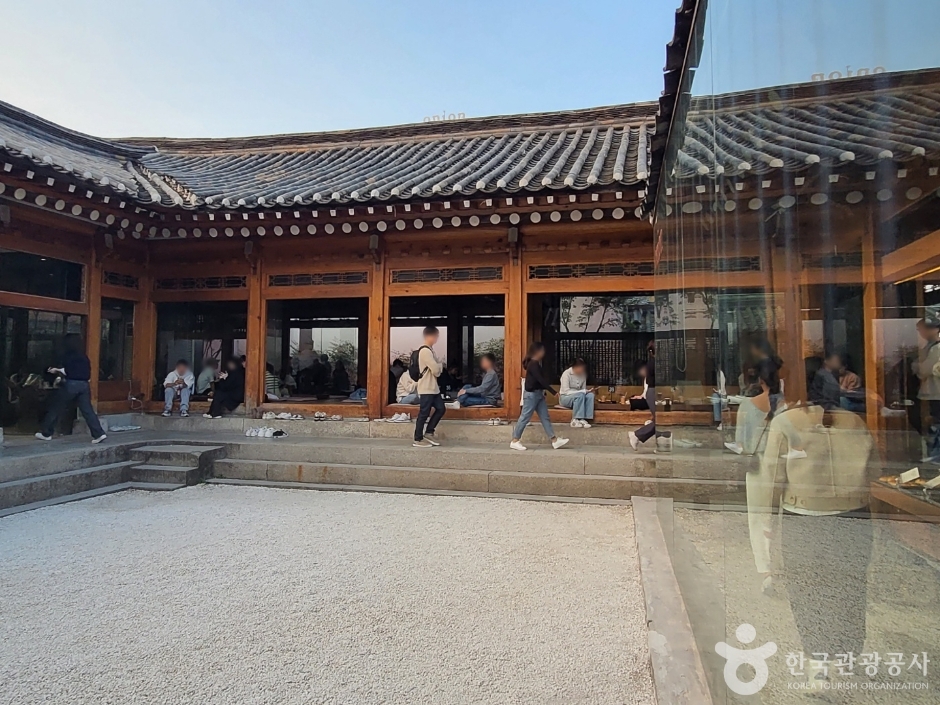
Onion is a café situated in a hanok dating back to the 1920s. Renovated with careful preservation of the daecheongmaru and madang, the café offers a glimpse into traditional Korean architecture. The signature menu item is the vanilla bean latte, and popular desserts include pandoro and salty butter bread. Its proximity to nearby attractions such as Gyeongbokgung Palace, Changgyeonggung Palace, and Changdeokgung Palace makes it a convenient stop for those exploring Seoul's major palaces.
The Story of King Sejong (세종이야기)
2.5Km 2022-09-13
jiha 175, Sejong-daero, Jongno-gu, Seoul
+82-2-399-1000
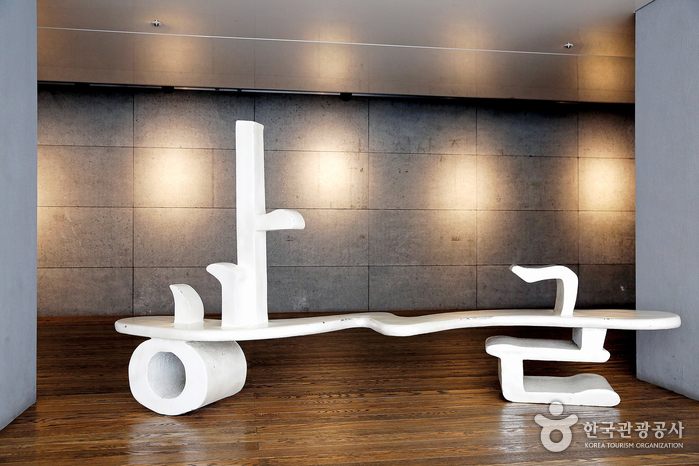
The Story of King Sejong comprises six different sections with a total area of 3,200 square meters. The museum consists of exhibition zones, an event space, video room, shop and more to display King Sejong’s scientific, artistic, military, and political contributions, including the theory of Minbon, which recognized the people as the base of politics. King Sejong, the 4th king of the Joseon dynasty (1397-1450, reigning from 1418-1450) was responsible for some of the most brilliant achievements in the history of Korea, including the creation of Hangeul (Korean alphabet) and great advancements in the areas of science, culture, art and politics.
 English
 한국어
한국어 日本語
日本語 中文(简体)
 Deutsch
 Français
 Español
 Русский


