![Daiso - Sinchon Branch [Tax Refund Shop] (다이소 신촌)](http://tong.visitkorea.or.kr/cms/resource/50/2878350_image2_1.jpg)

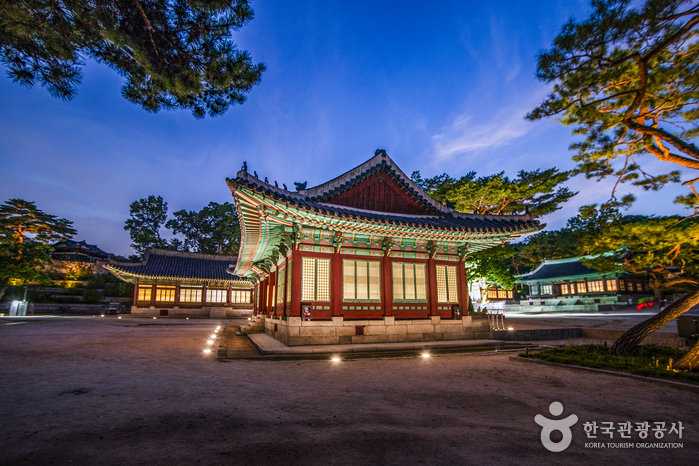
Changgyeonggung Palace (창경궁)
6.9Km 2024-10-31
185 Changgyeonggung-ro, Jongno-gu, Seoul
+82-2-762-4868
Located in the heart of Seoul, Changgyeonggung Palace was originally built as Suganggung Palace by the 4th ruler of the Joseon dynasty, King Sejong (r.1418-1450), for his retiring father, King Taejong. It often served as residential quarters for queens and concubines. During the reign of King Seongjong (r.1469-1494), the palace was renovated and renamed to Changgyeonggung Palace. It later became a park with a zoo and a botanical garden during Japanese colonial rule. The palace grounds remained this way until 1983 when restoration of its old grace was completed.
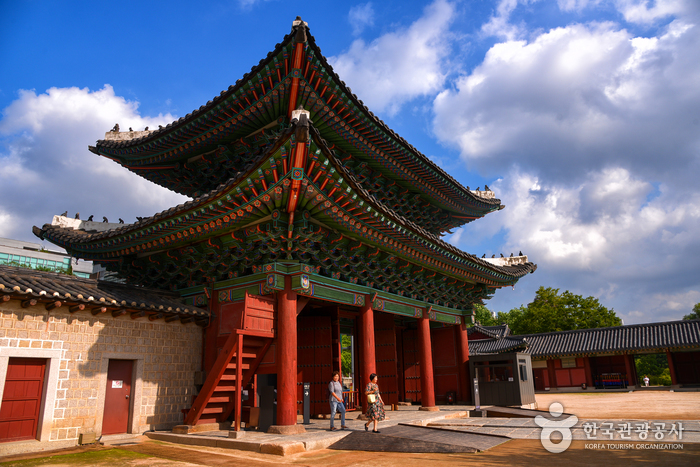
Changgyeonggung Palace Honghwamun Gate (창경궁 홍화문)
6.9Km 2021-05-27
99, Yulgok-ro, Jongno-gu, Seoul
+82-2-762-4868
Honghwamun Gate is the main gate of Changgyeonggung Palace. It has three opening gates in the front and two to the side with a sophisticated locking mechanism.
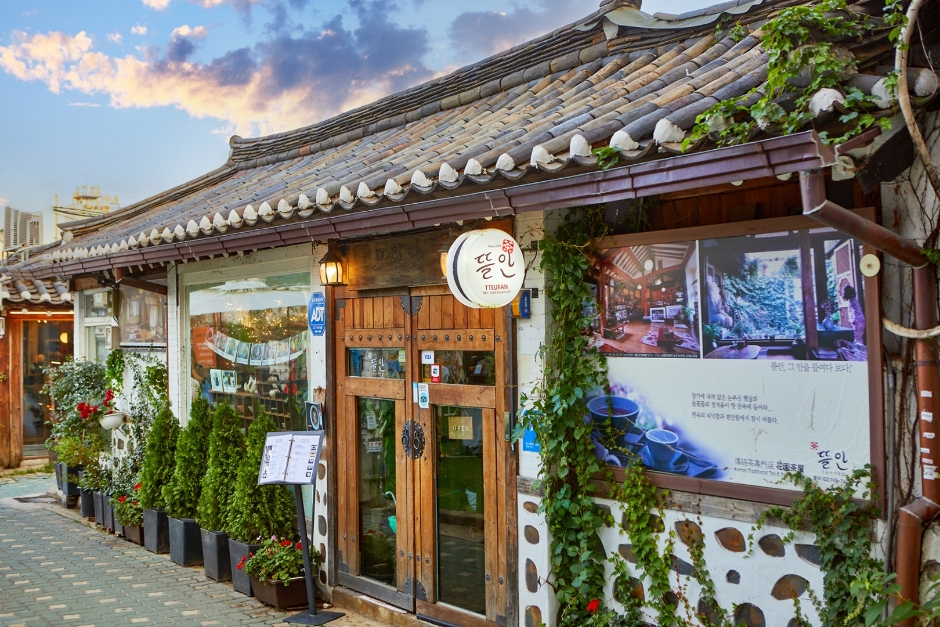
Tteulan Teahouse (뜰안)
6.9Km 2024-12-10
Tteulan Teahouse is a cafe that really allows one to feel the tradition and flair of Korea. Tteulan has two entrances: one facing the wide alley and the other facing the smaller one. The smaller entrance is decorated like a garden, so it feels as if one is stepping into a land of fairy-tales. The café has a floor seating tables with traditional items like gadari soban (a table with legs that curve like a dog's legs), and jogakbo (a textile woven from several pieces of scrap cloth), all of which add to the traditional Korean aesthetic. The menu features ssanghwacha (medicinal herb tea known to help the immune system), a favorite among middle-aged and elderly Koreans; omija tea (omija is a tart berry that grows in East Asia known to be good for lung and bronchial health and boosts immunity); citrus tea (usually made with yuzu which is rich in vitamin C and said to help mitigate fatigue); and pour-over coffee. Traditional desserts include mugwort rice cake (rice cake with mugwort added for herbal flavor, best enjoyed with malt syrup), pumpkin rice cake, and roasted grain powder (a nutritious beverage made with a variety of powdered grain). It can be hard to find seating in the afternoon, so visitors are advised to avoid these hours if they seek to enjoy their drink in peace.
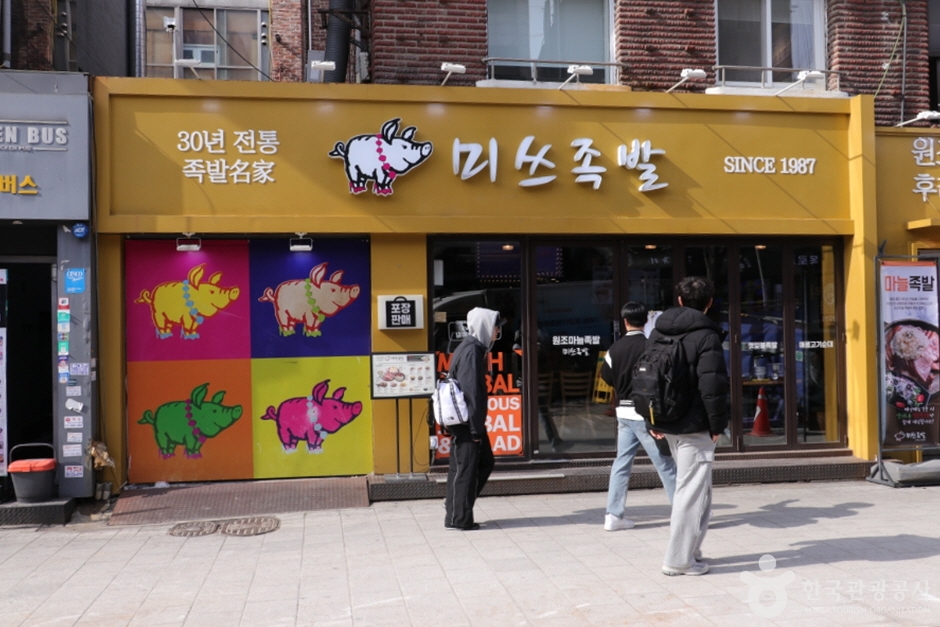
Myth Jokbal Hongik Univ. (미쓰족발 홍대)
6.9Km 2024-03-19
123-1 Eoulmadang-ro Mapo-gu Seoul
+82-2-336-2111
Myth Jokbal is an affordable place for jokbal (braised pigs' feet) and bossam (kimchi cabbage wraps with pork). Jokbal is made by boiling pork feet for a long time and is characterized by its chewy texture and flavor. The signature dish, Myth maneul jokbal (braised pigs' feet with garlic), is tender and flavored with plenty of garlic. the restaurant offers other popular dishes including original jokbal (original braised pigs' feet), kkaennip buljokbal (spicy braised pigs' feet with perilla leaves), and gabeuri bossam (kimchi cabbage wraps with grilled blade-end fatback). It is just a 2-minute walk from Exit 9 of Hongik Univ. Station, attracting numerous visitors.
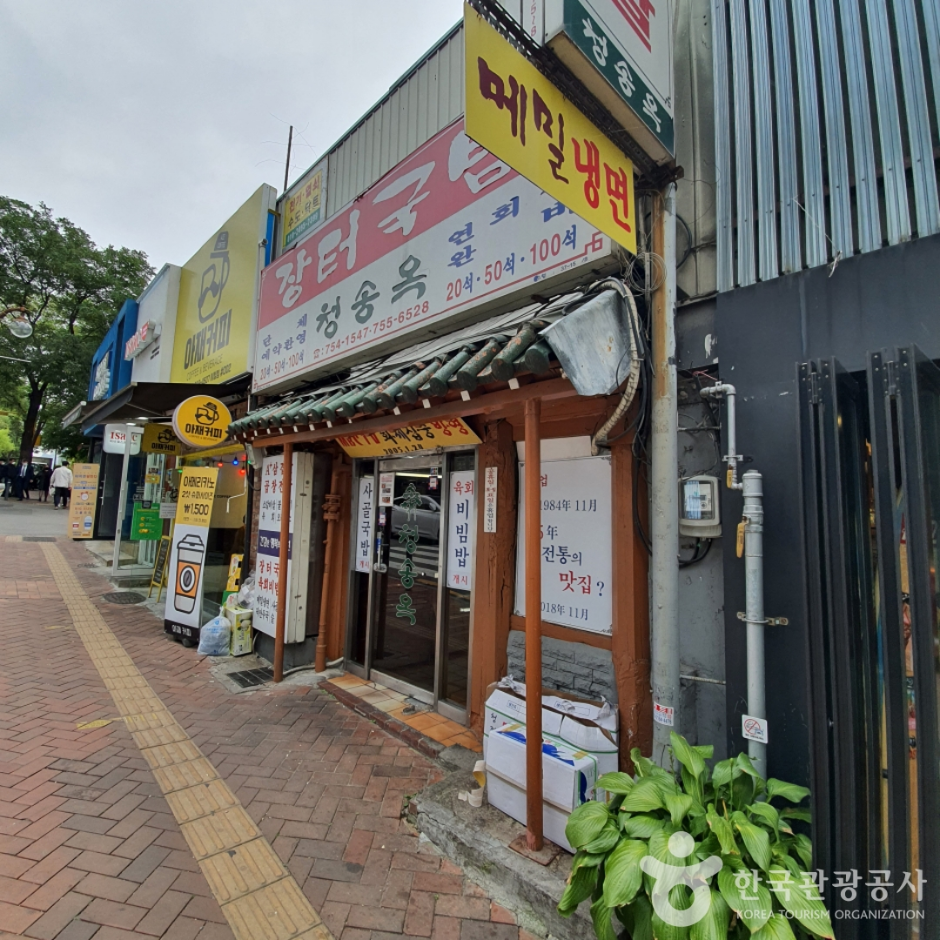
Cheongsongok (청송옥)
6.9Km 2024-02-20
14 Seosomun-ro 11-gil, Jung-gu, Seoul
Cheongsongok is a jangteo gukbap (rice soup) restaurant that opened in 1984. The signature menu is jangteo gukbap, a rice soup with green onions and radishes in beef bone broth. The kimchi served with the gukbap is homemade, known for its spicy flavor and crisp texture. Nearby is Deoksugung Palace, and the Seokjojeon Hall in Deoksugung Palace presents a picturesque landscape harmonized with the garden, making it a popular spot for photography.
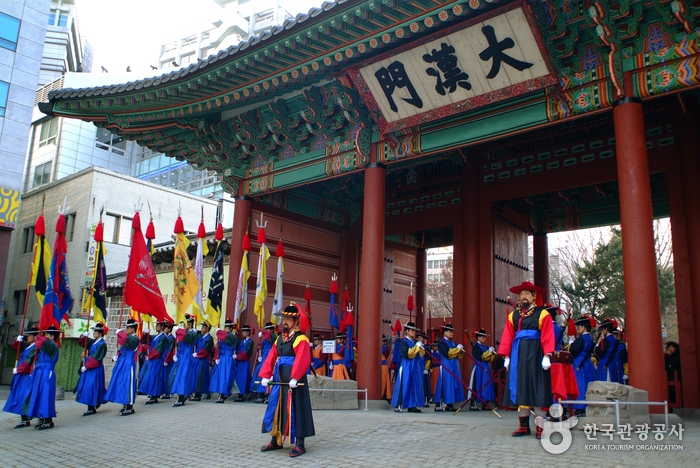
Deoksugung Palace Royal Guard Changing Ceremony (덕수궁 왕궁수문장교대의식)
6.9Km 2025-07-11
99, Sejong-daero, Jung-gu, Seoul
• 1330 Travel Hotline: +82-2-1330 (Korean, English, Japanese, Chinese) • For more info: +82-2-737-6444
Deoksugung Palace has held a guard changing ceremony since 1996 after thorough historical research by leading historians. The ceremony, which is held in front of Daehanmun Gate of Deoksugung Palace, is a tradition similar to the Changing of the Guards at Buckingham Palace and offers a rare opportunity to experience royal culture. The royal gate is opened and closed at pre-determined times, and the gatekeepers in charge of guard duty and patrols hold a shift ceremony three times a day.
The Royal Guard Changing Ceremony is a highly recommended event for tourists. It is held three times a day, with each ceremony following the same procedure and lasts for forty minutes to an hour, and the ceremony is free of charge. There are no ceremonies on Mondays as well as on severely cold or hot days.
As the ceremony begins, the changing of the guards commences replete with traditional musical instruments, and exchanges a password for verification. An eight-minute guard ceremony ensues, followed by a seven-minute change ceremony, and finally a patrol that completes the ceremony. The procedure takes a dramatic turn when 18 guards in six official positions beat a drum and bellow some orders.
The Royal Guard Changing Ceremony is a great opportunity to experience a rare traditional scene. The guards’ splendid costumes, with their brilliant primary colors, are a pleasure to view. Once the ceremony is over, visitors can take pictures with the gatekeepers.
![ABC-Mart - Hongik Univ. Station Branch [Tax Refund Shop] (ABC마트 GS홍대역점)](http://tong.visitkorea.or.kr/cms/resource/91/2890491_image2_1.jpg)
ABC-Mart - Hongik Univ. Station Branch [Tax Refund Shop] (ABC마트 GS홍대역점)
6.9Km 2024-04-22
152, Yanghwa-ro, Mapo-gu, Seoul
-
![Insa Chilgi - Insa Branch [Tax Refund Shop] (인사칠기 인사)](http://tong.visitkorea.or.kr/cms/resource/18/2878218_image2_1.jpg)
Insa Chilgi - Insa Branch [Tax Refund Shop] (인사칠기 인사)
6.9Km 2024-04-22
5, Seolleung-ro 162-gil, Gangnam-gu, Seoul
-
 English
 한국어
한국어 日本語
日本語 中文(简体)
 Deutsch
 Français
 Español
 Русский


