![CheongKwanJang - Euljiro Branch [Tax Refund Shop] (정관장 을지로)](http://tong.visitkorea.or.kr/cms/resource/59/2878659_image2_1.jpg)
CheongKwanJang - Euljiro Branch [Tax Refund Shop] (정관장 을지로)
5.5Km 2024-04-18
1F, 103, Eulji-ro, Jung-gu, Seoul
-
![Insa Chilgi - Insa Branch [Tax Refund Shop] (인사칠기 인사)](http://tong.visitkorea.or.kr/cms/resource/18/2878218_image2_1.jpg)
Insa Chilgi - Insa Branch [Tax Refund Shop] (인사칠기 인사)
5.5Km 2024-04-22
5, Seolleung-ro 162-gil, Gangnam-gu, Seoul
-
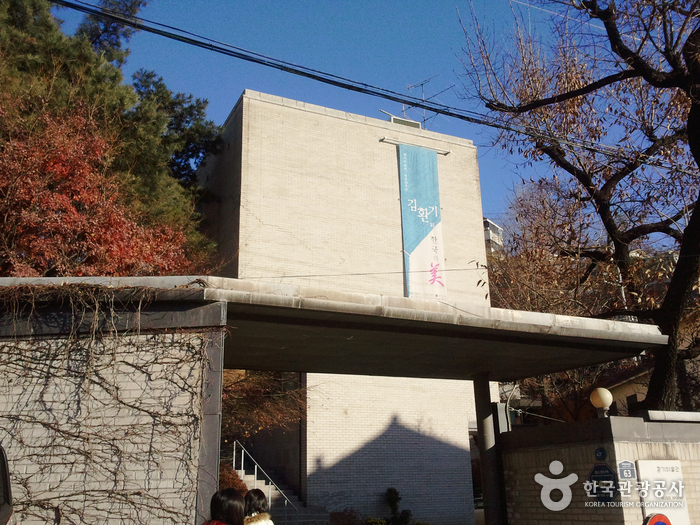
Whanki Art Museum (환기미술관)
5.5Km 2024-03-04
63, Jahamun-ro 40-gil, Jongno-gu, Seoul
+82-2-391-7701
Whanki Art Museum exhibits the works of Kim Whanki (1913-1974), the pioneer of Korean abstract art. Kim was inspired by traditional features such as Korean mountains and streams, the sky, moons and clouds, the white porcelain and traditional patterns, and worked to express them in abstract forms through points, lines, and surfaces. The main collection features nearly 300 works by Kim. One can also find an art shop and a café.

Insa-dong Maneul Bossam (인사동마늘보쌈)
5.5Km 2024-03-18
12-5 Insadong 8-gil, Jongno-gu, Seoul
+82-2-735-7885
Insa-dong Maneul Bossam is a Korean restaurant nestled in the alleys of Insa-dong. Specializing in dishes like maneul bossam (kimchi cabbage wraps with pork and garlic), kimchi jjim (braised kimchi), nakji bokkeum (stir-fried octopus), buchujeon (chive pancake), kimchijeon (kimchi pancake), yeolmu naengmyeon (cold buckwheat noodles with young summer radish kimchi), and bam makgeolli (unrefined chestnut rice wine). Their signature dish, the bossam jeongsik (kimchi cabbage wraps with pork set menu), features pork belly boiled in a secret broth, served with a sweet garlic sauce for dipping, along with seaweed soup, fresh vegetables for wrapping, dried radish salad, and side dishes. They also offer set menus for two people, and neomu hansang set menu.
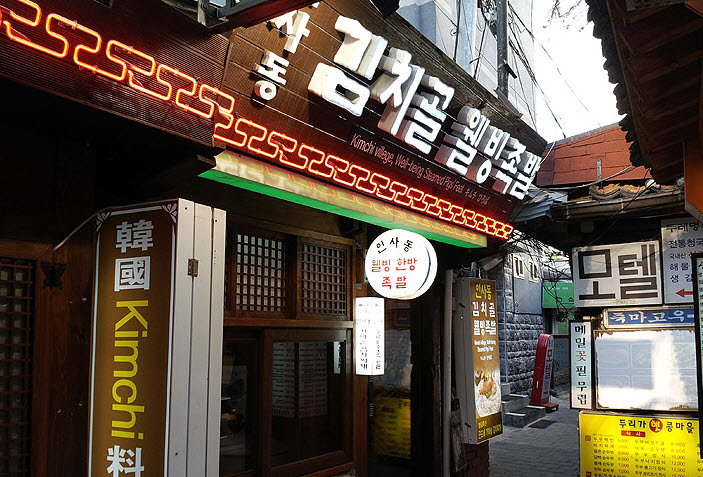
Kimchigol Well-being Bapsang(김치골웰빙밥상)
5.5Km 2024-10-14
22-5 Insadong-gil, Jongro-gu, Seoul
+82-2-720-6436
A restaurant where you can try kimchi, a Korean traditional dish, and meat. The representative menu is kimchi cabbage wraps with pork. This is a Korean cuisine located in Insa-dong, Seoul.
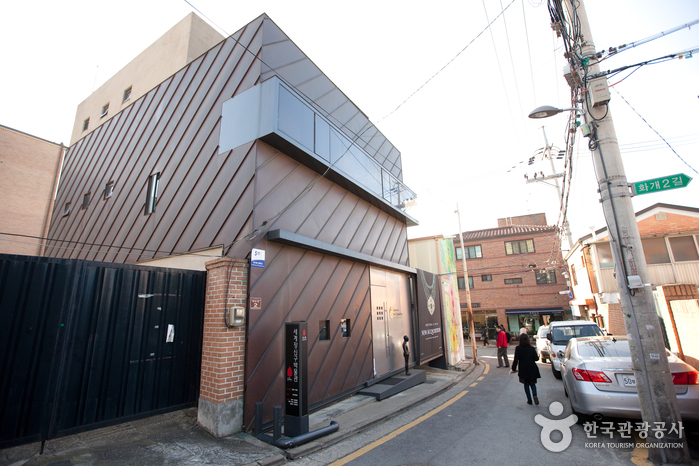
World Jewellery Museum (세계장신구박물관)
5.5Km 2023-09-21
2, Bukchon-ro 5na-gil, Jongno-gu, Seoul
+82-2-730-1610
Situated in the gallery district in the back alley of Samcheong-dong (east of Gyeongbokgung Palace), the World Jewellery Museum houses 3,000 jewelry pieces from 60 countries, which have been collected over 30 years. Of which, 1,000 have been selected for display. The first floor contains an Amber Wall that goes back as far as 50 million years, the Golden Hall (El Dorado), the Necklace Hall, and the solemn Alter of the Cross. The second floor holds a mask wall, rings, beads and ivory as well as modern jewelry.
![CheongKwanJang - Dongbuichon Branch [Tax Refund Shop] (정관장 동부이촌)](http://tong.visitkorea.or.kr/cms/resource/24/2888324_image2_1.jpg)
CheongKwanJang - Dongbuichon Branch [Tax Refund Shop] (정관장 동부이촌)
5.5Km 2024-04-17
1F, 245, Ichon-ro, Yongsan-gu, Seoul
-
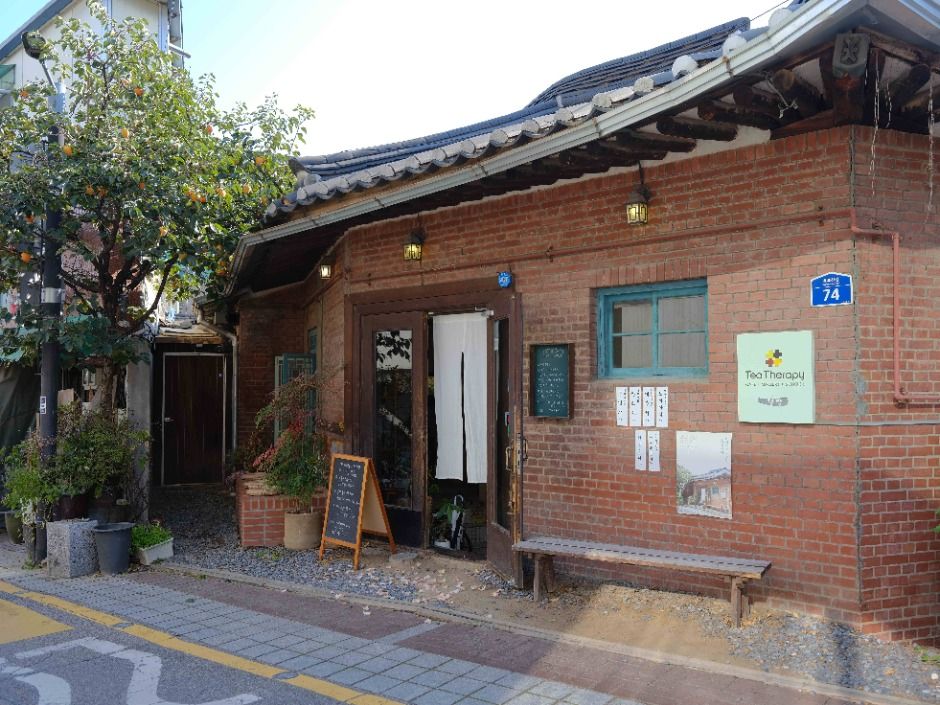
Tea Therapy (티테라피)
5.5Km 2025-10-23
74 Yunboseon-gil, Jongno-gu, Seoul
+82-2-730-7507
Located in Jongno-gu, Seoul, Tea Therapy can be of help to those who chronically feel unwell even though they do not have any serious diseases that need to be treated. It is a place where medicinal herbal teas, which once seemed difficult to enjoy, can be enjoyed without hassle and in a unique way. The teas found at Tea Therapy can be brewed within three minutes, similar to herbal teas found in other countries, and are both delicious and good for your health. Tea Therapy recommends tea through testing so even novices can have fun selecting teas that suit them. Tea products are sold here as well, allowing you to enjoy the same flavors at home.
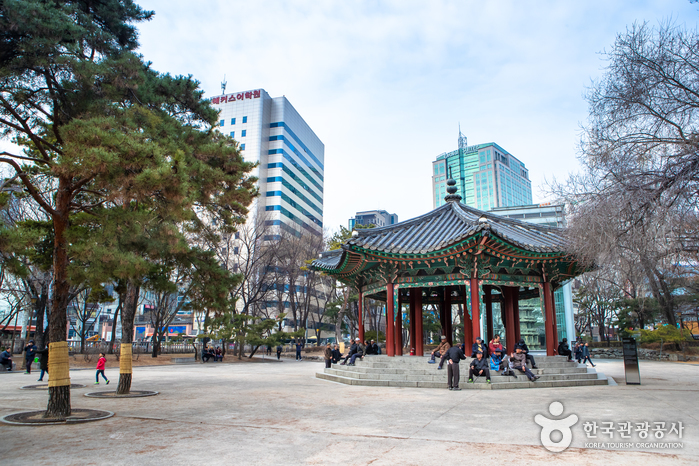
Tapgol Park (탑골공원)
5.5Km 2024-03-04
99, Jong-ro, Jongno-gu, Seoul
+82-2-731-0534
Tapgol Park is the first modern park in Seoul. Having been the site of the Buddhist temple of Wongaksa Temple since 1467, the land was turned into a park in 1897. The park has a significant presence in Korean history, being the place where the March 1 Independence Movement began in 1919. One can find historical sites that hearken back to the struggle, such as the Palgakjeong Pavilion, the center of the movement; cultural heritage sites such as the Ten-story Stone Pagoda of Wongaksa Temple Site and the Stele for the Construction of Daewongaksa Temple at Wongaksa Temple Site; and monuments such as the independence movement relief plate, murals, the statue of Son Byeong-hee, and the statue of Han Yong-un.
 English
 한국어
한국어 日本語
日本語 中文(简体)
 Deutsch
 Français
 Español
 Русский


