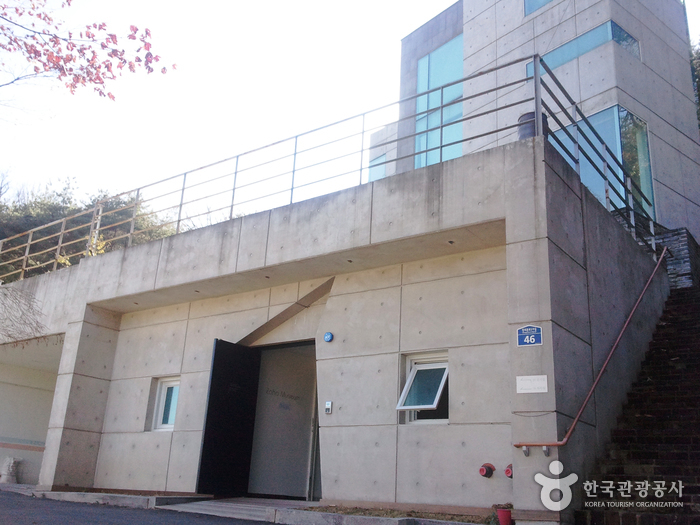
Zaha Museum (자하미술관)
4.4Km 2021-03-09
46, Changuimun-ro 5ga-gil, Jongno-gu, Seoul
+82-2-395-3222
Located in Buam-dong, Jongno-gu, Zaha Museum is the highest art gallery in Seoul. Reaching
the museum involves a bit of an uphill walk, but the breathtaking scenery that includes Bugaksan Mountain and Inwangsan Mountain makes it worth the effort.
Opened on March 1, 2008, the two-story museum exhibits experimental works of young artists. There are two exhibition halls and a small garden on the second floor with a great view of the mountains.
Jeongdong-gil Road (정동길)
4.4Km 2024-06-19
2-1 Jeongdong-gil, Jung-gu, Seoul
Jeongdong-gil Road is one of Seoul's most famous walking paths, stretching from the intersection in front of Jeongdong Church to Saemunan-gil Road. The street holds importance in Korea's modern history, with the surroundings serving as a living museum of this. During the Joseon dynasty, the area developed into a residental space for distant members of the royal family, with a palace and royal tombs in the area. In 1999, the pedestrian walking area was expanded by turning the two-way road into a one-way road. Since then, the road has earned many awards and honors.
![Olive Young - Yeomchang Station Branch [Tax Refund Shop] (올리브영 염창역)](http://tong.visitkorea.or.kr/cms/resource/93/2880093_image2_1.jpg)
Olive Young - Yeomchang Station Branch [Tax Refund Shop] (올리브영 염창역)
4.4Km 2024-04-22
#102, and #103, 637, Gonghang-daero, Gangseo-gu, Seoul
-
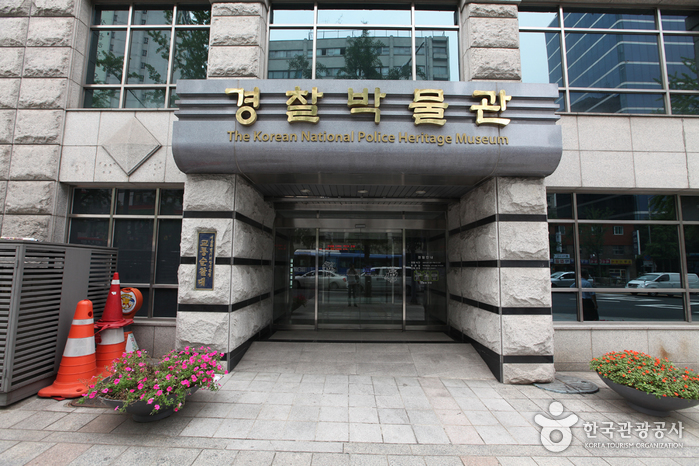
Korean National Police Heritage Museum (경찰박물관)
4.4Km 2021-12-21
41, Saemunan-ro, Jongno-gu, Seoul
+82-2-3150-3681
The police museum opened on October 14, 2005 to give a better understanding of the job of the police and to offer a formal education to children who wish to become police officers in the future. The history hall of the museum is designed for visitors to learn about the history of Korean police at a glance, exhibiting information on the police force from the Joseon dynasty up until current times.
Visitors to the museum can pretend to be police officers by touching actual equipment and learning about an officer's daily tasks. Visitors can also get in patrol cars, wear a police uniform, experience shooting a gun through a simulation, and learn self-defense martial arts and arrest techniques. Visitors can also go to the museum jail.
Jeongdong Guksi (정동국시)
4.5Km 2024-06-19
5 Jeongdong-gil, Jung-gu, Seoul
02-732-0114
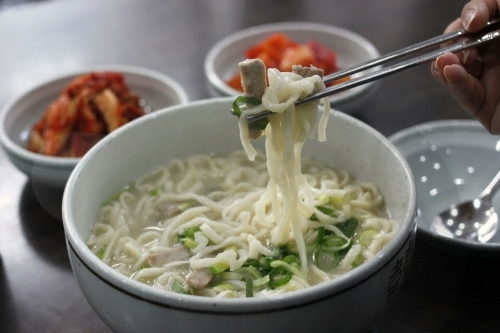
Jeongdong Guksi features a rich soup with a clean taste, created by carefully removing the oil dozens of times while boiling Korean beef bones for 15 hours. The restaurant uses this same beef bone broth in their mandutguk (dumpling soup), something not many restaurants do. The rich flavor of the broth combined with the soft dumplings, made in-house daily, is a must-try. The restaurant is also surrounded by many cultural and artistic spaces, making it a great addition to tours in the area.
Seosomun Historical Park (서소문역사공원)
4.5Km 2023-08-11
5, Chilpae-ro, Jung-gu, Seoul
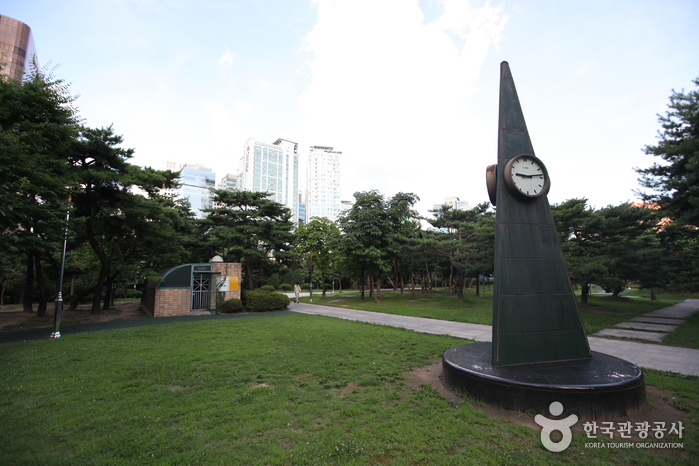
The Seosomun Gate area, which is located outside Seosomun Gate, was used as a persecution site in the 19th century before it turned into the local park of today. Many Catholics were suppressed and martyred here, making the area a holy site for Korean Catholics. Seosomun Gate was a gateway to Chilpae Market located near Namdaemun Gate. It was always busy with passerbys and the persecution site was established outside the gate to set an example of crime punishment to all the witnesses.
On May 15, 1999, a memorial tower was raised at the center of the park in honor of the martyrs. In 2013, Seoul's Jung-gu district also founded Seosumun Holy Shrine History Museum with a memorial exhibition hall in their honor.
Hanyangdoseong Seoul City Wall Stamp Tour (서울 한양도성 순성길)
4.5Km 2025-06-30
Nusang-dong, Jongno-gu, Seoul
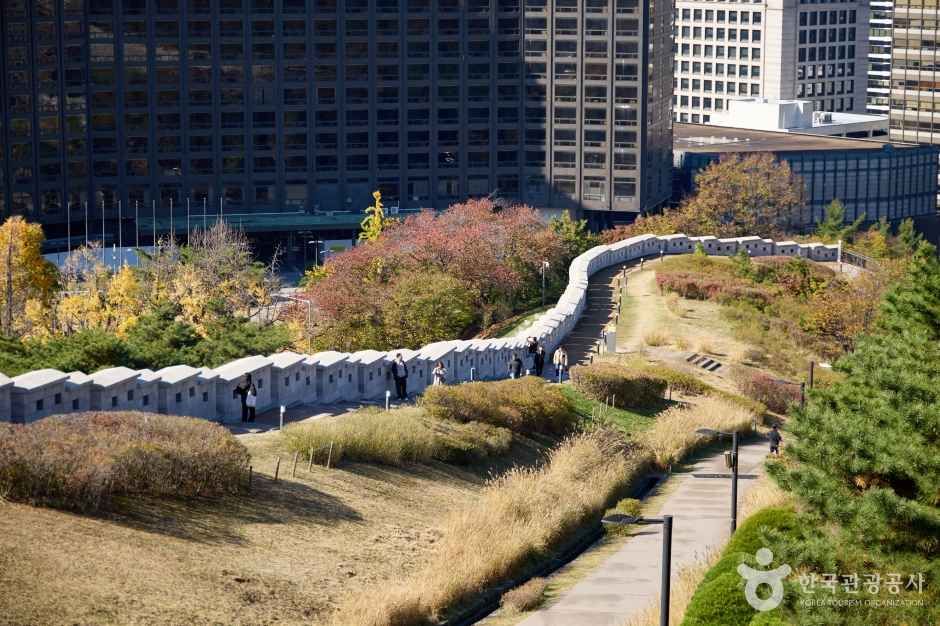
Hanyangdoseong Seoul City Wall is a 18.7 km-long trail that encircles the old capital city of Hanyang, covering Bugaksan, Inwangsan, Naksan, and Namsan Mountains. The urban trekking course provides the opportunity to see Seoul's history, culture, and nature all at once, including four large gates, four small gates, and 169 cultural heritages. To enjoy the trail even further, take part in the stamp tour. Travelers who complete the full trail, collecting stamps and taking pictures at the designated locations will recieve a completion certificate.
Namdo Bunsik Seochon Branch (남도분식 서촌점)
4.5Km 2024-02-20
1F, 2 Ogin 2-gil, Jongno-gu, Seoul
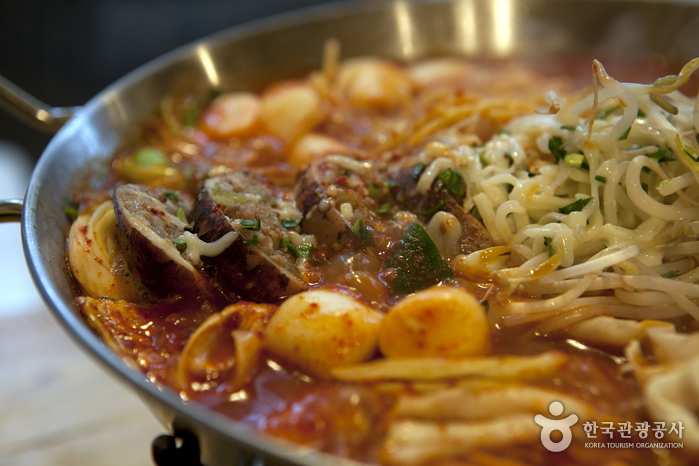
Namdo Bunsik is a snack restaurant that caters to the tastes of the younger generation by adapting regional traditional cuisine. The flagship menu features namdo tteokbokki, an jeukseok tteokbokki (instant tteokbokki) crafted with various ingredients such as pollack, scallions, and radish, with the broth prepared in-house. The spiciness of the tteokbokki can be adjusted from level 1 to level 3. Another popular item is sangchu twigim (deep-fried lettuce), where deep-fried dishes and pickled onions are wrapped in lettuce for consumption.
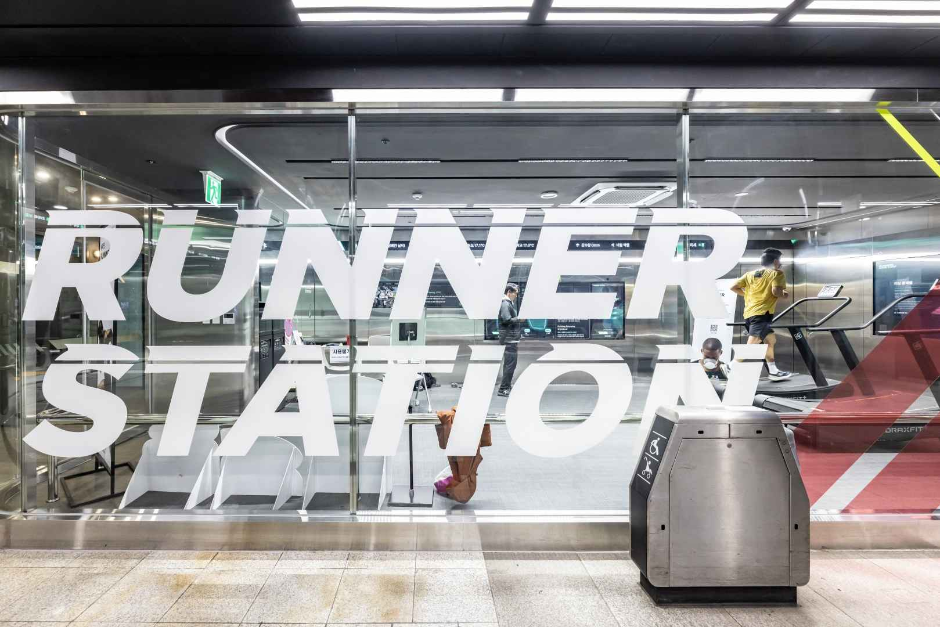
Runner Station at Yeouinaru Station (여의나루역 러너스테이션)
4.5Km 2025-11-06
343 Yeouidong-ro, Yeongdeungpo-gu, Seoul
With Seoul’s skyscrapers and the scenic Hangang River, Yeouido has become the top destination for Korean runners. In response to the growing popularity of running along the Hangang among the MZ generation, Yeouinaru Station introduced Runner Station, equipped with essentials like lockers and media boards displaying popular running routes. Wrap up your day with a refreshing run in Yeouido.
 English
 한국어
한국어 日本語
日本語 中文(简体)
 Deutsch
 Français
 Español
 Русский


