
Olive Young - Gwangmyeong Cheolsan Branch [Tax Refund Shop] (올리브영 광명철산점)
6.4Km 2024-06-27
#101, 24, Cheolsan-ro, Gwangmyeong-si, Gyeonggi-do
-
Ewha Womans University Seoul Hospital (이화의대부속서울병원)
6.4Km 2025-10-23
260 Gonghang-daero, Gangseo-gu, Seoul
Ewha Womans University Seoul Hospital is designed with a focus on optimizing care for infectious diseases, featuring 3-bed standard wards and single-bed rooms in all intensive care units. Building on our long history of excellence in women’s education, treatment, and research, we have established a competitive edge by specializing in women’s cancers, including breast, thyroid, uterine, and ovarian cancers. Our expertise extends beyond women’s health, offering specialized medical services for severe conditions such as bladder, stomach, and colorectal cancers, as well as cardiovascular diseases. We also provide comprehensive care for chronic adult conditions like hypertension, diabetes, and obesity.
Our recently opened Ewha Womans University Cerebrovascular Hospital and Ewha Womans University Aorta and Vascular Hospital are equipped with the latest technology to offer advanced surgery and treatment for stroke, aneurysms, heart, and aortic diseases. The Ewha Womans University Mother and Baby Hospital is dedicated to the specialized care of high-risk mothers and newborns, ensuring the best outcomes for maternal and child health. Additionally, we offer personalized health management through our specialized centers, including the Wellness Health Checkup Center and the Well-Aging Center, to support our patients’ overall well-being.
Himart - Cheolsan Branch [Tax Refund Shop] (하이마트 철산점)
6.4Km 2024-04-19
22, Cheolsan-ro, Gwangmyeong-si, Gyeonggi-do
-
![Olive Young - Balsan Station Branch [Tax Refund Shop] (올리브영 발산역)](http://tong.visitkorea.or.kr/cms/resource/19/2880119_image2_1.jpg)
Olive Young - Balsan Station Branch [Tax Refund Shop] (올리브영 발산역)
6.4Km 2024-04-17
385, Gangseo-ro, Gangseo-gu, Seoul
-
![Davich Optical - Geumcheon Branch [Tax Refund Shop] (다비치안경 금천)](http://tong.visitkorea.or.kr/cms/resource/39/2880439_image2_1.jpg)
Davich Optical - Geumcheon Branch [Tax Refund Shop] (다비치안경 금천)
6.4Km 2024-04-22
415, Siheung-daero, Geumcheon-gu, Seoul
-
Seodaemun Museum of Natural History (서대문자연사박물관)
6.4Km 2021-07-02
51, Yeonhui-ro 32-gil, Seodaemun-gu, Seoul
+82-2-330-8899
Nestled at the foothills of Ansan Mountain, a natural resting area in the city, Seodaemun Museum of Natural History is the first natural history museum in the nation to be established by a government agency. Opened on July 10, 2003, the museum offers various opportunities to experience and learn about the environment. It also provides the chance to interact with animals and plants, teaching the value of life.
Youngone Corporation [Tax Refund Shop] (주식회사 영원무역)
6.5Km 2024-04-19
159, Mallijae-ro, Jung-gu, Seoul
-
CheongKwanJang - Doksan Sageori Branch [Tax Refund Shop] (정관장 독산사거리)
6.5Km 2024-04-18
1F, 409, Siheung-daero, Geumcheon-gu, Seoul
-
![Golfzon Market - Magok Branch [Tax Refund Shop] (골프존마켓 마곡 [사후면세점])](http://tong.visitkorea.or.kr/cms/resource/01/2880101_image2_1.jpg)
Golfzon Market - Magok Branch [Tax Refund Shop] (골프존마켓 마곡 [사후면세점])
6.5Km 2024-04-22
1-2F, 376, Yangcheon-ro, Gangseo-gu, Seoul
-
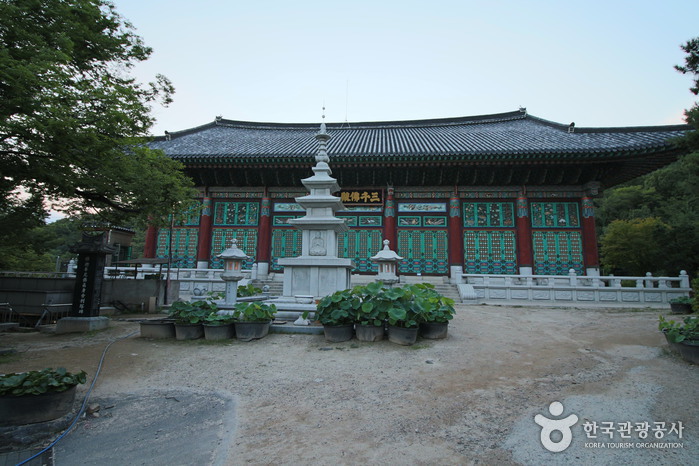
Bongwonsa Temple (봉원사)
6.5Km 2023-03-13
120, Bongwonsa-gil, Seodaemun-gu, Seoul
+82-2-392-3007
Located on the outskirts of Ansan Mountain in Bongwon-dong, Seodaemun-gu, Seoul, Bongwonsa Temple, as the center of Korean Buddhism Taego, is a thousand-year-old temple with a long history and tradition. In 889 (3rd year of Shilla Queen Jinseong’s reign), Monk Doseon founded it at the ground of Yeonhui Palace (now Yonsei Univ.) and named it Banyasa temple. It was destroyed during the Imjin War in 1592, and later in 1748 (the 24th year of Joseon King Yeongjo’s reign), it was rebuilt and renamed “Bongwonsa” by two Buddhist monks, Chanjeup and Jeungam.
“Yeongsanjae,” one of the Buddhist rituals and also a National Intangible Cultural Property, takes place at Bongwonsa on June 6 every year wishing for world peace and the reunification of North and South Korea. It was designated as one of the Intangible Cultural Heritage of Humanity by UNESCO in 2009. During Yeongsanjae, visitors can enjoy the Buddhist arts such as Beompae (Buddhist temple music for rituals) and dancing. Also, during summertime, Seoul Lotus Flower Culture Festival takes place, where visitors can enjoy the beautiful lotus flowers which are a symbol of Buddhism.
 English
 한국어
한국어 日本語
日本語 中文(简体)
 Deutsch
 Français
 Español
 Русский


