![Cheongha Korean Ginseng [Tax Refund Shop] (청하고려인삼)](http://tong.visitkorea.or.kr/cms/resource/82/2890682_image2_1.jpg)
Cheongha Korean Ginseng [Tax Refund Shop] (청하고려인삼)
11.3Km 2024-04-22
280, Jahamun-ro, Jongno-gu, Seoul
-
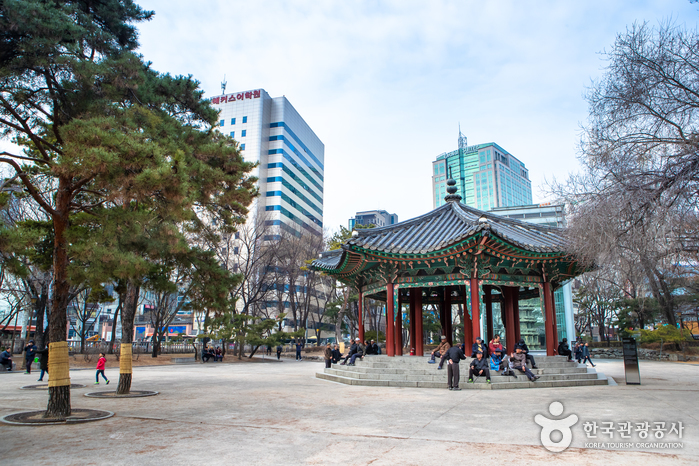
Tapgol Park (탑골공원)
11.3Km 2024-03-04
99, Jong-ro, Jongno-gu, Seoul
+82-2-731-0534
Tapgol Park is the first modern park in Seoul. Having been the site of the Buddhist temple of Wongaksa Temple since 1467, the land was turned into a park in 1897. The park has a significant presence in Korean history, being the place where the March 1 Independence Movement began in 1919. One can find historical sites that hearken back to the struggle, such as the Palgakjeong Pavilion, the center of the movement; cultural heritage sites such as the Ten-story Stone Pagoda of Wongaksa Temple Site and the Stele for the Construction of Daewongaksa Temple at Wongaksa Temple Site; and monuments such as the independence movement relief plate, murals, the statue of Son Byeong-hee, and the statue of Han Yong-un.
![Koibito - Gangnam Main Branch [Tax Refund Shop] (고이비토 강남본점)](http://tong.visitkorea.or.kr/cms/resource/05/2889105_image2_1.jpg)
Koibito - Gangnam Main Branch [Tax Refund Shop] (고이비토 강남본점)
11.3Km 2024-04-18
310-3, Banpo-daero, Seocho-gu, Seoul
-
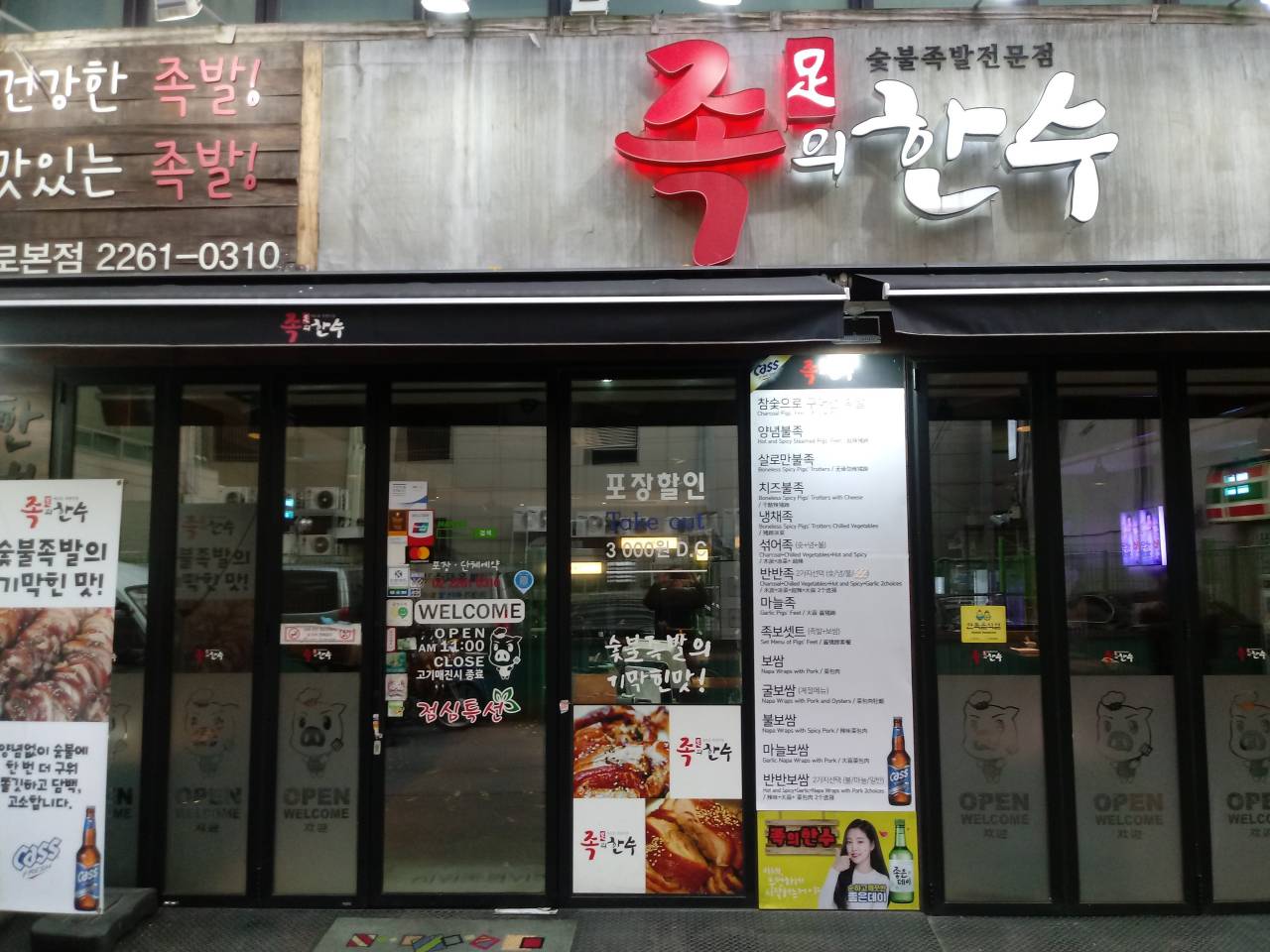
Jogui Hansu (족의한수)
11.3Km 2024-10-15
93-1, Supyo-ro, Jongno-gu, Seoul
+82-2-2261-0310
A pig's trotter(s) specialty restaurant located in Jongno, Seoul. This restaurant's signature menu is braised pigs' feet. A restaurant serving both charcoal-grilled jokbal (pig's trotter) and spicy jokbal.
![yyk [Tax Refund Shop] (와이와이케이)](http://tong.visitkorea.or.kr/cms/resource/67/3313167_image2_1.jpg)
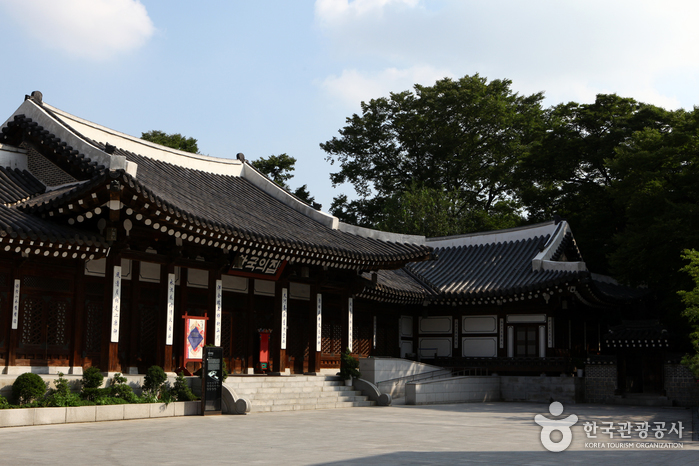
Korea House (한국의집)
11.3Km 2025-10-23
10, Toegye-ro 36-gil, Jung-gu, Seoul
The Korea House was opened in 1981. It is a traditional Korean building that introduces the culture and lifestyle of Koreans, where you can experience traditional architecture and a classical atmosphere. The building was built in the style of the Joseon Dynasty's Jagyeong-jeon building at the Gyeongbok Palace. It is the only building built in the traditional architectural style. You will feel its antiquity as you enter the building.
It is divided into the Haerin-gwan (a space for people to get acquainted with each other), the Traditional Theater, and three annex buildings (Munhyang-ru, Nokeum-jeong and Cheongwu-jeong). At Haerin-gwan, you can enjoy traditional music at Garak-dang and try traditional food at Sohwa-dang. In the square of Garak-dang you can view a traditional wedding (on the weekends) or people playing folk games. Also, at the Traditional Theater, about 156 seats are available, and in the afternoons Human Cultural Assets or members of the National Center for Korean Traditional Performing Arts and the National Corps members present traditional music and dances. Sinayui, Salpuri, Pansori, the Drum Dance and the Bongsan Mask Dance are the most popular programs for foreigners. The programs are all explained in English and Japanese.
In the Cultural Gift Shop you can view various crafts made by traditional craftsmen. It is always open and the crafts are for sale as well. There are pottery, ceramics, golden crafts, knots and embroidery etc; approximately 500 pieces of artwork made by craftsmen from 20 different fields. Next to the House of Korea is the Namsan-gol Hanok Village where visitors can explore traditional houses.
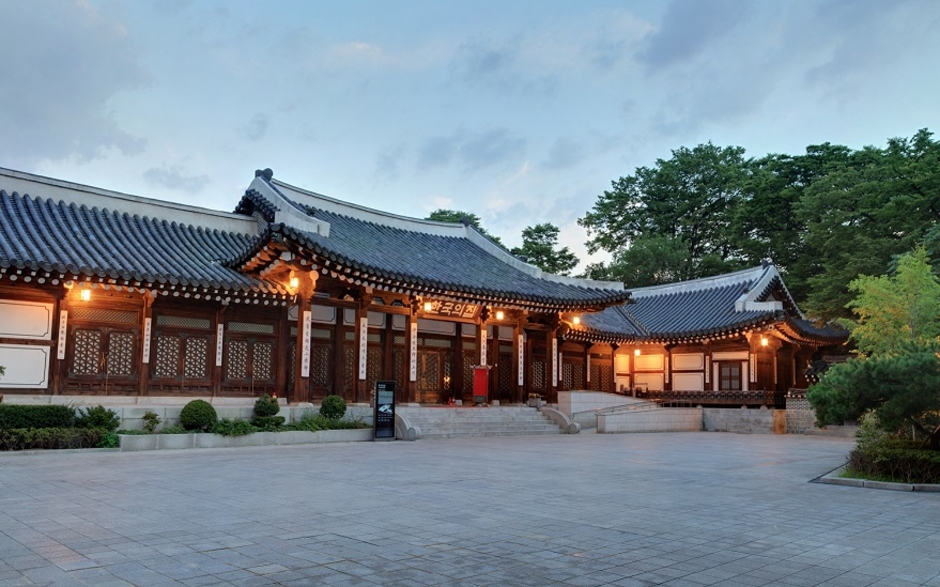
Korea House (한국의집)
11.3Km 2024-03-05
10 Toegye-ro 36-gil, Jung-gu, Seoul
+82-2-2266-9101
Located in the center of Seoul, Korea House is a must-visit tourism spot as a high-end cultural complex offering Hanjeongsik (Korean table d'hote), traditional refreshments, traditional performance arts, and traditional weddings, allowing visitors to feel the beauty of Korean culture and the taste of Korea. Guests can also enjoy the elegant beauty of hanok.
![Goyang West Five Royal Tombs [UNESCO World Heritage] (고양 서오릉 [유네스코 세계문화유산])](http://tong.visitkorea.or.kr/cms/resource/88/1589188_image2_1.jpg)
Goyang West Five Royal Tombs [UNESCO World Heritage] (고양 서오릉 [유네스코 세계문화유산])
11.3Km 2024-02-19
334-32 Seooreung-ro, Deogyang-gu, Goyang-si, Gyeonggi-do
+82-2-359-0090
Goyang West Five Royal Tombs is an important historical site comprising a cluster of five royal tombs from the Joseon dynasty, located in the western region. This significant group include the tombs of Crown Prince Uigyeong (1438-1457), the eldest son of King Sejo, at Gyeongneung; King Yejong at Changneung; Crown Prince Sunhui at Sunchangwon; Queen Ingyeong at Ingneung; King Sukjong at Myeongneung; and Queen Jeongseong at Hongneung. Touring these sites typically takes about an hour. Additionally, there's a walking trail behind Ingneung, allowing visitors to enjoy the surrounding forest in spring and summer, as well as the vibrant maple trees in autumn.

Seorae Village (서래마을)
11.3Km 2022-12-16
Banpo-dong, Seocho-gu, Seoul
+82-2-2155-6220
Seorae Village is located in between Banpo 4-dong and Bangbaebon-dong in Seocho-gu, Seoul. Seorae Village took its form as a French neighborhood when French residents moved to the area after Ecole Francaise de Seoul, a school for French residents in Korea, was established here in 1985. According to 2008 census, about half of the total 1,000 French citizens residing in Korea were registered to be living in Seorae Village. The area naturally took shape as a global neighborhood as many international residents settled at Seorae Village much thanks to the strong presence of French residents. In addition to its convenient location near the central district area as well as Gangnam area and Hangang River Park, Seorae Village serves as a pleasant environment space for all.
Many shops and restaurants in Seorae Village are small in size and rather charming, resembling those in Europe. A bakery that makes traditional French baguettes using ingredients directly imported from France can be found here. In recent years, Seorae Village has undergone several changes, gaining much attention as one of the most modern and fanciest regions found in Seoul.
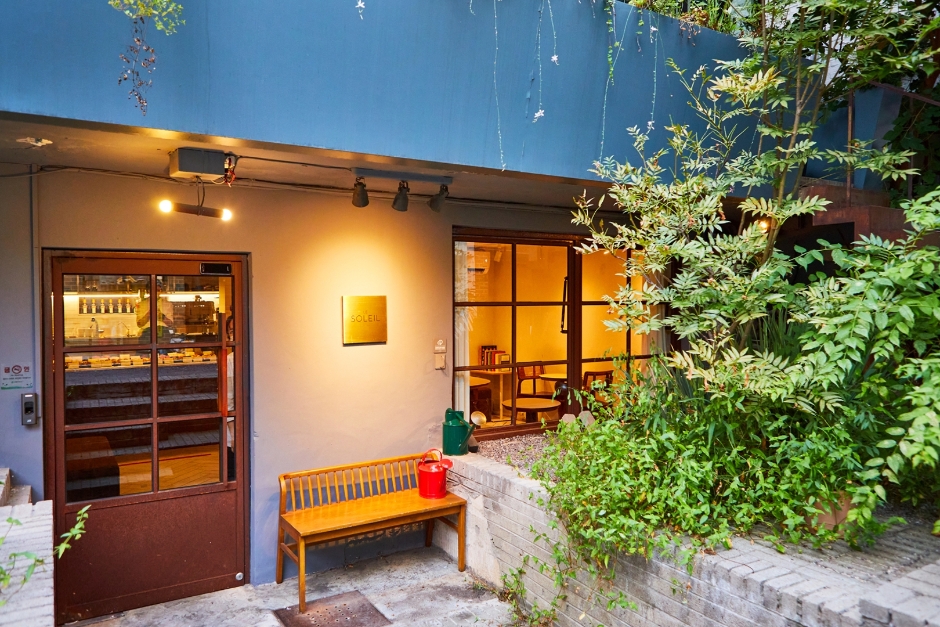
LE SOLEIL (르솔레이)
11.3Km 2024-03-18
28 Itaewon-ro 54-gil, Yongsan-gu, Seoul
LE SOLEIL is a dessert café in Yeonhui-dong that is small but constantly crowded with customers. About 20 kinds of madeleines of various ingredients fill the showcase. Representative menu items include Rose & Litchi Madeleine, which has a subtle rose scent and attractive litchi flesh, and Nurung Madeleine, which combines cream cheese and scorched rice toppings. Brûlée Madeleines with a luxurious vanilla scent and Truffle Madeleines with a truffle scent are also popular because they are not commonly seen elsewhere. Popular items will likely be sold out early, so it is best to check the information through their official Instagram before visiting.
 English
 한국어
한국어 日本語
日本語 中文(简体)
 Deutsch
 Français
 Español
 Русский


