![JDX - Happy Department Store Branch [Tax Refund Shop] (제이디엑스행복한백화점점)](http://tong.visitkorea.or.kr/cms/resource/27/2880127_image2_1.jpg)
JDX - Happy Department Store Branch [Tax Refund Shop] (제이디엑스행복한백화점점)
19.8Km 2024-04-19
309, Mokdongdong-ro, Yangcheon-gu, Seoul
-
![Passardi - Happy Department Store Branch [Tax Refund Shop] (파사디행복한백화점점)](http://tong.visitkorea.or.kr/cms/resource/28/2880128_image2_1.jpg)
Passardi - Happy Department Store Branch [Tax Refund Shop] (파사디행복한백화점점)
19.8Km 2024-04-22
309, Mokdongdong-ro, Yangcheon-gu, Seoul
-

Innisfree - Happy Department Store Branch [Tax Refund Shop] (이니스프리행복한백화점점)
19.8Km 2024-04-19
309, Mokdongdong-ro, Yangcheon-gu, Seoul
-
Farbe - Happy Department Store Branch [Tax Refund Shop] (파르베행복한백화점점)
19.8Km 2024-04-19
309, Mokdongdong-ro, Yangcheon-gu, Seoul
-
![Lecaf - Happy Department Store Branch [Tax Refund Shop] (르까프행복한백화점점)](http://tong.visitkorea.or.kr/cms/resource/29/2880129_image2_1.jpg)
Lecaf - Happy Department Store Branch [Tax Refund Shop] (르까프행복한백화점점)
19.8Km 2024-04-22
309, Mokdongdong-ro, Yangcheon-gu, Seoul
-
Hottracks - Mok-dong Branch [Tax Refund Shop] (핫트랙스 목동점)
19.9Km 2024-04-23
159-1, Mokdongseo-ro, Yangcheon-gu, Seoul
-
Bucheon Bow Museum (부천활박물관)
19.9Km 2021-12-23
482, Sosa-ro, Bucheon-si, Gyeonggi-do
+82-32-614-2678
Reflected by the outstanding performance of Korean archers at recent Olympic games, Koreans have an esteemed reputation for their skills in archery and craftsmanship. But this undoubted skill has historical precedent, as bows were an important weapon of war throughout Korean history. The Bucheon Bow Museum was established to show visitors the spirit of Korean archery, and demonstrate its ancestral traditions of bowyer craftsmanship. The museum houses traditional bows (gukgung), which are considered prized cultural pieces, and have been made by a Bucheon family, which has fostered a lineage of bowyers across five generations. In addition, the museum exhibits various pieces and articles related to archery.
Seodaemun Museum of Natural History (서대문자연사박물관)
19.9Km 2021-07-02
51, Yeonhui-ro 32-gil, Seodaemun-gu, Seoul
+82-2-330-8899
Nestled at the foothills of Ansan Mountain, a natural resting area in the city, Seodaemun Museum of Natural History is the first natural history museum in the nation to be established by a government agency. Opened on July 10, 2003, the museum offers various opportunities to experience and learn about the environment. It also provides the chance to interact with animals and plants, teaching the value of life.
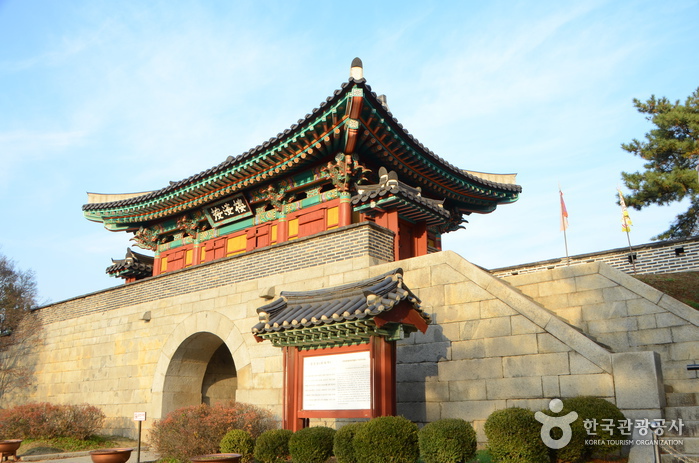
Gwangseongbo Fortress (광성보)
19.9Km 2022-07-25
27, Haeandong-ro 466beon-gil, Ganghwa-gun, Incheon
+82-32-930-7070
Gwangseongbo Fortress’s outer wall from the Goryeo era was mended in 1618. The fortress was built in 1656 and the outpost was constructed in 1679. It was completely remodeled into
a masonry castle with gates in 1745. During Sinmiyangyo (the American invasion in 1871), Gwangseongbo was the fiercest battle ground in Ganghwa. On April 24, 1871, a
fleet with 1,230 American naval forces led by Rear Admiral John Rodgers landed on Ganghwado Island to demand the
opening of Korea's ports and commerce. The armed forces attacked Chojijin Fortress
and Deokjinjin Camp, then marched to Gwangseongbo Fortress, where they engaged in close combat with the warriors of Joseon. Although General Eo Jae-yeon and the other warriors were poorly equipped with far inferior weapons, they bravely fought to the
death against the invading forces.
The battlefield ruins of the fortress and the gate towers such as Anhaeru, Gwangseongdon, Sondolmokdon, and Yongdudon were repaired
in 1977. The twin tombs of General Eo Jae-Yeon and his brother Eo Jae-seon, along with the anonymous tombs of warriors who died on the battlefield were
also honorably arranged at the same time. Furthermore, a stone monument commemorating the restoration of Ganghwa Battlefield was erected on Yongdudondae Post.
In 1988, an extensive rest area was created toward the shore for visitors’ convenience. Gwangseongbo Fortress is presently designated as Historical Relic No. 227. A religious service known as Gwangseongje is held annually to commemorate the patriotic spirits of General Eo Jae-yeon and other unnamed warriors. This service takes place at 11 a.m. on every April 24th of the lunar calendar.
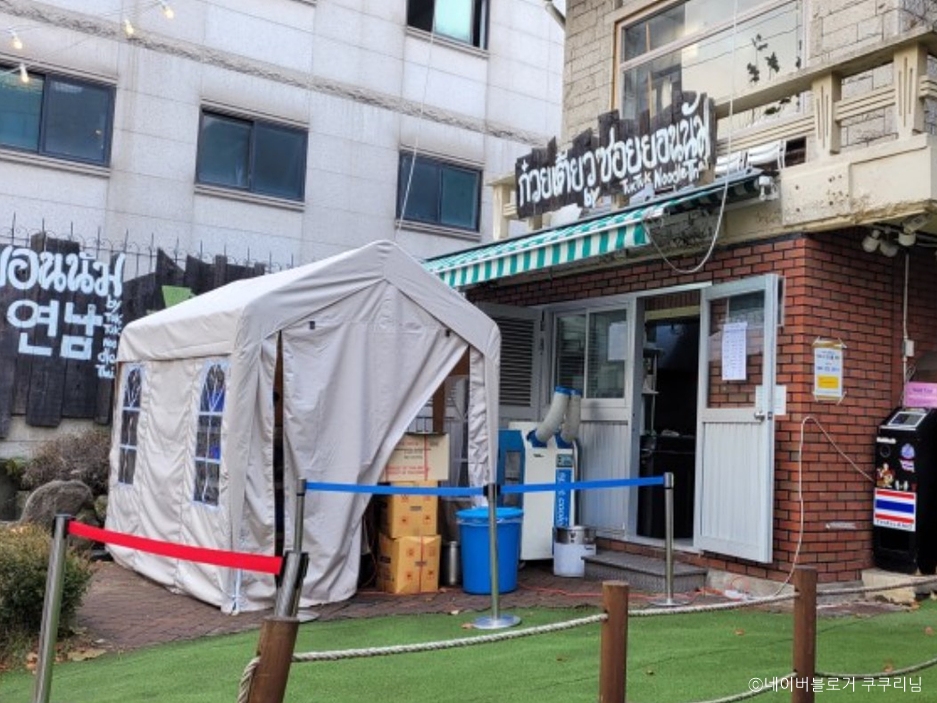
Soi Yeonnam (소이연남)
19.9Km 2024-02-22
1F, 267 Donggyo-ro, Mapo-gu, Seoul
Soi Yeonnam is a rice noodle specialty restaurant where you can experience the atmosphere of Thailand. The signature dish is the flavorful and rich sogogi ssalguksu (beef noodle soup). Other popular dishes include soi popia (spring roll), which is fried with shrimp, pork, mushrooms, tom yam ssalguksu (tom yum noodle), and som tam (green papaya salad). It's so famous that people line up to eat there, and it's beloved by both locals and tourists alike.
 English
 한국어
한국어 日本語
日本語 中文(简体)
 Deutsch
 Français
 Español
 Русский


