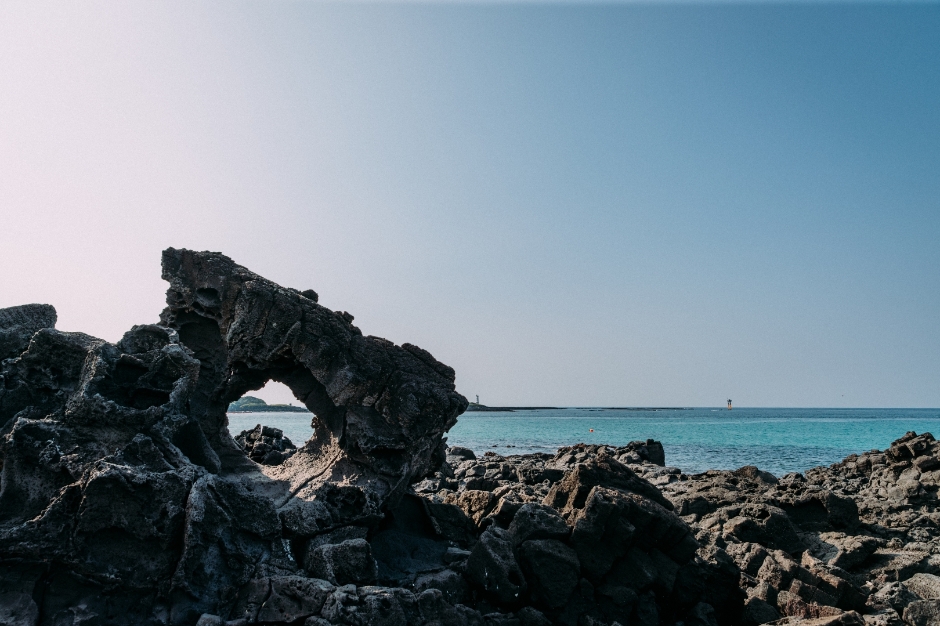
Changkkom (창꼼)
14.2Km 2025-10-29
393 Bukchon-ri, Jocheon-eup, Jeju-si, Jeju-do
Changkkom is a unique rock formation with a window-shaped hole, popular among tourists for taking photos.
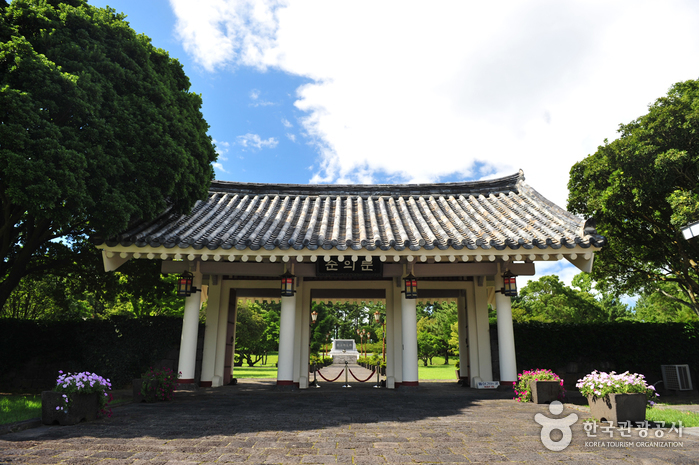
Historic Site of Anti-Mongolian Struggle in Hangpadu-ri, Jeju (제주 항파두리 항몽 유적)
14.3Km 2022-08-18
50, Hangpaduri-ro, Jeju-si, Jeju-do
+82-64-710-6721
Historic Site of Anti-Mongolian Struggle in Hangpadu-ri is where the Sambyeolcho military unit of the Goryeo dynasty resisted the invasion of Mongolia until the last possible moment. The site houses an
exhibition hall, a monument, and a unique mud fortress. Nearby is Jangsumul Spring (Jangsu means general) which flowed from the footprints of General Kim Tong-jeong. Today, water from the spring
cannot be used as drinking water.
Sambyeolcho was a military unit of the Goryeo dynasty. When the Goryeo dynasty made peace with the Mongolian forces in February 1270 (the 11th year of King Wonjong), the Sambyeolcho special defense unit opposed it and launched a resistance movement. They moved their base to Jindo in Jeollanam-do, but after suffering a huge defeat, they moved to Jeju-do and built Hangpaduseong Fortress. They continued to fight against the Mongolian forces for two more years there. However, all the members were killed in April 1273 (the 14th year of King Wonjong).
This independent anti-Mongolian movement was born out the deeply patriotic belief in the need to safeguard the nation from foreign invasion. In 1977, the government invested 745 million won to restore part of the fortress and build a monument in commemoration of those who died in the war. The work was completed in June 1978.

Ivar Garden (아이바가든)
14.6Km 2024-04-19
8 Goseongnamseo-gil, Aewol-eup, Jeju-si, Jeju-do
Ivar Garden is an immersive media art exhibition hall in Aewol-eup on Jeju’s northwest coast. The hall is divided into eight exhibition spaces, each with a unique theme like Dreamy, Industrial, Mystery, and Party. The exhibitions extend all the way to the floor and the ceiling for a fully immersive experience.
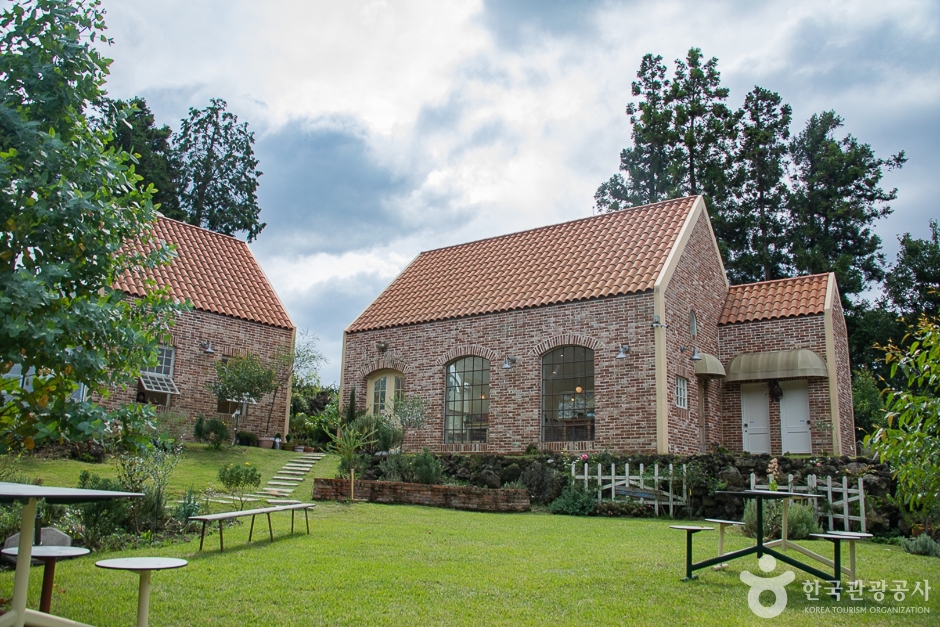
Jas de Bouffan (자드부팡)
14.7Km 2024-02-20
385-216 Bukheul-ro, Jocheon-eup, Jeju-si, Jeju-do
Café Jas de Bouffan is nestled within Dongbaek-Dongsan forest, featuring a European-style building that, along with the surrounding forest, creates stunning scenery. The signature item on the menu is the coconut cream latte. Guests can savor a range of desserts and drinks amidst the café's exotic atmosphere. Nearby attractions such as Gimnyeong Beach, Bijarim Forest, and Manjanggul Lava Tube enhance the appeal of visiting this unique spot.
Jeju Central Park (제주 센트럴파크)
15.0Km 2025-01-08
606, Bijarim-ro, Jeju-si, Jeju-do
+82-64-782-7720
Jeju Central Park is a miniature theme park located in the beautiful scenery of Hallasan Mountain. The park is divided into five different zones, including the World Heritage Land, Fantasy Land, and Dinosaur Land. It serves as a fun education park for children and teenagers where they can explore exotic landscapes without having to travel far. It also has the nation's first and largest outdoor go-kart track.
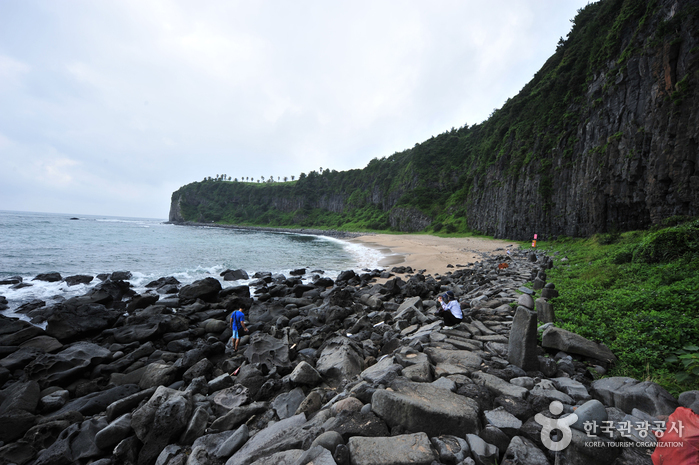
Jeju Island Special Tourist Zone (제주도 관광특구)
15.1Km 2025-05-20
Jeju-do
+82-64-740-6000
Located to the southwest of the Korean Peninsula, the island of Jeju is Korea's largest tourist destination. The entire island has been designated as a special tourist zone, and it's easy to see why: there is hardly any spot on the island that is not photogenic. Unlike mainland Korea, which has a temperate climate, Jeju boasts a climate that is closer to subtropical. Hallasan Mountain, lying at the center of the island, is surrounded by 368 parasitic cones, known as "Oreum." Eleven beaches have been designated as tourist beaches, but including those that are not officially designated, the island features nearly thirty beaches in total. Famous beaches include Iho Tewoo Beach, Samyang Beach, Hyeopjae Beach, Geumneung Beach, and Gwakji Beach. Jeju's renowned Olle Trails, a system of hiking paths, span a total length of 425 kilometers and would take about fifteen days to complete in their entirety.
Gueom Port (구엄포구)
15.5Km 2022-06-09
607-5, Gueom-ri, Jeju-si, Jeju
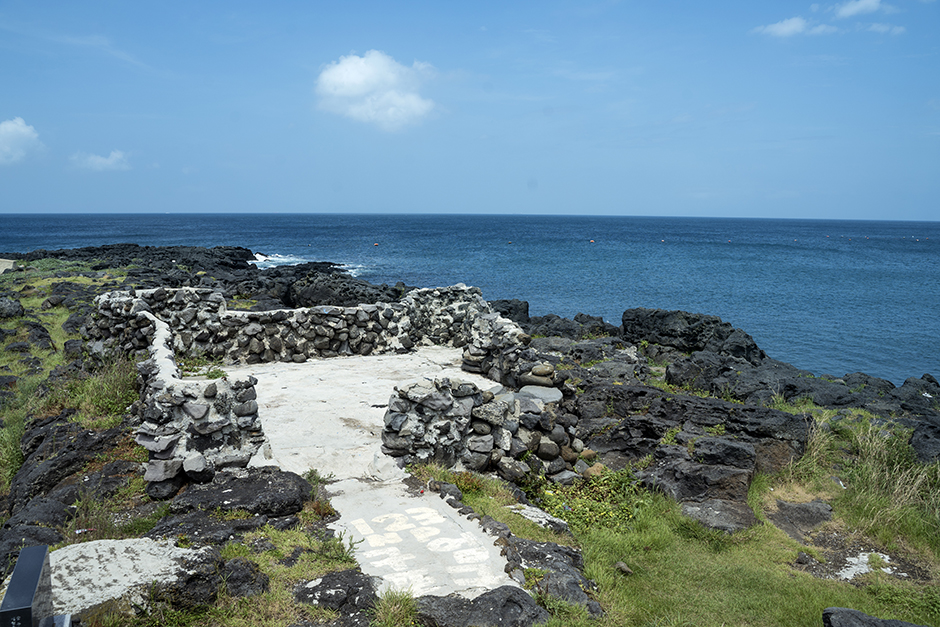
Near Aewol's coastal road, a beautiful sunset spot, there is the small and quaint Gueom Port. Next to the port, there is a rock saltern. This is where salt was produced on top of the basalt. The beautiful coastal road along the rock saltern was designated as a coastal path. There is also a small lighthouse for fishermen returning from sea at night.
Noeully (노을리)
16.0Km 2024-01-31
656 Aewolhaean-ro, Jeju-si, Jeju-do
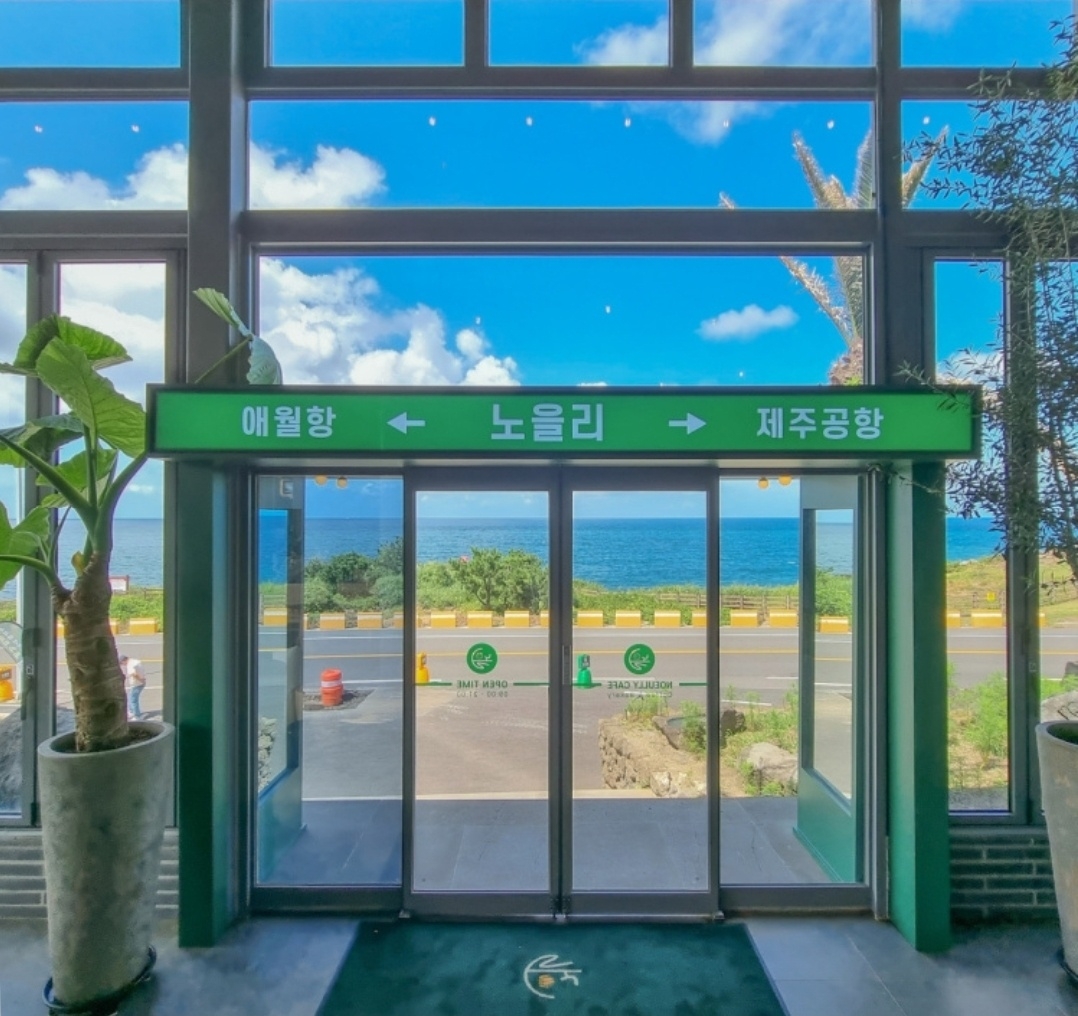
Noeully is a dessert café located in Gueom-ri, Aewol-eup, Jeju-si. The entrance and interior are decorated like a bus stop and a glass greenhouse, respectively, allowing visitors to enjoy tropical plants and the ocean view. It consists of a rooftop café on the second floor and a sky garden on the third floor, as a no-kids zone except on the first floor. Chairs and tables face the sea for an open view of the Jeju sea and sunset, making this café a popular spot to visit for taking photos to post on social media. One of the charms of Noeully is that visitors can enjoy flowers here all year round, such as mustard flowers, hydrangeas, sunflowers, cosmos, and buckwheat flowers. The representative menu item is Briquette bread, a briquette-shaped glutinous rice bread filled with strawberry jam. In addition, the menu includes a variety of drinks, coffee, scones, and cookies.
Sangumburi Crater (산굼부리)
16.4Km 2024-11-28
768 Bijarim-ro, Jeju-si, Jeju-do
+82-64-783-9900
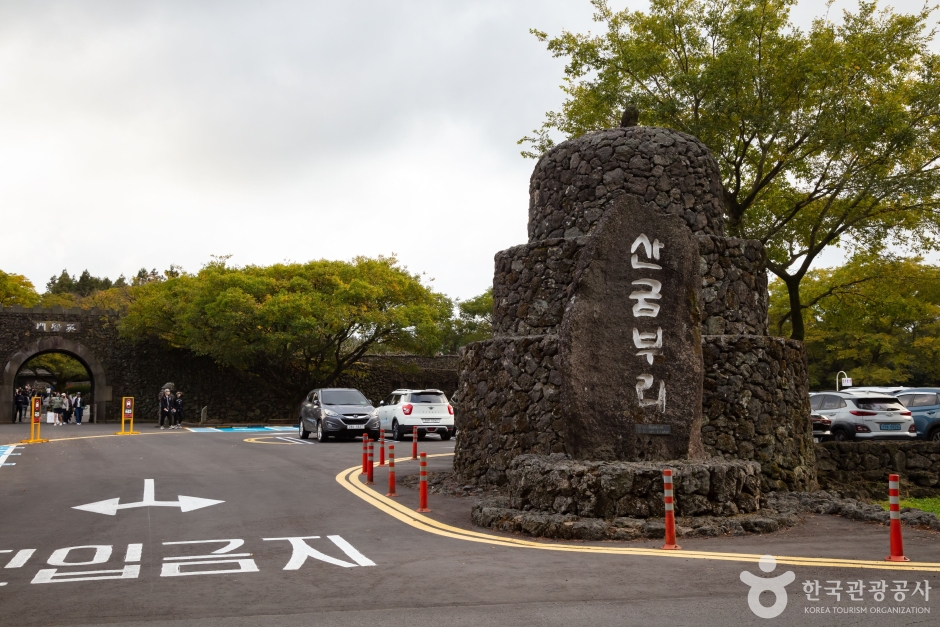
Sangumburi Crater has been designated as a Natural Monument. It is located on the southeast side of Jeju, and is a flat crater, about 650 meters wide, 100 meters deep, and 2,070 meters in circumference. If you look at the crater from above up, it looks like a man-made circular stadium. There is a variety of plant-life in the crater. On the north side, Nandaeseong vegetation such as red-thorn trees, and magnolia trees grow, along with the rare winter strawberries. On the south side of the crater, Ondaerim vegetation such as evergreens, maples, and mountain strawberry trees cover the area. Because so many different kinds of trees and plants grow in such a limited space, it attracts the attention of researchers as well.
![Geomunoreum Lava Tube [UNESCO World Natural Heritage Site] (거문오름 [유네스코 세계자연유산])](http://tong.visitkorea.or.kr/cms/resource/61/2661661_image2_1.jpg)
Geomunoreum Lava Tube [UNESCO World Natural Heritage Site] (거문오름 [유네스코 세계자연유산])
16.6Km 2025-03-13
569-36 Seongyo-ro, Jocheon-eup, Jeju-si, Jeju-do
+82-64-710-8981
Geomunoreum Lava Tube stands out as one of the distinct oreum (the Jeju language term for parasitic cones) on Jeju Island, marked by its extensive network of around 20 lava tubes running through the volcanic structure. This site is not only a geological marvel but also a sanctuary for diverse biological species. Visitors begin their journey at the Jeju World Natural Heritage Center, from where a path leads directly to the Geomunoreum Lava Tube. It is important to note that prior reservations are required to visit. The significance of this location as a key geological feature was recognized when it was designated as a UNESCO World Natural Heritage Site in 2007. Additionally, an international trekking event is hosted annually to celebrate its global importance.
 English
 한국어
한국어 日本語
日本語 中文(简体)
 Deutsch
 Français
 Español
 Русский


